


If you are upgrading your dining space, mid century rattan dining chairs offer a timeless combination of natural texture, comfort, and clean design. They can make a formal dining room feel warmer, add character to a modern kitchen, and complement both classic and contemporary furniture.
However, shoppers often need to choose between two main styles: cane-back chairs with a solid wood frame and full-rattan designs made with thicker, curved rattan components.
Both options work well in a mid century modern home, but they differ in durability, comfort, maintenance, and visual weight. This guide compares cane-back and full-rattan dining chairs so you can discover the best type for your table, lifestyle, and home.
What Is the Difference Between Cane, Rattan, and Wicker?
Although the terms are often used interchangeably, they have different meanings.
Rattan is a naturally growing, vine-like palm. Its strong inner core can be bent into frames, legs, arms, and curved supports. The material is valued for its durability and flexibility.
Cane is the thinner outer layer of the rattan plant. It is peeled into narrow strips and woven into breathable panels, often used in the backrest of a mid century rattan chair.
Wicker refers to a weaving technique rather than a specific material. Wicker furniture may be made from rattan, cane, bamboo, synthetic resin, or other woven fibers.
A cane-back dining chair usually combines a woven cane panel with a solid wood frame. A full-rattan chair uses more rattan throughout the frame, seat, back, or sides.
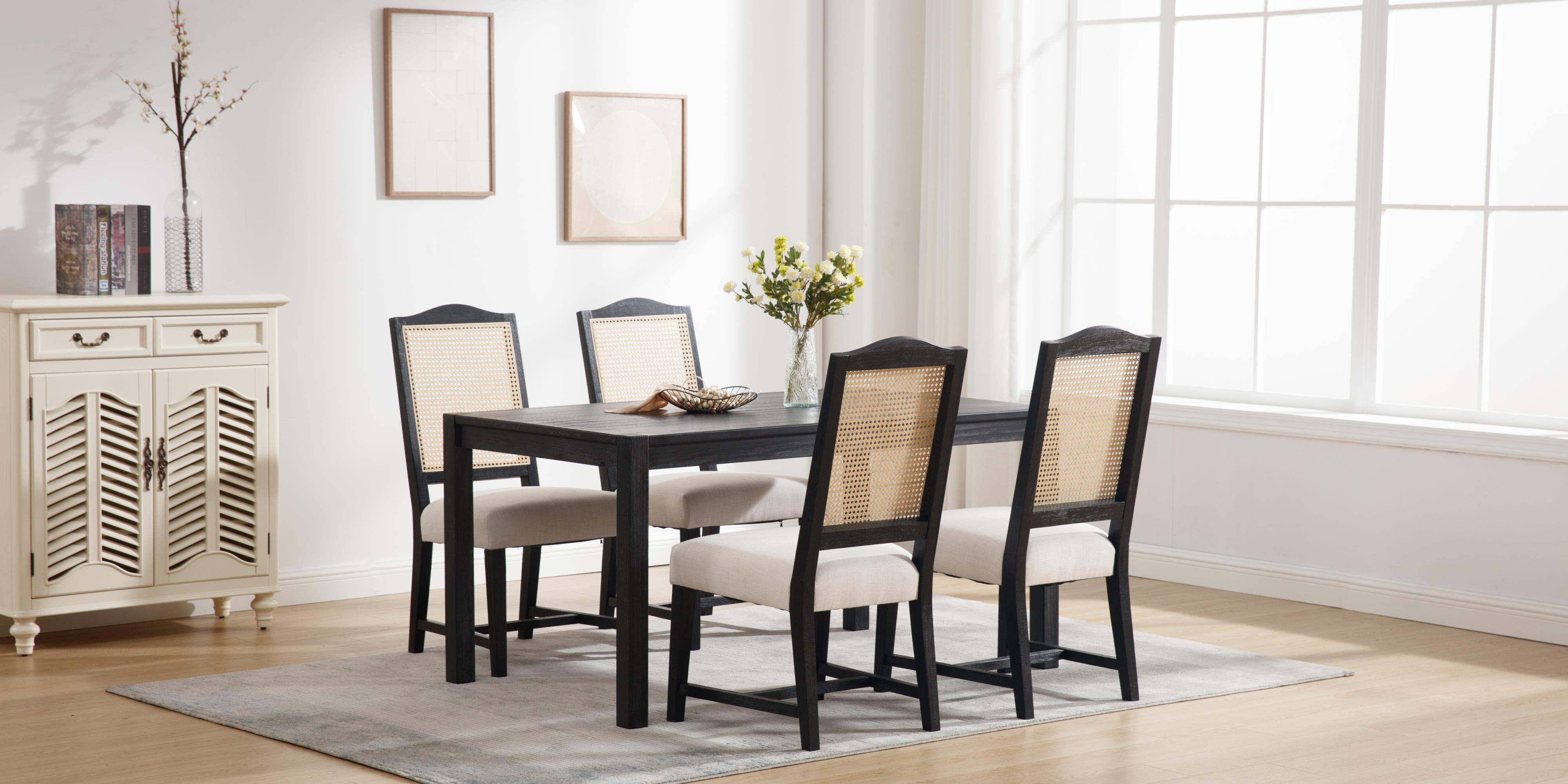
Cane-Back Dining Chairs: Pros and Cons
Cane-back chairs usually feature a solid wood structure with a woven cane backrest. Many also include an upholstered seat, combining a breathable back with a comfortable cushion.
Their clean lines and natural material make them a popular choice for mid-century, Scandinavian, transitional, and contemporary interiors.
Advantages of Cane-Back Chairs
Light and Space-Saving
The open woven back allows light to pass through the chair, creating a visually lighter appearance. This makes cane-back chairs ideal for:
-
Small dining rooms
-
Apartment kitchens
-
Breakfast areas
-
Open-plan spaces
-
Rooms with limited natural light
Even when the dimensions are similar, a cane-back chair often looks less bulky than a fully upholstered or full-rattan product.
Breathable and Flexible
The woven material allows air to circulate, which can help guests stay comfortable during long meals. Cane also has slight natural flexibility, making it feel less rigid than a flat solid wood back.
Easy to Mix and Match
Cane-back rattan dining chairs work with many table materials, including:
-
Walnut or oak
-
Glass
-
Marble
-
Black metal
-
Painted wood
Natural brown cane pairs beautifully with warm wood, while black frames create a more contemporary look. Gray or green upholstery can add subtle color without overwhelming the dining room.
Versatile Style
A cane-back chair can fit more than one decorating style. Tapered legs and simple lines create a clear mid century look, while curved backs and soft upholstery can feel more transitional.
These chairs can also be used in a bedroom, home office, or reading corner, giving customers more flexibility beyond the dining area.
Disadvantages of Cane-Back Chairs
More Delicate Than Solid Materials
The thin woven fibers can be damaged by sharp objects, rough handling, or pet claws. Cane-back chairs may not be the best choice for homes with active cats or young children who climb on furniture.
Firmer Back Support
Cane offers some flexibility but does not feel as soft as an upholstered back. For better comfort, choose a chair with a curved backrest and upholstered seat.
Dust Can Collect in the Weave
Crumbs, dust, and pet hair can collect inside the woven pattern. Regular cleaning with a soft brush or vacuum attachment is usually necessary.
Full-Rattan Dining Chairs: Pros and Cons
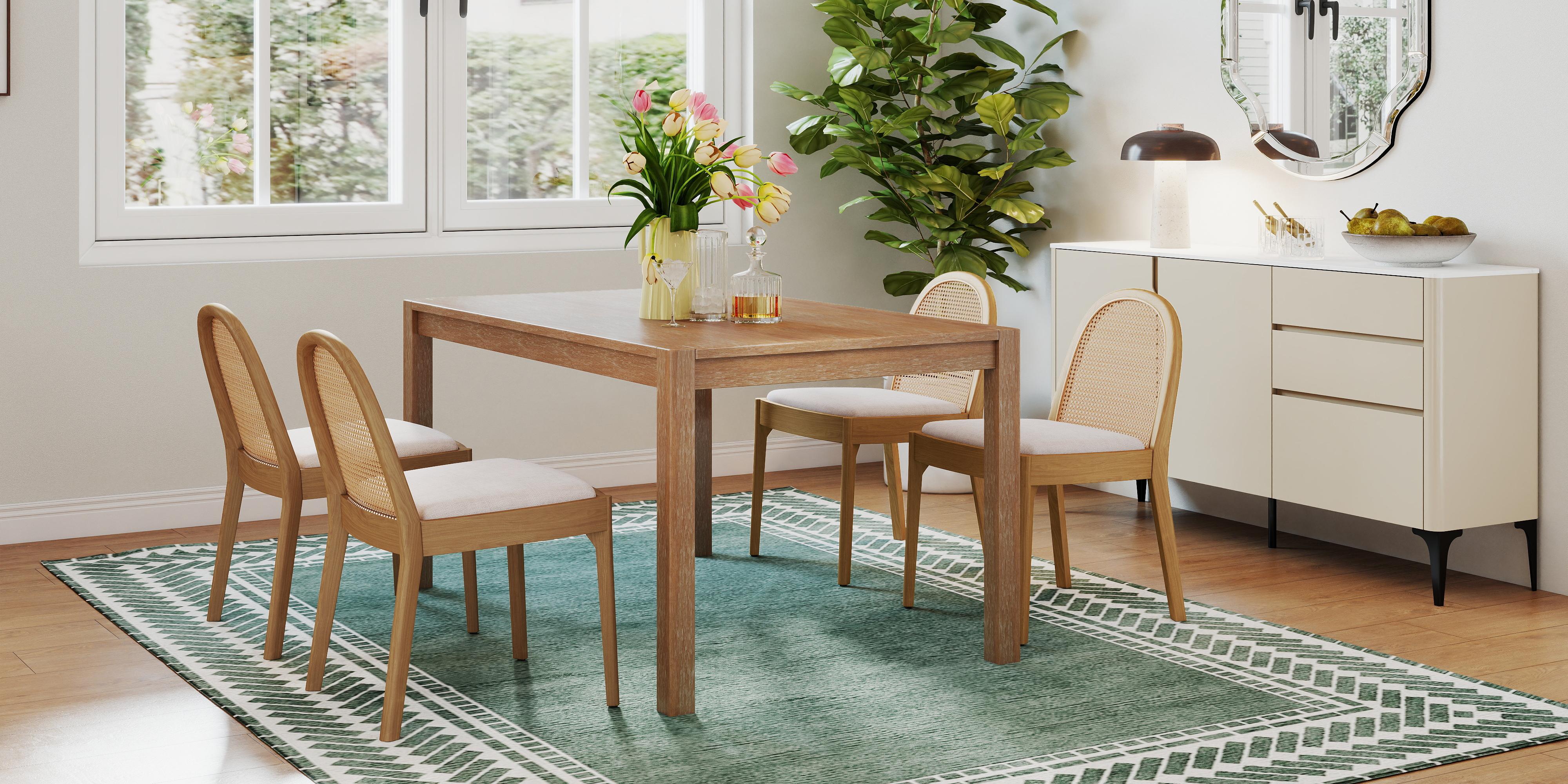
Full-rattan chairs use thicker rattan poles or woven sections across more of the chair. The frame, back, arms, and sometimes the seat may all feature visible rattan.
These chairs usually have a warmer and more organic appearance than cane-back designs. Although rattan is often associated with outdoors, many modern products are made specifically for indoor dining.
Advantages of Full-Rattan Chairs
Strong Visual Impact
Full-rattan furniture adds noticeable texture and can become a focal point in a neutral dining room.
It works especially well in:
-
Organic modern interiors
-
Bohemian spaces
-
Coastal homes
-
Contemporary rooms
-
Relaxed mid-century settings
If the room contains many smooth materials, such as glass, metal, or painted cabinetry, rattan can make the space feel warmer.
Durable Structure
The thicker core of the rattan plant is stronger than delicate cane peel. Well-constructed full-rattan chairs can handle frequent daily use while retaining natural flexibility.
However, durability also depends on the joints, reinforcement, and overall product construction.
Curved Support
Many full-rattan chairs feature rounded or wraparound backs that support the body naturally. Adding a removable cushion or upholstered seat can improve comfort during long dinners.
Warmth Without Heavy Upholstery
Full-rattan chairs add texture without covering the entire product in fabric. Natural brown, tan, and honey finishes work well with cream, beige, gray, green, and black interiors.
Disadvantages of Full-Rattan Chairs
Can Look Visually Heavy
Full-rattan designs often have thicker frames and more texture. In a small kitchen or dining room, several large chairs may make the space feel crowded.
Always compare the chair width and depth with the available place around your table.
More Crevices to Clean
Dust and food particles can collect around woven joints and wrapped sections. A removable cushion may also require separate maintenance.
Cane-Back vs Full-Rattan Dining Chairs
|
Feature |
||
|
Appearance |
Light, clean, minimal |
Warm, textured, bold |
|
Frame |
Usually solid wood |
Mostly rattan or rattan-wrapped |
|
Best space |
Small to medium rooms |
Medium to large rooms |
|
Breathability |
Excellent |
Good |
|
Durability |
Strong frame, delicate cane |
Stronger woven structure |
|
Comfort |
Best with upholstered seat |
Best with cushion |
|
Pet-friendly |
Less suitable |
More suitable, depending on weave |
|
Style |
Mid-century, Scandinavian, transitional |
Bohemian, coastal, contemporary |
Which Design Is Better for a Small Dining Room?
For most small spaces, cane-back chairs are the better option. Their open backs make the dining area feel less crowded.
Choose chairs with:
-
No arms
-
A slim solid wood frame
-
A width of about 17 to 20 inches
-
A moderate back height
-
A seat that fits comfortably under the table
Full-rattan chairs can still work in a small space, but choose a streamlined type rather than a wide barrel-style chair.
Which Type Is More Comfortable?
Comfort depends on more than material. Seat depth, back angle, cushion thickness, and chair height all matter.
Cane-back chairs provide airflow and gentle flexibility. Full-rattan chairs often provide broader curved support.
For long dinners, look for an upholstered seat or removable cushion. For a standard 30-inch dining table, a seat height of around 18 inches is usually suitable, although you should always check the exact product dimensions.
Which Type Is Better for Kids and Pets?
Full-rattan or solid wood chairs are generally more practical for active households because thin cane can be punctured or scratched.
For a family-friendly chair, look for:
-
Stable legs
-
Rounded corners
-
Tightly woven material
-
Easy-clean upholstery
-
A removable cushion
-
Clear maximum weight capacity
Full-rattan is not completely pet-proof, but it is usually more durable than delicate cane webbing.
How to Match Rattan Chairs With Your Table
Walnut Table
Choose natural cane or medium-brown wood. A slightly lighter or darker chair finish creates contrast without looking mismatched.
Oak Table
Natural rattan, cream upholstery, gray fabric, or muted green cushions work well with light oak.
Glass Table
Rattan softens the hard appearance of glass. A black or brown frame adds definition while keeping the dining room visually open.
Metal Table
Natural rattan adds warmth to black metal and creates a balanced contemporary look.
Marble Table
Choose simple cane-back chairs if the marble has strong veining. A restrained design allows the table to remain the focal point.
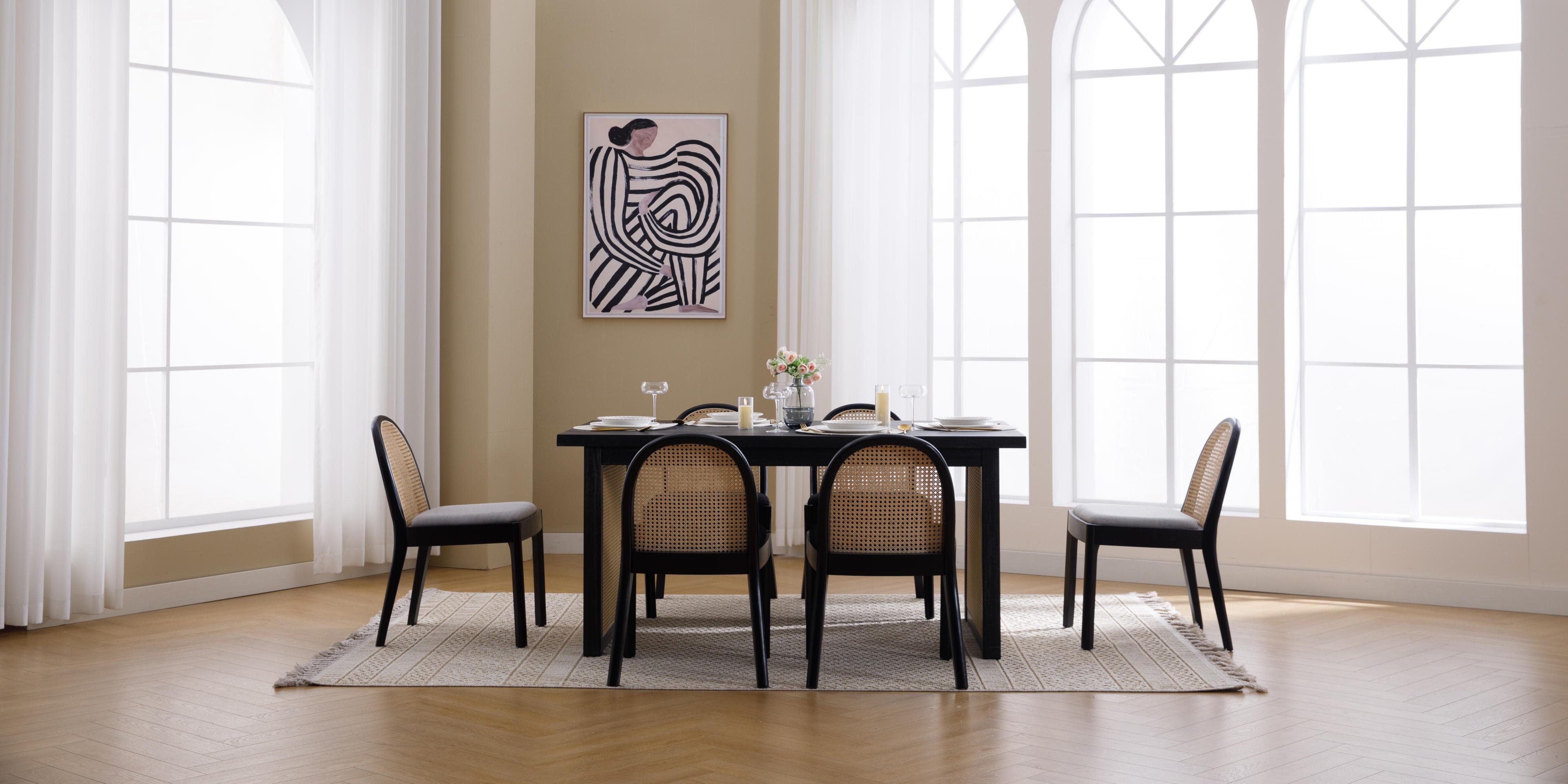
How to Clean Rattan Dining Chairs
Use a soft-bristle brush or vacuum attachment to remove dust and crumbs from the woven material.
For spot cleaning:
-
Use a lightly damp cloth with mild soap.
-
Avoid soaking the rattan or cane.
-
Dry the surface immediately.
-
Follow the care instructions for any upholstered cushion.
Keep natural rattan away from constant sunlight, heating vents, excessive moisture, and unprotected outdoor conditions unless the furniture is specifically rated for outdoors.
Which Design Should You Choose?
Choose cane-back mid century rattan dining chairs when you want:
-
A light, refined profile
-
A space-saving design
-
Easy table matching
-
Better breathability
-
A classic mid century modern look
Choose full-rattan chairs when you want:
-
More organic texture
-
A bold focal point
-
Curved support
-
Greater visual warmth
-
A stronger alternative to delicate cane
Neither design is universally better. Cane-back chairs emphasize simplicity and flexibility, while full-rattan designs offer warmth, texture, and presence.
Final Thoughts
Mid century rattan dining chairs combine natural material, comfort, and versatile style. Cane-back designs are ideal for smaller spaces and customers who prefer a light, refined look. Full-rattan chairs are better for rooms that need stronger texture and visual impact.
Consider your dining room size, table material, pets, children, comfort needs, and cleaning habits before making a decision. The right rattan chair should not only look attractive but also fit naturally into your daily life.
FAQs
Are rattan dining chairs comfortable for long dinners?
Yes. Cane-back chairs offer breathability, while full-rattan chairs may provide wider curved support. An upholstered seat or cushion improves long-term comfort.
Are cane-back chairs pet-friendly?
Not usually. Cats can scratch or break the thin woven fibers. Full-rattan or solid wood chairs are generally safer options.
Can I use rattan chairs with a glass or metal table?
Yes. Mixing natural rattan with glass or metal creates attractive contrast and prevents a contemporary dining room from feeling too cold.
Can indoor rattan chairs be used outside?
Only if the product is specifically rated for outdoor use. Many mid century rattan dining chairs are designed for indoor spaces and may be damaged by rain or strong sunlight.
Is mid-century rattan going out of style?
Mid-century design and woven natural materials have remained popular because they work with many interior styles. A well-made chair with balanced proportions is more timeless than a highly trend-driven product.