


A good accent chair should do more than fill an empty corner. It should feel comfortable when you sit down, work with your existing furniture, and make the entire room feel more intentional.
If you are wondering how to choose a comfortable accent chair, start with three things: comfort, proportion, and placement. Style matters, of course, but the perfect accent chair is one that looks right in your living space and feels good enough to use every day.
Start With Comfort, Not Just Appearance
Decorative chairs often catch your eye because of their shape, fabric, or chair's color. But if you plan on prolonged sitting—reading, chatting with guests, or enjoying coffee—you will want more than decorative appeal.
Look for a comfortable seat with supportive cushioning and a stable frame. High-density foam cushions can provide firm ergonomic support while helping the seat retain its shape over time. A supportive backrest is also important because it can reduce tension around the lower spine.
Seat dimensions deserve attention too. Accent chair seat height commonly falls around 17 to 20 inches, while a comfortable seat height for many people is around 16 to 18 inches. Standard seat depths are often approximately 20 to 24 inches.
A seat that is too deep may encourage slouching, while one that is too shallow may not offer enough support. The right chair should let your feet rest naturally while giving your back enough support to relax.
Measure Your Living Space Before You Shop
One of the easiest mistakes is falling in love with a chair before checking whether the chair fits the room.
Measure the available space, then compare those measurements with the chair's width, depth, and overall height. Accent chairs commonly range from roughly 30 to 40 inches tall, but size can vary considerably depending on the design.
Try to leave about three feet of walking space where major traffic flow passes around the chair. Your accent chairs should not block pathways, doors, or access to other furniture.
In a small room or smaller living rooms, a compact single accent chair can provide extra seating without adding too much visual weight. Slipper chairs are especially useful in small spaces because their armless shape often creates a lighter look.
In large spaces, two accent chairs can help create balance and prevent the seating area from feeling empty.
Keep the Chair Proportional to Your Sofa
Your accent chair should feel connected to the surrounding furniture rather than looking randomly placed.
As a general guideline, the seat height should be within about four inches of the sofa seat. The overall chair height is usually most balanced when it is equal to or slightly shorter than the sofa.
This does not mean every piece must be identical. In fact, mixing a new shape or different materials can create visual interest. The goal is to make sure one delicate chair is not overwhelmed by an oversized sofa—or that a massive lounge chair does not dominate a compact living room.
Both size and design language matter when choosing the right accent chair.
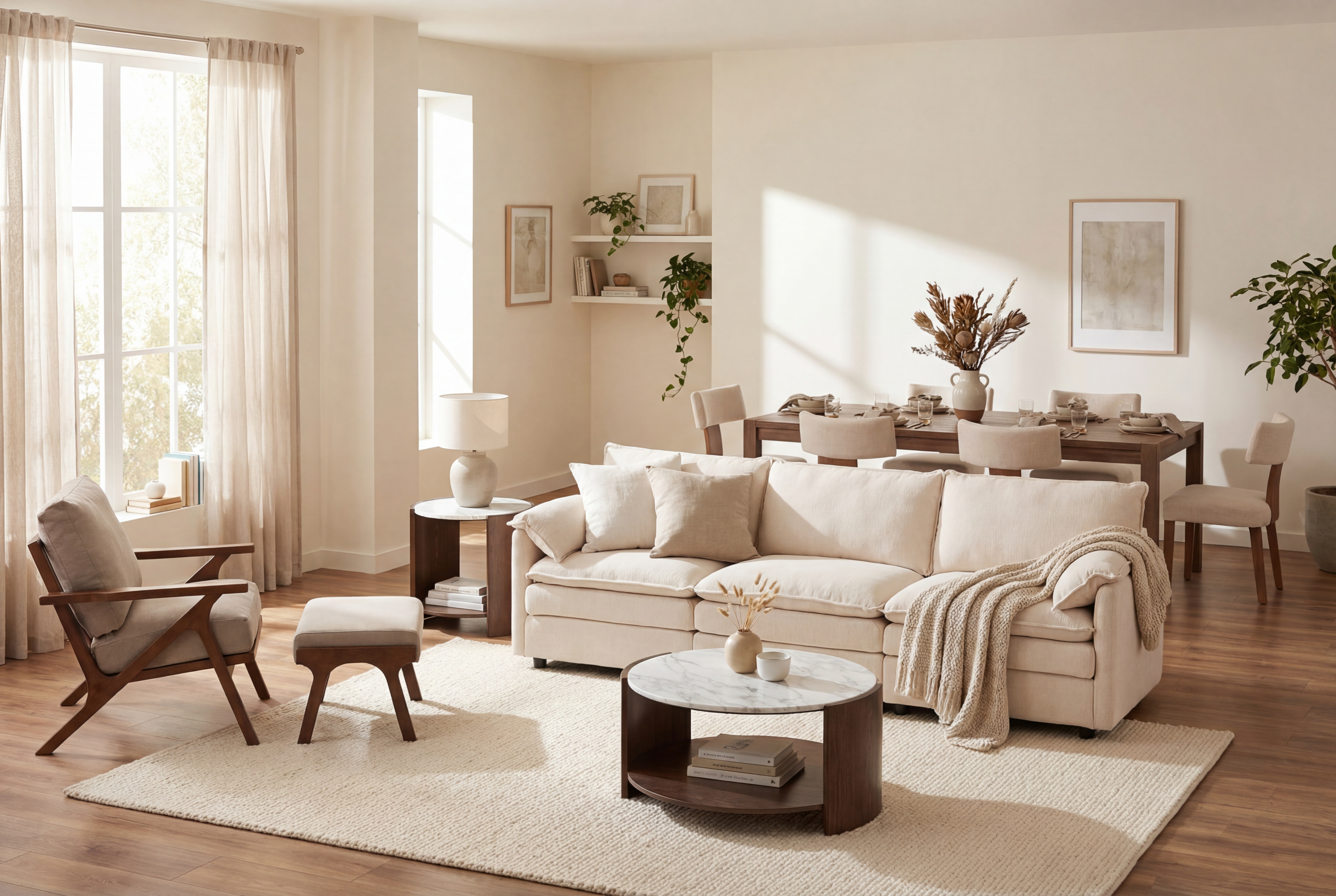
Choose an Accent Chair That Works With Your Color Scheme
The perfect accent chair does not need to match your sofa exactly.
A contrasting color can actually turn the chair into a natural focal point. For example, bold colors such as mustard yellow, warm orange, or earthy green can draw attention in a room built around a blue or neutral sofa.
If you prefer a calmer room feel, choose a chair one shade lighter or darker than your existing color palette. Layering neutral tones or different shades of the same color can create a cohesive look without making the room feel flat.
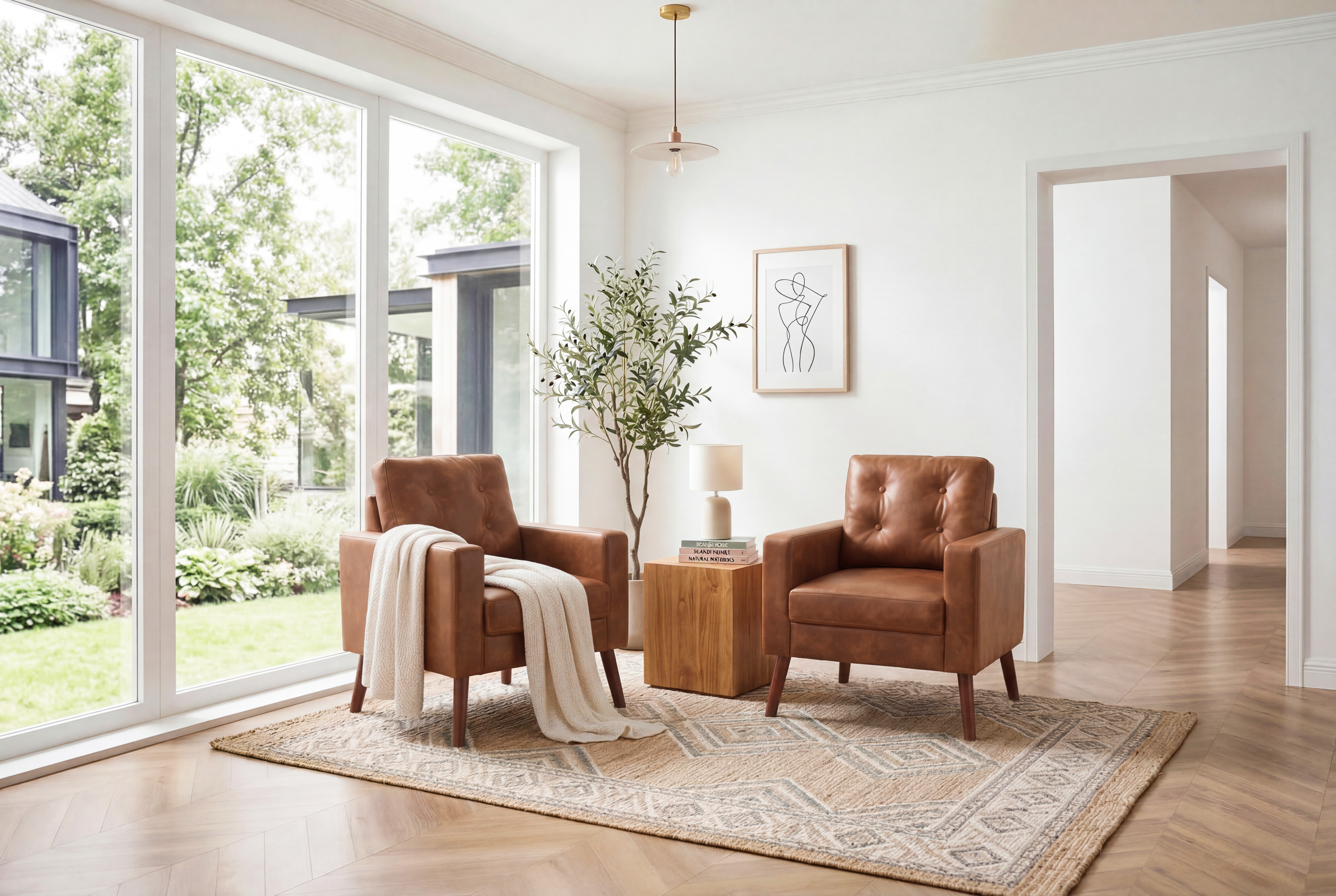
You can also use tactile materials to introduce visual interest. Velvet brings softness and depth, while leather can create a warmer, more structured appearance. Performance fabrics may be a practical choice for high-traffic living room settings, especially where spills and regular cleaning are concerns.
Pick the Right Type of Accent Chair
Different rooms call for different chairs.
Wingback chairs have tall backs and side wings, making them a good choice when you want a more supportive reading chair or something suited to a traditional room.
A swivel chair gives you more flexibility, especially in open living room settings where you may want to turn between the sofa, coffee table, television, or conversation area. A swivel base can make additional seating much more functional.
Slipper chairs work well in reading nooks, bedrooms, and small spaces, while lounge chairs are better suited to relaxed seating. Chaise lounges are designed for reclining, while rounded tub-style chairs can add a softer new shape to contemporary interiors.
Dayalane's accent and lounge chair assortment includes options such as the Charles Lounge Armchair, London PU Leather Lounge Chair, and Tucker Accent Chair, giving shoppers different ways to add comfortable seating and personality without replacing the rest of the room.
Think About Where the Chair Will Go
Placement can change how useful your chair feels.
Accent chairs can sit beside sofas or near a coffee table, helping extend the main seating area. Positioning one near a window can turn an unused corner into an inviting reading spot.
If you frequently enjoy entertaining guests, consider two accent chairs facing or angled toward the sofa. This arrangement creates a more natural conversation area and gives the room balanced seating.
The right chair can also work in different rooms. A compact accent chair may become bedroom seating, a home office occasional chair, or part of a quiet reading corner.
Whatever layout you choose, avoid pushing every chair against the wall. Use furniture placement to create balance and make conversation easier.
Match the Chair to Your Everyday Life
A beautiful chair is only useful if it suits the way you actually live.
For families, pets, and busy households, quality materials and easy-care upholstery may matter more than delicate fabrics that stain easily. For reading corners, prioritize plush cushioning and back support. For entertaining, think about how the chair connects with the sofa and other furniture.
And if your room changes frequently, swivel or lightweight lounge chairs give you more flexibility than a heavy statement piece.
Dayalane's broader design approach focuses on stylish comfort for real homes, making accent chairs particularly useful for shoppers who want to refresh a living room without replacing their entire furniture setup.
Key Takeaways
Choosing the right chair is really about balance. Measure your space first, check seat height and depth, think about back support, and make sure the chair feels proportional to your sofa and surrounding furniture.
Then have some fun with style.
A neutral color can create a calm, cohesive look, while bold colors, leather, velvet, or patterned upholstery can turn a single accent chair into a statement piece. Place it beside a coffee table, next to the sofa, or near a window where it becomes part of everyday life.
The best accent chairs are not simply decorative chairs. They add comfort, personality, additional seating, and visual interest while helping your living room feel more complete.