


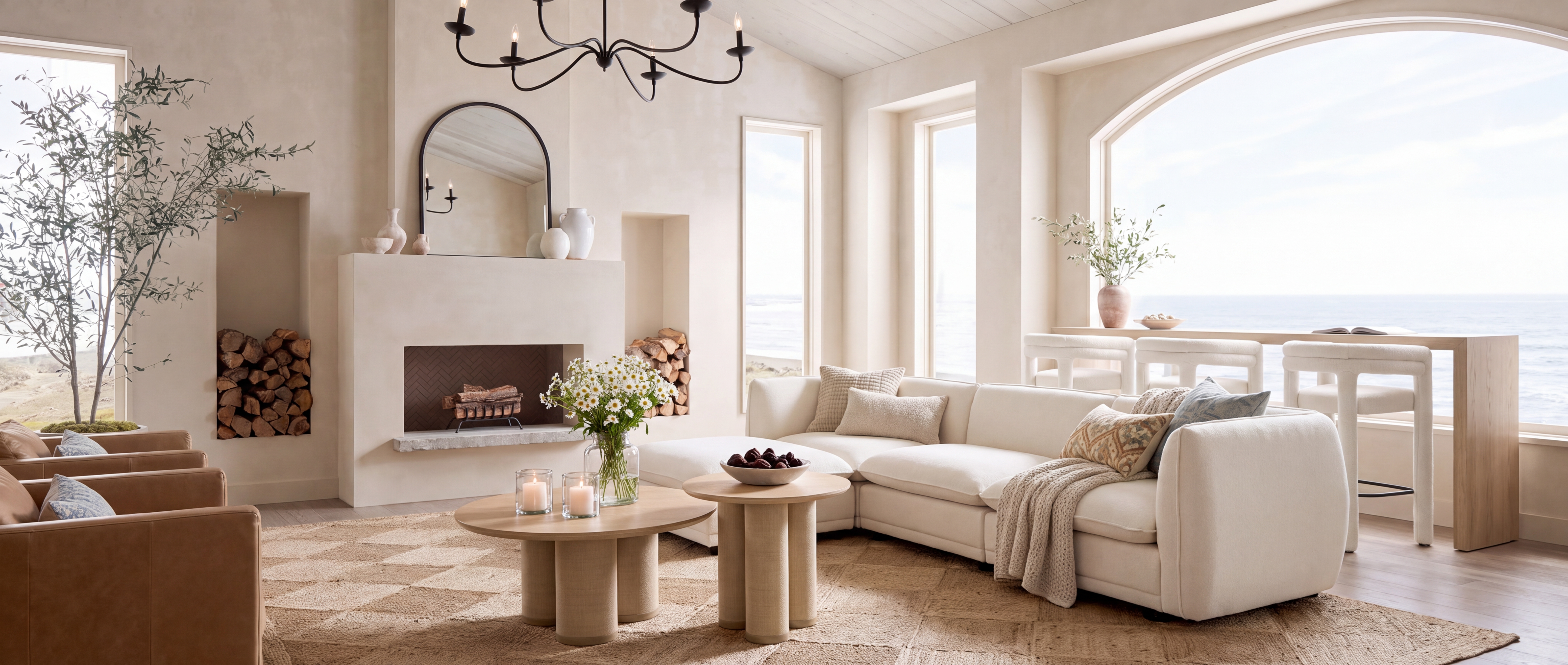
Styling an accent chair with sectional sofa furniture is one of the easiest ways to make a living room feel more complete. A sectional gives you plenty of comfortable seating, but because it often has a large, boxy form, it can dominate the room. The right accent chairs introduce contrast, personality, and a better sense of balance.
The best approach is not to make every chair, sofa, and table perfectly match. Instead, create a thoughtful combination of colors, shapes, textures, and materials that makes the living area feel layered, cozy, and welcoming.
Here are our favorite suggestions for putting an accent chair beside a sectional.
1. Contrast the Shape of Your Sectional
Start by looking at the shape of your sectional.
If your sectional is deep, straight, and boxy, introduce softer shapes with your accent chair. A rounded lounge chair, barrel-style chair, or swivel chair can break up all those straight lines and create visual interest.
This is one reason accent chairs should not simply copy the sofa.
A curved chair next to a rectangular couch gives the room a nice balance because the two pieces have different silhouettes. The chair can still complement the sofa without looking like it came from exactly the same family.
For example, a rounded Dayalane accent chair beside a large neutral sectional can soften the entire seating arrangement while giving the room a more intentionally designed look. Dayalane's accent-chair category is particularly suited to shoppers who want one statement piece that updates a room without replacing all their existing furniture.
2. Mix Materials Instead of Matching Everything
One of the easiest ways to create depth is to mix different materials.
Your chair does not need to use the same upholstery as your sectional. In fact, avoiding identical materials usually creates a richer, more collected style.
If you have a fabric sectional, consider a chair with wood details, PU leather, textured fabric, or a metal frame. If you have a velvet sofa, a chair with exposed wood or metal can create attractive material contrast.
Dayalane's London PU Leather Lounge Chair, for example, can introduce a different surface and texture beside an upholstered sectional. The Charles Lounge Armchair or Tucker Accent Chair can provide another direction depending on the shape and overall aesthetic of your room.
Mixing materials adds warmth and prevents the seating arrangement from looking flat.
You can repeat those materials through other details, too. Wooden chair legs could connect visually with a wood coffee table, console, side table, or picture frames.
3. Choose a Contrasting Color That Still Connects
Your accent chairs don't need to be the same color as the sectional.
A contrasting color usually creates a more interesting room, especially when the rest of the furniture is neutral.
Imagine a beige sectional paired with a darker brown, muted green, rust, or cream chair. The colors are different, but they can still look harmonious.
The easiest approach is to choose a secondary color already displayed somewhere else in your space.
Look at the rug, cushions, artwork, curtains, and accessories for inspiration. If your rug contains beige, brown, and green, for example, a green chair can connect with the rug while creating contrast against a beige sectional.
You can also repeat a small amount of the chair's color in a pillow or decorative object.
This makes the chair look inspired by the rest of the room rather than randomly added.
4. Pay Attention to Visual Weight
A sectional already has significant visual weight, so the size and form of the chair matter.
If you put an oversized chair next to an equally bulky sectional, especially in a small space, the room may feel crowded.
Instead, choose a chair with lighter visual weight. A chair with exposed legs, slimmer arms, an open frame, or a curved silhouette can stand beside a deep sectional without competing with it.
In a larger room, you can use a more substantial chair or even a pair of accent chairs.
The key is proportion.
Your sofa and chair should feel like a balanced pair, even though they don't match exactly. The sectional remains the visual anchor while the chair adds contrast.
5. Keep the Seat Heights Similar
Design isn't only about appearance.
Think about how your family, friends, and guests will actually use the furniture.
The accent chair's seat should sit reasonably close to the sectional's seat height. A dramatically higher or lower chair can make a conversation area feel awkward.
When people sit across from one another to talk, similar seating heights help the arrangement feel more natural.
This becomes especially important if the chair is used every day by adults, kids, or guests rather than simply being decorative.
.jpg?w=4044&h=2022)
6. Place the Chair Where Conversation Feels Natural
Chair placement can completely change how a living area works.
If your sectional faces the TV, try putting the chair at an angle near one end of the sofa. This creates a better conversation arrangement while still allowing someone in the chair to see the screen.
Another idea is to place two accent chairs opposite the sectional. This works especially well in a large room because it creates a defined gathering area where family and friends can sit and talk.
If there is a window beside the sectional, placing a lounge or swivel chair nearby can also create a cozy reading corner.
However, always protect your traffic flow.
You should be able to walk comfortably between the sectional, chair, coffee table, and doorway. Avoid putting a chair directly in a major pathway simply because it photographs well.
Good room planning combines style with practical movement.
7. Use a Rug to Connect the Seating Area
A large rug is one of the easiest ways to make a sectional and accent chair feel connected.
Ideally, both pieces should visually interact with the rug. Depending on the room size, the front legs of the sectional and chair can rest on it.
The rug acts like a frame around the seating area.
It also gives you another opportunity to create color and texture connections. A patterned rug can tie together a beige sectional, darker chair, wood table, and decorative accessories without requiring every piece of furnishing to match.
If your sectional and chair feel slightly disconnected, changing the rug can sometimes solve the problem.
8. Let the Accent Chair Add Texture and Personality
A sectional often needs to handle everyday life.
If you have a busy family, children, or pets, durable upholstery and performance fabrics may be important when choosing your main couch.
That gives the accent chair an opportunity to be more expressive.
Use it to introduce a stronger texture, sculptural shape, richer material, or more noticeable color. A textured chair beside a simple sectional can immediately elevate the room.
This approach works particularly well for people decorating on a budget because you don't need to replace the largest furniture piece to create a noticeable change.
Dayalane's broader positioning emphasizes modern furniture that combines an elevated look with practical comfort for everyday homes, including apartments, families, and design-conscious shoppers.
One well-chosen accent chair can support that same idea: make a significant style change without redesigning the entire room.
9. Don't Try to Match Every Detail
A beautiful room usually looks collected over time rather than purchased as one matching set.
Your sectional and accent chair might share a color but use different materials. They could have completely different colors but similar wood tones. Or they might contrast in shape while connecting through the rug.
The goal isn't to match everything.
It's to create relationships between the pieces.
For example:
-
Pair a beige sectional with a darker textured chair.
-
Pair a straight sectional with a curved swivel chair.
-
Pair a velvet sofa with a wood or metal chair.
-
Pair a bulky couch with an accent chair that has lighter visual weight.
-
Pair neutral furniture with a stunning accent chair in a secondary room color.
-
Pair different materials while repeating one finish elsewhere in the room.
These combinations add depth without making the design feel chaotic.
10. Style the Entire Room, Not Just the Sofa and Chair
Finally, step away from the sectional and look at the whole room.
Your accent chair may look perfect beside the couch, but the surrounding rug, lighting, table, artwork, and accessories determine whether the complete space feels balanced.
Think about the relationship between every form, texture, color, and material.
Sometimes simply moving the chair closer to the sectional can create a more intimate conversation zone. In another room, pulling it slightly farther away improves traffic flow.
Try different placements before deciding.
You can even take a photo from the doorway and another from the sofa. A picture often reveals whether the visual weight feels balanced better than looking at the room from one position.
Final Thoughts: Create Contrast Without Creating Conflict
The best way to style an accent chair with sectional sofa seating is to aim for connection rather than duplication.
Let your accent chairs contrast with the sectional through shape, material, texture, or color. Then connect the pieces through smaller repeated details such as the rug, wood finishes, cushions, or decorative accents.
Pay attention to scale, seat height, visual weight, and traffic flow so your arrangement doesn't just look beautiful—it works for everyday life.
Whether you're putting one chair beside the sectional, creating a pair opposite it, or adding a swivel chair near the window, the right combination can make the room feel warmer, more welcoming, and much more complete.
With thoughtful contrast, proportion, and material mixing, your sectional and accent chair can complement one another without ever needing to match.