


A modern accent chair can do much more than fill an empty corner. The right one can add extra seating, introduce color and texture, create a focal point, or turn an overlooked part of your home into a cozy reading nook.
The challenge is finding the perfect accent chair for your particular room.
A chair that looks beautiful online may feel too large beside your sofa, too low for comfortable conversation, or simply disconnected from your existing furniture once it arrives. Style matters, but so do proportions, upholstery, seat height, back support, and the way the chair affects traffic flow through the room.
This modern accent chair buying guide walks through the details that are worth considering before you buy, from room size and color to comfort, materials, placement, and useful features.
Whether you need a single accent chair beside the sofa, two accent chairs for a conversation area, or a comfortable lounge chair for morning coffee, the goal is the same: choose a chair that feels intentional in your home.
Key Takeaways
Before getting into the details, keep these principles in mind:
-
Measure your space and the chair dimensions before purchasing.
-
Most accent chairs are roughly 30 to 40 inches tall, although designs vary.
-
A seat height around 16 to 18 inches works comfortably for many adults.
-
The chair should be proportional to the sofa and surrounding furniture.
-
Choose a chair's color that complements your existing decor without matching everything exactly.
-
Neutral tones are versatile, while bold colors can turn a chair into a statement piece.
-
Upholstery should reflect your lifestyle and willingness to handle spills, stains, and regular cleaning.
-
A comfortable seat, good back support, and properly positioned armrests matter if the chair will be used for prolonged sitting.
-
Leave approximately 18 to 24 inches of walkway space where people need to move around the chair.
-
A well chosen accent chair should improve both the style and function of the living space.
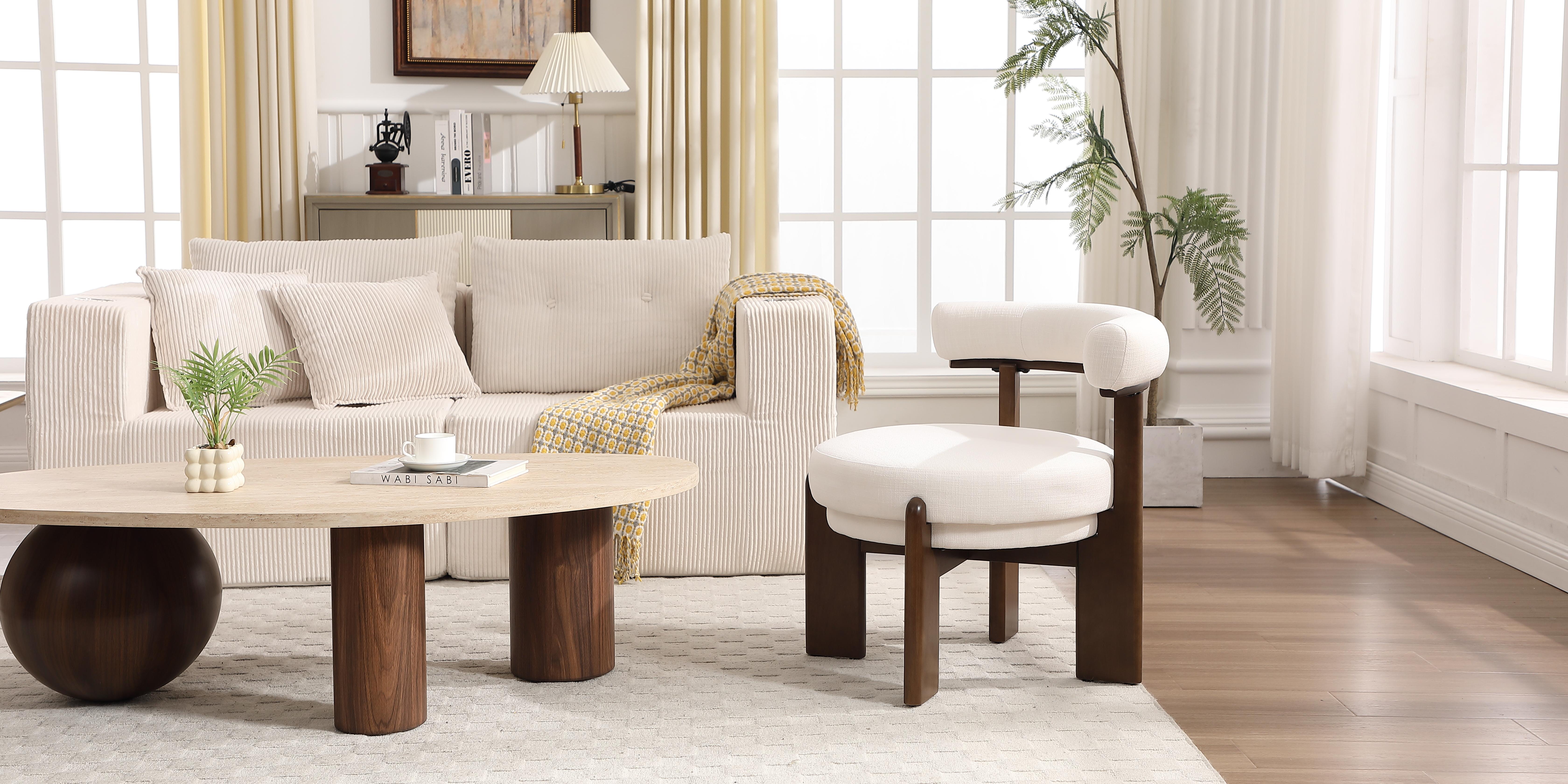
1. Start With What You Want the Accent Chair to Do
Before comparing fabrics or colors, decide why you need the chair.
Accent chairs can serve both functional and decorative purposes, and knowing the primary purpose makes almost every other decision easier.
If the chair will mostly provide additional seating while entertaining guests, comfort and conversation-friendly placement may matter more than dramatic styling.
If you want to fill an empty corner, a sculptural chair with more visual weight can give that part of the room a sense of purpose.
For a cozy reading nook, look for a comfortable seat with supportive cushioning, then add a floor lamp and small table nearby. Positioning the chair near a window can also give you better access to natural light during the day.
In larger rooms, accent chairs can even define functional zones. A pair of chairs might separate a conversation area from the main TV space, while a lounge chair near a bookshelf can establish a quiet reading zone without adding walls or dividers.
In other words, don't start with, “Which chair looks best?”
Start with, “What job does this chair need to do?”
That question usually leads you toward the right accent chair much faster.
2. Choose the Right Size for Your Room
One of the easiest mistakes when buying furniture online is judging scale from a product photo instead of actual measurements.
Always check the dimensions before ordering an accent chair.
Consider the Overall Chair Height
Accent chairs commonly range from around 30 to 40 inches tall, though some low-profile lounge styles and high-back designs will fall outside that range.
As a general styling rule, the chair height should feel compatible with your sofa. It can match the sofa's overall height or sit slightly shorter without looking out of place.
A very tall chair beside an extremely low sofa can make the seating area feel unbalanced. The reverse can happen when a small chair is placed beside oversized furniture.
Check the Seat Height
For everyday comfort, a seat height of approximately 16 to 18 inches works well for many people.
Seat height becomes especially important when the chair sits opposite a sofa. If everyone is seated at dramatically different heights, conversation can feel surprisingly awkward.
A lower seat can work beautifully for a relaxed lounge chair, but consider who will use it. Getting in and out of an extremely low chair may not be comfortable for every household member.
Think About Proportion, Not Just Measurements
Room size matters, but so does the size of the other furniture.
In smaller living rooms, a streamlined or armless design can provide extra seating without overwhelming the room. Slipper chairs are especially useful in small spaces because they are armless and generally have a lighter profile.
For large spaces, a broader armchair, tub chair, swivel chair, or chair-and-ottoman combination may create better balance.
Look at the visual weight as well as the physical dimensions. A chair with thick arms, a heavy base, dark upholstery, and a substantial back can visually occupy more space than a chair with the same footprint but slender legs and clean lines.
The perfect chair should feel connected to the surrounding furniture rather than either disappearing beside it or dominating the entire room.
3. Leave Enough Space Around the Chair
A beautiful room still needs to be easy to walk through.
Try to preserve roughly 18 to 24 inches of walkway space in areas where people regularly pass the chair. Exact requirements depend on your living room layouts, but the principle is simple: furniture shouldn't interrupt natural traffic flow.
Walk through the room mentally before placing the chair.
Can someone move between the sofa and coffee table comfortably?
Can a guest sit down without bumping another piece of furniture?
Can a swivel chair rotate without striking a small table or floor lamp?
These practical questions matter just as much as style.
For compact living room settings, sometimes moving a chair only a few inches away from the wall or slightly changing its angle can make the room feel considerably more open.
4. Find an Accent Chair Style That Fits Your Home
There isn't one “correct” modern accent chair style.
Good design usually involves mixing complementary pieces instead of matching every piece of furniture exactly.
A modern chair can work in a traditional room. A rounded chair can soften furniture dominated by straight lines. A more structured chair can bring definition to a relaxed space.
The key is finding some connection between the pieces—a material, shape, finish, color, or broader design language.
.jpg?w=4800&h=2400)
Armchairs
Classic armchairs provide a defined seat with arm support, making them an easy choice for living rooms, bedrooms, and reading areas.
They work particularly well when comfort matters as much as decorative appeal.
Slipper Chairs
Slipper chairs are armless, giving them a narrower silhouette.
Because they take up less visual and physical space, they're particularly useful for smaller living rooms, apartments, bedrooms, and other small spaces.
Wingback Chairs
Wingback chairs feature a high back with side “wings” around the upper portion of the chair.
Their strong silhouette can draw attention and create a statement piece while providing more enclosure and support than a low-back chair.
Although associated with classic interiors, simplified wingback shapes can also work in contemporary interiors.
Tub Chairs
Tub chairs typically feature a rounded shape in which the back curves naturally around the sitter rather than using clearly separated arms.
The soft shape can add visual interest when a room contains lots of rectangular furniture.
Swivel Chairs
Swivel chairs are especially practical in flexible living room settings.
Instead of moving the whole chair, you can turn toward the sofa during a conversation, toward a window during morning coffee, or toward another part of an open-plan room.
For example, the DAYALANE Gayle Swivel Accent Chair combines a rounded barrel-style silhouette with a 360-degree swivel function, making it useful where seating needs to face different directions.
Chaise Lounges and Lounge Chairs
Chaise lounges are intended for reclining and relaxation, while a lounge chair generally uses a deeper, more relaxed seating position than an upright side chair.
These styles are well suited to bedrooms, reading spaces, studies, or quieter corners of a living room.
The DAYALANE Soren Swivel Lounge Armchair, for example, combines curved wood elements with a swivel base and a more relaxed seating profile, illustrating how a lounge chair can provide both visual character and flexible seating.
5. Decide Whether the Chair Should Blend In or Stand Out
Color is where an accent chair can change the personality of a room almost instantly.
Begin with your existing color palette, including:
-
sofa upholstery
-
wall colors
-
rugs
-
curtains
-
wood finishes
-
artwork
-
other furniture
Then decide whether you want harmony or contrast.
For a Calm, Flexible Look, Choose Neutral Tones
Cream, beige, gray, taupe, black, and warm brown are easier to incorporate into different rooms and decor styles.
Neutral colors can fit into virtually any decor style and often have greater timeless appeal than trend-driven shades.
If you want subtle contrast, try choosing a chair that's a shade lighter or darker than nearby upholstery rather than matching it exactly.
For More Personality, Add a Contrasting Color
Accent chairs should usually have enough contrast with existing furniture colors to feel intentional.
That doesn't mean the chair has to be bright.
A warm brown chair can contrast nicely with a cream sofa. Deep green can bring richness to a neutral room. Navy can provide depth against lighter wall colors.
For more energy, consider bold colors such as mustard yellow, rust, forest green, or another vibrant color that already appears somewhere in your decor.
A mustard yellow chair in an otherwise neutral room, for instance, can become a focal point without requiring the entire room to change.
The trick is repetition. Echo the chair's color subtly in artwork, a cushion, a throw, or another decorative object. That helps the room feel connected rather than random.
6. Pay Attention to Upholstery and Materials
Accent chairs can be upholstered in leather or fabric, and neither is automatically better.
The best option depends on how you live.
Fabric Upholstery
Common materials include linen-look textiles, chenille, velvet, bouclé, and various woven fabrics.
Fabric can add softness, texture, and warmth to a living space. Textured upholstery can be particularly effective when the rest of the room has smooth surfaces.
The DAYALANE Chloe Accent Chair, for example, is offered in fabric-forward options and uses a minimalist silhouette that can work in a living room, study, or other flexible seating area.
Leather and Leather-Look Upholstery
Leather surfaces can introduce warmth and structure, particularly in rooms with wood, metal, or neutral-toned furniture.
They can also work well when you want a chair with a more defined visual presence.
Performance Fabrics
If the chair will see frequent use, pets, children, food, or drinks, look beyond appearance.
Performance fabrics resist stains and are generally easier to clean, making them practical for everyday wear.
Some beautiful fabrics stain easily and require more regular cleaning, so think realistically about maintenance.
If you're likely to handle spills regularly, durability may matter more than choosing the most delicate upholstery available.
Choose upholstery based on your lifestyle—not just the showroom look.
7. Look Beneath the Fabric: Construction Matters
A chair is only as good as what's underneath the upholstery.
When product information is available, pay attention to the frame, cushion materials, and construction.
For durable furniture, kiln-dried hardwood is often a desirable frame material because properly dried wood offers good structural stability.
For cushioning, high-density foam can provide firmer, longer-lasting support than very soft low-density filling.
This doesn't mean the firmest chair is always the most comfortable. Comfort is personal.
It does mean that quality materials generally matter more if the chair will be used every day rather than simply serving as one of several decorative chairs in the room.
8. Don't Sacrifice Comfort for Looks
A sculptural chair can photograph beautifully and still be uncomfortable after twenty minutes.
If you're buying living room chairs for regular use, pay attention to:
Seat Depth
A deeper seat tends to encourage lounging, while a shallower seat promotes a more upright position.
Think about how you actually sit.
Someone using a chair to read for an hour will have different needs from someone using a decorative chair mainly when entertaining guests.
Back Support
Look at where the chair back meets your body.
A well-shaped backrest can provide better back support, while an ergonomic design can help reduce unnecessary strain during prolonged sitting.
Cushioning
A comfortable seat should provide enough cushioning to distribute pressure without feeling like you disappear into the chair.
High-density foam is commonly used when firmer support and shape retention are priorities.
Armrest Position
Proper armrest position can make a noticeable difference during longer periods of sitting.
Your shoulders should be able to relax naturally instead of being pushed upward or left completely unsupported when support is desired.
Ultimately, ergonomic support isn't about adding complicated technology to a chair. It's about helping the body sit in a relaxed, supported position.
9. Consider How the Chair Will Work With Other Furniture
One of the most useful rules in interior styling is this:
Coordinate—don't copy.
Your right chair doesn't need to look like a miniature version of your sofa.
In fact, a room often feels more interesting when pieces have different shapes or textures but still share some common design language.
For example:
-
Pair a boxy sofa with a curved accent chair.
-
Add textured fabric beside smooth leather.
-
Use warm wood details to connect a chair with a coffee table.
-
Pair a visually heavy sofa with a chair on exposed legs to create balance.
-
Introduce a contrasting color while keeping similar undertones.
A single accent chair can give an established room a fresh focal point without replacing the existing furniture.
The goal is for every item to belong in the same conversation—not necessarily wear the same uniform.
10. Think About Placement Before You Buy
Where you put an accent chair affects both appearance and usability.
Beside a Sofa
One of the easiest layouts is placing an accent chair at an angle near the sofa.
This creates a natural seating area for conversation without making everything face the same direction.
Near a Coffee Table
Accent chairs can sit beside or partially face a coffee table, allowing the chair to become part of the main conversation zone.
Just make sure the layout leaves enough space for movement.
Use Two Accent Chairs for Conversation
Two accent chairs facing or angled toward a sofa can create a comfortable conversational arrangement.
In large spaces, two chairs can also visually complete a seating group that would feel unfinished with only a sofa.
This arrangement is especially useful for households that frequently host friends or family.
Beside a Window
Positioning an accent chair near a window gives the seating area better access to natural light.
Add a floor lamp for evenings and a small table for a book or drink, and you've created a welcoming spot for reading or enjoying morning coffee.
In an Empty Corner
An empty corner doesn't always need furniture, but if it feels disconnected from the room, an accent chair can give it purpose.
A chair, lamp, and small side table are often enough.
In Larger Open Spaces
In open-plan homes and large spaces, furniture can function like invisible architecture.
A well chosen accent chair—or a pair of chairs—can help distinguish the conversation zone from dining rooms, work areas, or another part of the home.
11. Decide Which Features Are Actually Useful
Features are valuable when they support the way you use the chair.
They aren't automatically better simply because there are more of them.
Swivel Function
A swivel base makes sense when the chair needs to interact with different rooms or focal points.
The DAYALANE Gayle Swivel Accent Chair and Soren Swivel Lounge Armchair are examples of chairs designed around this kind of flexibility.
Ottoman
An ottoman can improve relaxation by allowing you to put your feet up, but it also takes additional floor space.
DAYALANE's Eva Boucle Accent Chair with Ottoman offers an example of this chair-and-ottoman format for buyers who want a more relaxed seating setup.
Armless Design
An armless chair can look lighter and take up less width, making it a practical option for small spaces.
Supportive Backrest
For reading and regular use, prioritize the shape and angle of the backrest rather than choosing a chair solely for decorative appeal.
DAYALANE's Beth Sling Accent Chair, for example, uses a slightly tilted backrest and arm support in a leisure-oriented design.
The best features are the ones you'll actually use.
12. Set a Realistic Budget
Accent chairs range widely in price, and price can reflect differences in upholstery, frame materials, construction, cushion quality, design complexity, and overall durability.
Set a budget before shopping.
But don't evaluate cost only by asking, “What's the cheapest chair I can find?”
Also consider:
-
How frequently will it be used?
-
How much everyday wear will it receive?
-
Will the upholstery require special maintenance?
-
How easy will regular cleaning be?
-
Is the frame made from quality materials?
-
Will the cushion maintain its support?
-
Is this a short-term decorative purchase or something you expect to keep for years?
Higher-quality chairs can justify a higher price tag when better materials and construction extend their useful life.
Investing in a quality chair may ultimately save money long-term if it prevents you from replacing a poorly made piece after only a short period.
Budget considerations should therefore include durability and maintenance, not just the initial purchase price.
13. A Few DAYALANE Accent Chairs to Consider
There isn't one perfect chair for every home, so it helps to compare designs according to how they'll actually be used.
Chloe Accent Chair: For Clean, Versatile Spaces
The DAYALANE Chloe Accent Chair uses a clean minimalist form and is designed to transition between spaces such as a living room and study. It is a useful reference point if you're looking for a modern chair that doesn't visually dominate other furniture.
Gayle Swivel Accent Chair: For Flexible Living Room Layouts
The Gayle Swivel Accent Chair combines a rounded barrel-style profile with a 360-degree swivel base. That makes it particularly interesting for open living room layouts where a chair may need to face the sofa at one moment and turn toward another part of the space the next.
Soren Swivel Lounge Armchair: For Relaxed Seating
For a deeper lounge-chair feel, the Soren Swivel Lounge Armchair pairs curved wood details with a swivel base and supportive cushioning. It works as an example of how a chair can bring visual interest while still serving as functional seating.
Beth Sling Accent Chair: For an Airier Look
The Beth Sling Accent Chair uses a lighter sling-style silhouette with an inclined backrest, making it an option worth considering when you want comfortable seating without the visual weight of a heavily upholstered chair.
Eva Accent Chair With Ottoman: For a Relaxed Corner
If your goal is to create a dedicated relaxation zone, the Eva Boucle Accent Chair with Ottoman illustrates how an ottoman can turn a standard chair arrangement into a more lounge-oriented setup.
DAYALANE currently offers these alongside additional accent, arm, lounge, and swivel chairs within its living-room seating collection.
14. Your Final Accent Chair Checklist
Before clicking “buy,” run through this checklist.
Purpose
-
Is the chair primarily a statement piece, everyday seat, reading chair, or occasional extra seating?
Measurements
-
Have you measured the room?
-
Have you checked the chair's width, depth, and overall height?
-
Does the seat height work for your household?
-
Is it proportional to your sofa and other furniture?
Layout
-
Does the placement preserve traffic flow?
-
Can you maintain roughly 18 to 24 inches of walkway space where needed?
-
Will the chair interfere with a coffee table, floor lamp, door, or walkway?
Comfort
-
Is there enough back support?
-
Is the seat depth appropriate?
-
Are the armrests positioned comfortably?
-
Would you enjoy prolonged sitting in this chair?
Style
-
Does its shape complement the room?
-
Does it add useful visual interest?
-
Does the chair's color work with your wall colors and broader color palette?
Materials
-
Does the upholstery suit your lifestyle?
-
Will it stain easily?
-
Can you handle spills without excessive stress?
-
Are you comfortable with the required regular cleaning?
Quality
-
Are the frame and cushions made from quality materials?
-
Does the expected durability make sense for the price?
If the answers line up, you're probably looking at the right chair.
How to Choose the Perfect Accent Chair: Final Thoughts
A modern accent chair may be smaller than a sofa or dining table, but it can have an outsized effect on how a room feels.
The right accent chair can add a vibrant color, soften a room full of clean lines, provide additional seating, create balance around a sofa, or transform an unused corner into a welcoming spot.
Don't choose one simply because the photo looks good.
Think about room size, seat height, comfort, visual weight, color, materials, maintenance, and traffic flow. Consider the existing furniture rather than designing around the chair in isolation. And remember that good interiors rarely come from making everything match perfectly.
Whether your unique taste leads you toward neutral tones, bold colors, a swivel chair, a compact armless design, or a relaxed lounge chair, the perfect accent chair is the one that makes your living space both more useful and more personal.
Choose thoughtfully, and one chair can change the feel of the entire room.