


A dining table has to do more than look good in a product photo. It needs to handle everyday meals, homework, coffee cups, family dinners, and the occasional dinner party without making your dining room feel crowded.
That is why finding an affordable table is less about chasing the lowest price and more about knowing where your money actually matters. A good affordable dining table buying guide should help you compare table size, materials, construction, and shape before you start worrying about decorative details.
Here is how to find the perfect dining table for your home without sacrificing quality.
Measure Your Dining Space Before Choosing a Table
Before thinking about solid wood, finishes, or table legs, measure the room.
A useful rule is to leave at least 36 inches of clearance around the table so people can pull out dining chairs and move comfortably. An easy way to estimate the maximum dining table size is to measure the room and subtract roughly three to four feet from each dimension.
For example, a table may technically fit into a small dining room but still feel oversized once chairs are added. Before ordering a new dining table, tape its dimensions onto the floor. It takes five minutes and gives you a much clearer sense of the actual floor space it will occupy.
Also think about seating. Allow approximately 24 inches of table edge per diner for comfortable elbow room. A typical four-seat table starts around 40–48 inches, while tables for six people are commonly around 60–72 inches long.
Your dining room furniture should work in real life, not just fit according to measurements.
Choose the Right Dining Table Shape
The best dining table shape usually follows the shape of the room.
A rectangular table works particularly well in a rectangular room or other long rooms. It provides generous surface area and is practical for larger families, special occasions, or anyone who regularly needs an extra chair for guests.
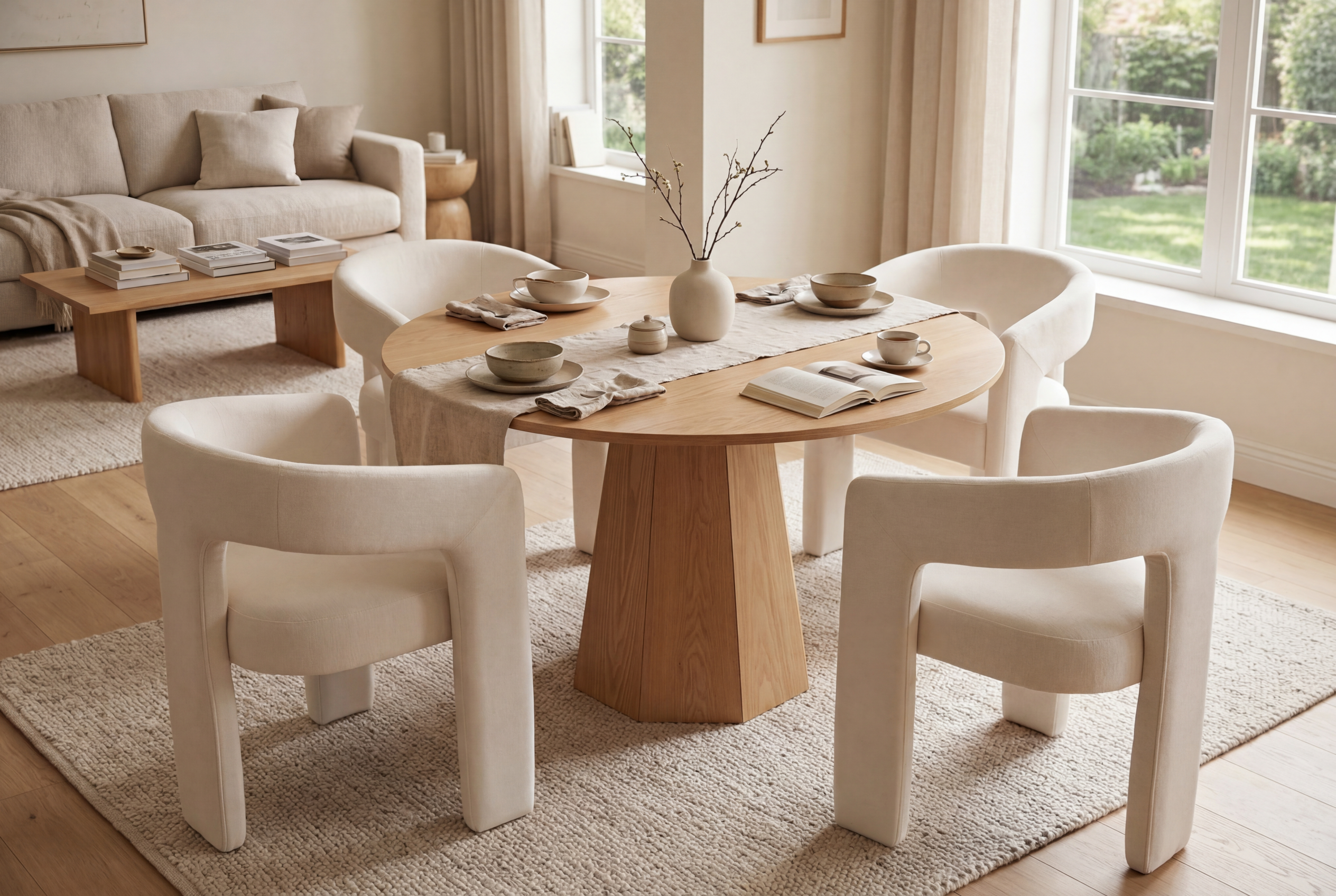
Round tables work beautifully in small spaces because there are no sharp corners taking up visual room. They also make conversation easier because everyone sits around the same central point. For a compact breakfast area or apartment dining space, this can be a practical choice.
Dayalane's current dining table assortment includes round, rectangular, and oval options ranging from compact tables to larger models designed for more seating. For example, the Clark 39" Round Dining Table gives shoppers a compact round-table option, while the James 63" Rectangular Dining Table provides a longer format for rooms with more floor space. Dayalane also carries the Lane 59" Dining Table and oval dining options, giving different room layouts more flexibility.
Round and oval tables are also worth considering if you have young children or a busy walkway around the dining area, since rounded corners remove the sharp edges found on many square tables.
Spend on Construction, Not Just Appearance
An affordable dining table can still be well made. Look closely at the construction rather than assuming a higher price automatically means better craftsmanship.
A stable table should not wobble when you place pressure on the table top. Pay attention to how the legs connect to the frame and whether the base feels substantial enough for the size of the surface.
Traditional four legs can provide straightforward stability, while a pedestal base often creates more usable legroom because diners do not have to work around corner legs.
Strong construction quality matters because a table is used repeatedly and often carries more weight than expected. Dayalane's internal product review, for example, notes that the Clark table page provides dimensions along with a stated 600-pound table capacity, which is the kind of concrete specification worth checking when comparing products.
Solid Wood vs. Veneer vs. Engineered Wood
Materials are one of the biggest factors affecting both price points and longevity.
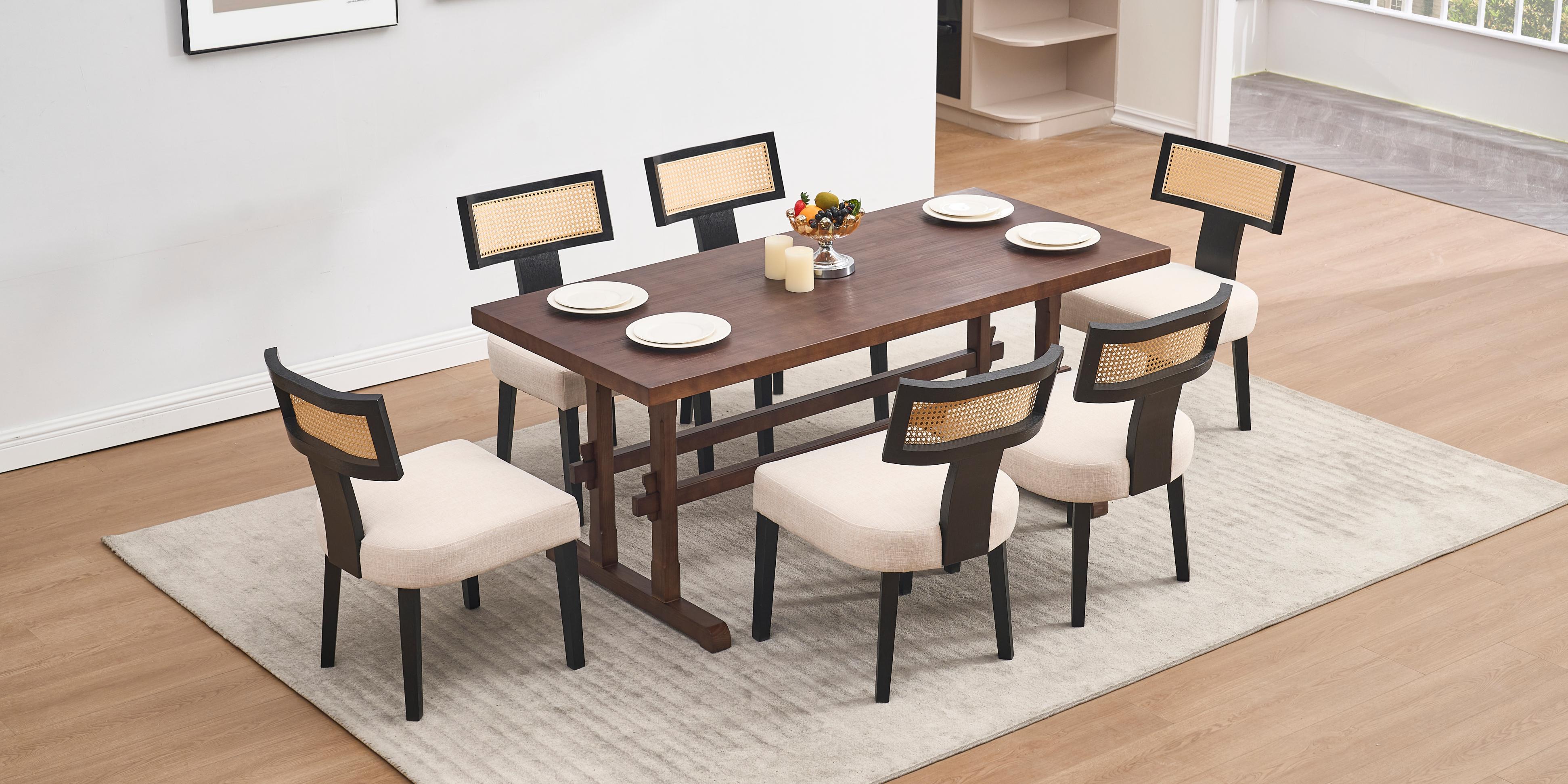
A solid wood dining table usually costs more, but real wood offers excellent durability. Hardwoods such as solid oak or walnut can often be sanded to remove scratches, which makes them easier to refresh after years of use. With proper care, a well-built solid wood table can last 20 years or more.
That does not mean veneer tables should automatically be avoided. High-quality wood veneers use a thin layer of real wood over another material, creating a wood appearance at more affordable prices. Veneer is also less affected by seasonal movement than solid wood, although damaged veneer can be harder to repair and may peel over time.
Engineered wood is another budget-friendly option for most households. It can be durable enough for daily use and allows manufacturers to offer clean, modern designs without the cost of an all-solid-wood construction.
For a busy family, the right answer may simply be the material that balances price, durability, and maintenance rather than the most expensive material available.
Think About How the Table Will Be Used
A beautiful formal dining room table and an everyday family table have different jobs.
If the table will see children, pets, food spills, and daily activity, prioritize a durable finish that can resist scratches and clean up easily. Pet-friendly and family-friendly furniture usually benefits more from practical surfaces than delicate craftsmanship details.
If you mostly use the table for larger gatherings, an extendable table can be a smarter use of space. You can keep it compact for everyday meals and open it when an extra guest arrives.
For very small dining rooms, kitchens, or apartments, a drop-leaf dining table can provide even more space-saving flexibility. When you do not need the additional surface area, the leaves fold down and free up floor space.
Let Style Come After Size and Quality
Once you know the correct table size, construction, and materials, then think about style.
Modern dining tables usually feature clean lines, simple bases, and minimal ornamentation. Farmhouse tables often use warmer or distressed wood finishes, while industrial styles combine wood tops with exposed metal bases. Traditional dining tables tend to emphasize timeless shapes and more visible craftsmanship.
Your dining table can become the focal point of the room, but it does not have to match every piece of furniture perfectly. Dining chairs in a different material or tone can add visual interest while keeping the overall dining space cohesive.
Dayalane's dining category is intentionally built around practical modern dining furniture for everyday homes, including compact and larger table formats as well as coordinating dining chairs and dining sets. That approach makes it easier to think about the whole room rather than choosing the table in isolation.
Affordable Does Not Have to Mean Disposable
Finding an affordable dining table is ultimately about balance.
Better materials, strong joints, durable finishes, the right proportions, and enough room for the whole family matter far more than decorative extras. A lower-priced engineered wood or well-made veneer table may be a smarter purchase than an expensive table that does not fit your room or lifestyle.
Measure carefully, choose a shape that suits the room, check construction details, and think about how the table will handle real life. Do that first, and you are much more likely to find one of the best dining tables for your space at an affordable price—without feeling like you compromised on quality.