


Choosing the right accent chair for a small living room is less about finding the smallest chair you can buy and more about finding one that fits naturally into the room. The right chair should give you a comfortable place to sit, add personality to your decor, and still leave enough open space for everyday movement.
For small spaces, proportions matter just as much as style. A chair may look compact online but still feel oversized once it is placed beside a sofa, coffee table, or window. Before you shop, think about dimensions, seat comfort, materials, legs, and how the chair will work with the rest of the room.
With a little planning, small accent chairs can add useful seating without making a smaller room feel crowded.
Measure Your Living Room Before You Shop
Start by measuring the exact area where you want the chair to sit. Check the available width and depth, but also pay attention to the space around it.
Can you still walk comfortably past the chair? Is there enough room between the seat and a coffee table? Will the chair block a doorway or make the room feel cramped?
In smaller rooms, it helps to mark the chair's dimensions on the floor with painter's tape before buying. This gives you a better sense of its real footprint.
If you plan to use a pair of accent chairs, chairs under roughly 30 inches wide can be easier to arrange in a compact living room. However, your room dimensions should always guide the final decision.
The goal is not simply to save space. It is to create enough visual space around the furniture so the entire room still feels balanced.
Choose Accent Chairs With a Lighter Visual Footprint
Some accent chairs feel heavier than others even when their dimensions are similar.
For a small apartment or compact house, look for chairs with exposed wood legs or slim metal legs. When you can see more floor beneath the chair, the room often feels more open.
Low-profile arms are another useful feature. Thick, bulky arm chairs can take up precious horizontal space, while armless chairs or chairs with slim, sloping arms tend to work better in tighter layouts.
Open-back designs can also help maintain a lighter appearance.
When comparing modern accent chairs, pay attention to the overall shape rather than just the seat width. A sleek silhouette, curved back, narrow arms, and raised legs can help a chair feel less imposing in small spaces.
Match the Chair to How You Actually Use the Room
The perfect accent chair should do more than look stylish.
If you enjoy reading, place a comfortable armchair near a window or bookshelf to create a cozy reading nook. Natural light can make a corner feel brighter while giving the chair a clear purpose.
A lounge chair usually has a slightly reclined seat and a higher back, making it a comfortable place to sit and relax. It can work well when the chair will be used regularly rather than only when guests visit.
Barrel chairs have a curved shape that wraps around the seat and can create a cozy feeling. Because some barrel chairs are relatively wide, check the dimensions carefully before placing one in a smaller living room.
A swivel chair offers another practical option. Swivel seating allows you to turn toward the sofa for conversation, face the television, or look toward a window without moving the entire chair. Compact swivel barrel chairs can be particularly useful when one space serves several purposes.
Occasional chairs are often lighter and easier to reposition, which makes them useful as spare seating when family, friends, or guests come over.
Consider Upholstery, Color, and Materials
Your choice of materials can change how large or small a chair feels in the room.
Light-colored fabrics, including cream, beige, soft gray, and linen textures, can reflect more light and help a compact room feel more open.
That does not mean your accent chair needs to be neutral.
A velvet chair can introduce softness and texture, while leather or faux-leather upholstery can create a cleaner, more tailored appearance. Rich colors can also work in a small room when the chair becomes the main accent rather than competing with several other bold pieces.
Different upholstery options also create different moods. Linen-style fabrics tend to feel relaxed, velvet can bring a little more elegance, and smooth leather-like materials can complement sleek, modern surroundings.
When you shop, consider how the chair's upholstery complements your sofa, rug, pillows, curtains, and other furniture.
Use Shape and Style to Add Personality
A small living room does not need to be boring.
In fact, a single chair can often make more impact in a compact room because every piece is more visible.
There are many various styles to explore, from traditional armchairs to curved modern seating, barrel chairs, lounge chairs, and minimalist designs.
If your sofa is simple and modern, a sculptural chair can add character. If your living room already has plenty of texture, a cleaner chair with simple lines may create a better sense of balance.
Look at existing wood finishes, fabric colors, and decorative details around the room. Your accent chair does not need to match everything exactly, but it should feel connected to its surroundings.
A chair can repeat the wood tone of a side table, the color of your pillows, or the texture of your rug. Those small connections help the chair feel intentional.
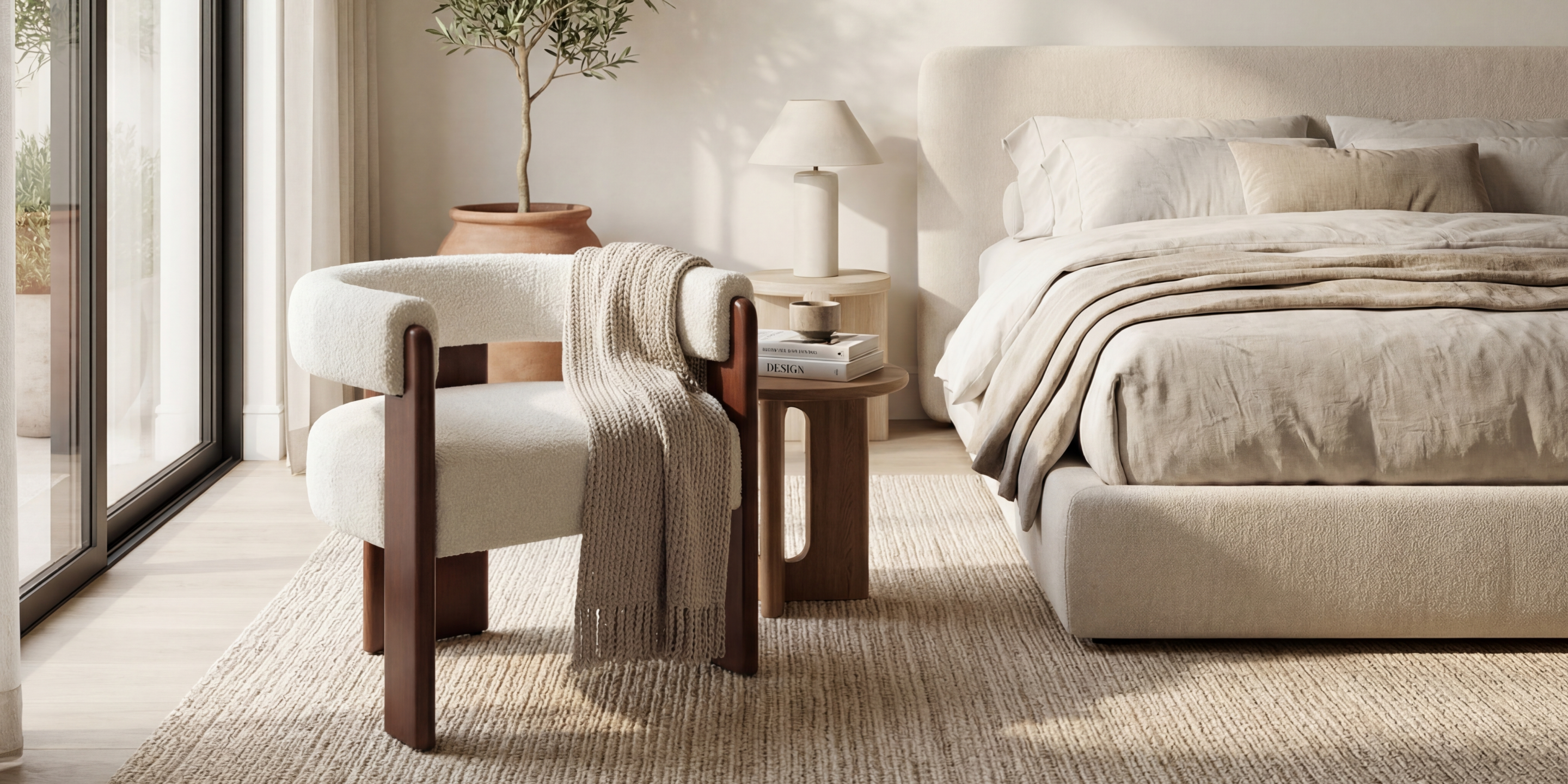
Explore Dayalane Accent Chairs for Smaller Rooms
Dayalane offers accent and lounge seating in a range of modern forms, including pieces such as the Charles Lounge Armchair, London PU Leather Lounge Chair, and Tucker Accent Chair.
When exploring Dayalane accent chairs, compare each product's dimensions, seat shape, materials, and features rather than choosing by appearance alone. Some shoppers may prefer a compact chair for a reading nook, while others may want a more relaxed lounge chair for conversation or everyday rest.
This approach is especially useful for apartment and condo shoppers, where fitting stylish furniture into limited space is a common concern. Dayalane's broader positioning also emphasizes modern furniture for real homes and smaller-space lifestyles.
Don't Sacrifice Comfort Just to Save Space
A smaller chair should still be comfortable.
Look at the seat width and depth, back shape, arm position, and cushioning. A chair that is slightly larger but properly proportioned may be more useful than a tiny chair you never want to sit in.
Consider who will use the chair most often. A decorative chair used occasionally has different requirements from a seat used every evening for tea, reading, or talking with friends.
The best chair should provide a comfortable place to rest while still working with the scale of the room.
Make Your Accent Chair Work Harder
Furniture in a small living room should earn its place.
A good accent chair can create extra seating, establish a reading nook, support conversation, add texture, and make an empty corner feel finished. It may even move between the living room and bedroom when your needs change.
That kind of versatility is especially valuable in a small apartment.
Ultimately, the best accent chair for a small living room balances dimensions, comfort, style, materials, and everyday function. Choose a chair with a light visual footprint, leave enough room around it, and pay attention to how its shape complements the rest of your decor.
The right chair will not just fit the space. It can enhance the way the room works and elevate the overall look without overwhelming it. is less about finding the smallest chair you can buy and more about finding one that fits naturally into the room. The right chair should give you a comfortable place to sit, add personality to your decor, and still leave enough open space for everyday movement.
For small spaces, proportions matter just as much as style. A chair may look compact online but still feel oversized once it is placed beside a sofa, coffee table, or window. Before you shop, think about dimensions, seat comfort, materials, legs, and how the chair will work with the rest of the room.
With a little planning, small accent chairs can add useful seating without making a smaller room feel crowded.
Measure Your Living Room Before You Shop
Start by measuring the exact area where you want the chair to sit. Check the available width and depth, but also pay attention to the space around it.
Can you still walk comfortably past the chair? Is there enough room between the seat and a coffee table? Will the chair block a doorway or make the room feel cramped?
In smaller rooms, it helps to mark the chair's dimensions on the floor with painter's tape before buying. This gives you a better sense of its real footprint.
If you plan to use a pair of accent chairs, chairs under roughly 30 inches wide can be easier to arrange in a compact living room. However, your room dimensions should always guide the final decision.
The goal is not simply to save space. It is to create enough visual space around the furniture so the entire room still feels balanced.
Choose Accent Chairs With a Lighter Visual Footprint
Some accent chairs feel heavier than others even when their dimensions are similar.
For a small apartment or compact house, look for chairs with exposed wood legs or slim metal legs. When you can see more floor beneath the chair, the room often feels more open.
Low-profile arms are another useful feature. Thick, bulky arm chairs can take up precious horizontal space, while armless chairs or chairs with slim, sloping arms tend to work better in tighter layouts.
Open-back designs can also help maintain a lighter appearance.
When comparing modern accent chairs, pay attention to the overall shape rather than just the seat width. A sleek silhouette, curved back, narrow arms, and raised legs can help a chair feel less imposing in small spaces.
Match the Chair to How You Actually Use the Room
The perfect accent chair should do more than look stylish.
If you enjoy reading, place a comfortable armchair near a window or bookshelf to create a cozy reading nook. Natural light can make a corner feel brighter while giving the chair a clear purpose.
A lounge chair usually has a slightly reclined seat and a higher back, making it a comfortable place to sit and relax. It can work well when the chair will be used regularly rather than only when guests visit.
Barrel chairs have a curved shape that wraps around the seat and can create a cozy feeling. Because some barrel chairs are relatively wide, check the dimensions carefully before placing one in a smaller living room.
A swivel chair offers another practical option. Swivel seating allows you to turn toward the sofa for conversation, face the television, or look toward a window without moving the entire chair. Compact swivel barrel chairs can be particularly useful when one space serves several purposes.
Occasional chairs are often lighter and easier to reposition, which makes them useful as spare seating when family, friends, or guests come over.
Consider Upholstery, Color, and Materials
Your choice of materials can change how large or small a chair feels in the room.
Light-colored fabrics, including cream, beige, soft gray, and linen textures, can reflect more light and help a compact room feel more open.
That does not mean your accent chair needs to be neutral.
A velvet chair can introduce softness and texture, while leather or faux-leather upholstery can create a cleaner, more tailored appearance. Rich colors can also work in a small room when the chair becomes the main accent rather than competing with several other bold pieces.
Different upholstery options also create different moods. Linen-style fabrics tend to feel relaxed, velvet can bring a little more elegance, and smooth leather-like materials can complement sleek, modern surroundings.
When you shop, consider how the chair's upholstery complements your sofa, rug, pillows, curtains, and other furniture.
Use Shape and Style to Add Personality
A small living room does not need to be boring.
In fact, a single chair can often make more impact in a compact room because every piece is more visible.
There are many various styles to explore, from traditional armchairs to curved modern seating, barrel chairs, lounge chairs, and minimalist designs.
If your sofa is simple and modern, a sculptural chair can add character. If your living room already has plenty of texture, a cleaner chair with simple lines may create a better sense of balance.
Look at existing wood finishes, fabric colors, and decorative details around the room. Your accent chair does not need to match everything exactly, but it should feel connected to its surroundings.
A chair can repeat the wood tone of a side table, the color of your pillows, or the texture of your rug. Those small connections help the chair feel intentional.
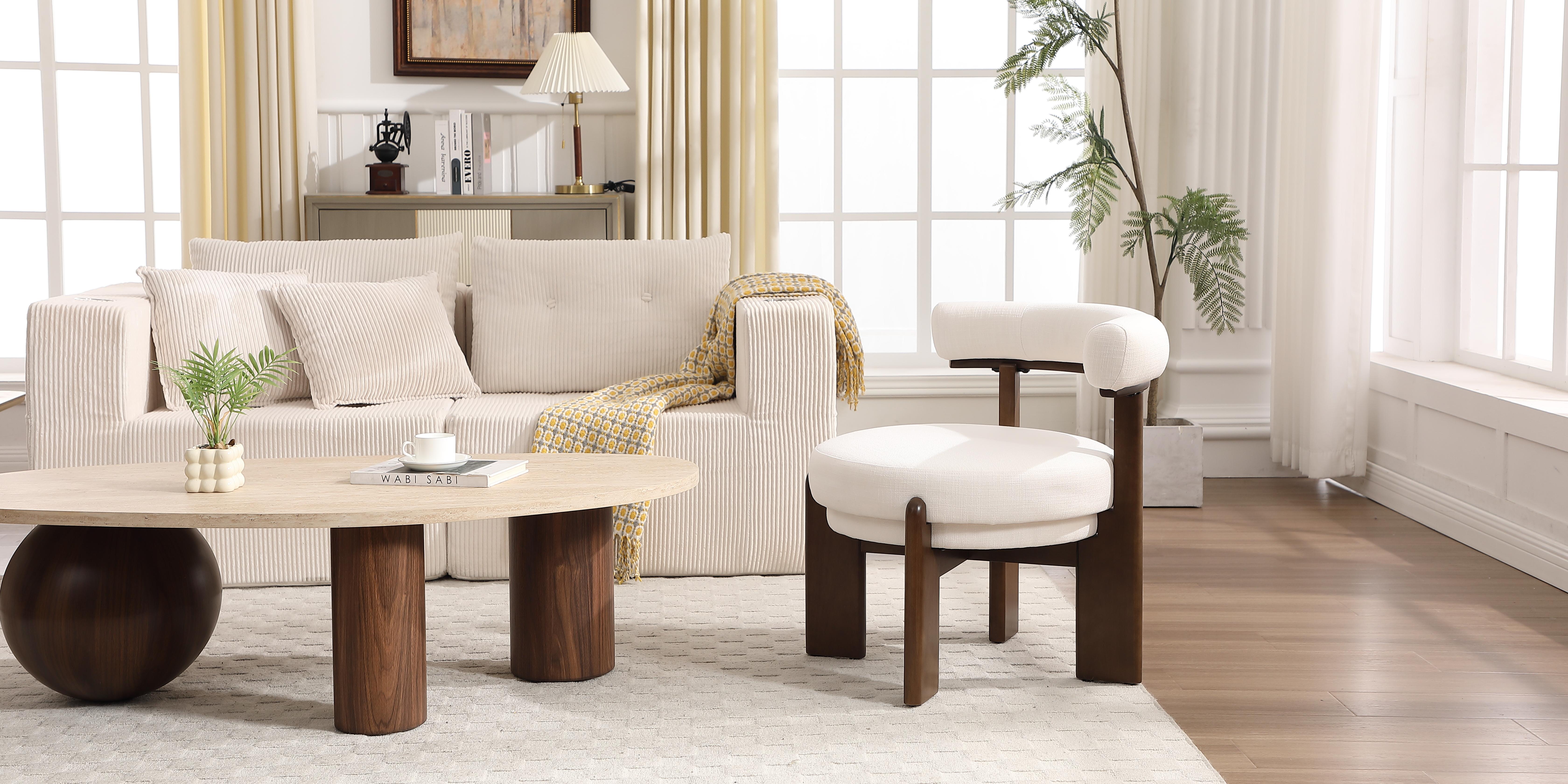
Explore Dayalane Accent Chairs for Smaller Rooms
Dayalane offers accent and lounge seating in a range of modern forms, including pieces such as the Charles Lounge Armchair, London PU Leather Lounge Chair, and Tucker Accent Chair.
When exploring Dayalane accent chairs, compare each product's dimensions, seat shape, materials, and features rather than choosing by appearance alone. Some shoppers may prefer a compact chair for a reading nook, while others may want a more relaxed lounge chair for conversation or everyday rest.
This approach is especially useful for apartment and condo shoppers, where fitting stylish furniture into limited space is a common concern. Dayalane's broader positioning also emphasizes modern furniture for real homes and smaller-space lifestyles.
Don't Sacrifice Comfort Just to Save Space
A smaller chair should still be comfortable.
Look at the seat width and depth, back shape, arm position, and cushioning. A chair that is slightly larger but properly proportioned may be more useful than a tiny chair you never want to sit in.
Consider who will use the chair most often. A decorative chair used occasionally has different requirements from a seat used every evening for tea, reading, or talking with friends.
The best chair should provide a comfortable place to rest while still working with the scale of the room.
Make Your Accent Chair Work Harder
Furniture in a small living room should earn its place.
A good accent chair can create extra seating, establish a reading nook, support conversation, add texture, and make an empty corner feel finished. It may even move between the living room and bedroom when your needs change.
That kind of versatility is especially valuable in a small apartment.
Ultimately, the best accent chair for a small living room balances dimensions, comfort, style, materials, and everyday function. Choose a chair with a light visual footprint, leave enough room around it, and pay attention to how its shape complements the rest of your decor.
The right chair will not just fit the space. It can enhance the way the room works and elevate the overall look without overwhelming it.