


Choosing between wood vs metal bar stools sounds like a style decision, but the material affects much more than appearance. It changes how the stools feel in the room, how easy they are to clean, how much visual space they occupy, and how they age after years of daily use.
For a warm kitchen filled with natural finishes, wood bar stools often feel at home immediately. Metal bar stools, meanwhile, tend to have a slimmer profile that works especially well in modern kitchens, apartments, and busy spaces.
Neither material is automatically better. The right choice depends on your kitchen, your everyday habits, and how you actually use your bar stools.
Wood vs. Metal Bar Stools: The Quick Answer
Choose wood if you want warmth, natural character, and a stool that can become richer-looking as it ages. Choose metal if you prefer a cleaner silhouette, lower maintenance, and a frame that can handle plenty of everyday traffic.
And don't forget that you don't have to pick one material exclusively. Some of the most practical counter stools combine a metal frame with an upholstered or wood seat, giving you strength without sacrificing comfort.
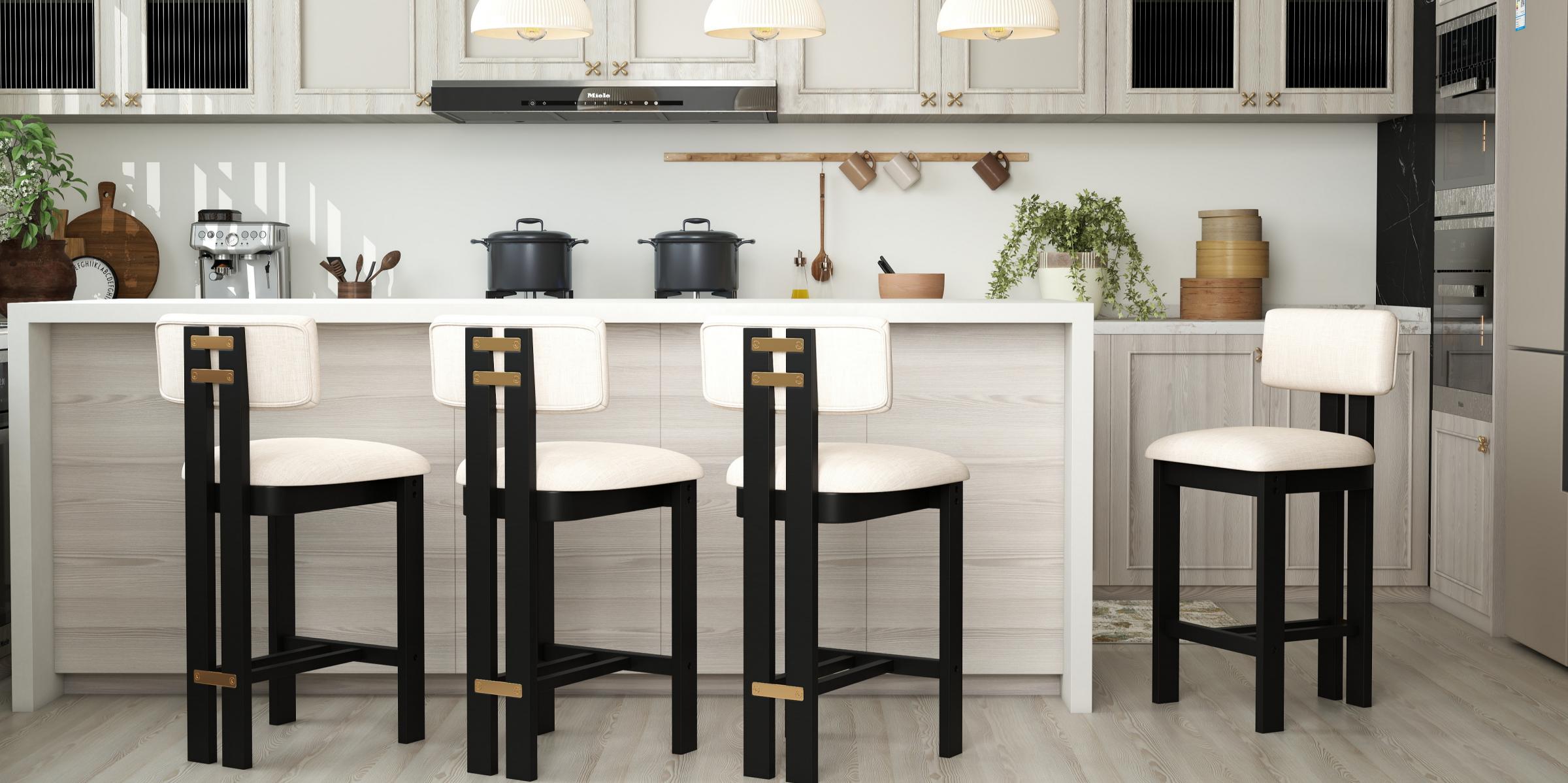
Why Choose Wood Bar Stools?
Wood has an easy warmth that can be difficult to recreate with other materials. It works naturally with wood floors, stone countertops, painted cabinetry, and kitchens that lean traditional, transitional, farmhouse, or mid-century modern.
Oak, beech, rubberwood, and walnut-toned finishes can all bring different levels of character to a room. Over time, solid wood may develop a subtle patina, which is part of the appeal for people who prefer furniture that looks lived-in rather than perfectly uniform.
Another advantage is repairability. Depending on the finish, scratches or worn areas on some wood stools can be sanded, touched up, stained, or refinished instead of requiring the entire stool to be replaced.
Dayalane's Walter 26.5" Cane Counter Stool, for example, uses a solid wood frame with a natural cane back, removable upholstered cushion, and curved footrest. Its open weave keeps the overall form visually lighter while the wood adds warmth—useful if you want natural materials without a bulky silhouette. The stool is rated to support up to 300 pounds.
The Perch 26.5" Counter Stool takes a similar wood-first approach with a solid rubberwood frame, gently curved backrest, and metal footrest. It is offered with linen or faux leather upholstery, so you can pair the warmth of wood with a softer seat surface.
Where Wood Requires More Care
Wood is durable, but it isn't completely carefree.
Repeated moisture can damage some finishes, while sharp objects or heavy impacts can create scratches and dents. Joints may also need attention after years of heavy use, depending on the stool's construction.
Maintenance varies by finish, so follow the manufacturer's care instructions rather than assuming every wood stool needs the same treatment. Some oiled finishes may benefit from occasional reconditioning, while sealed surfaces may require little more than gentle cleaning.
That small amount of upkeep can be worthwhile if you prefer the natural feel and character of solid wood.
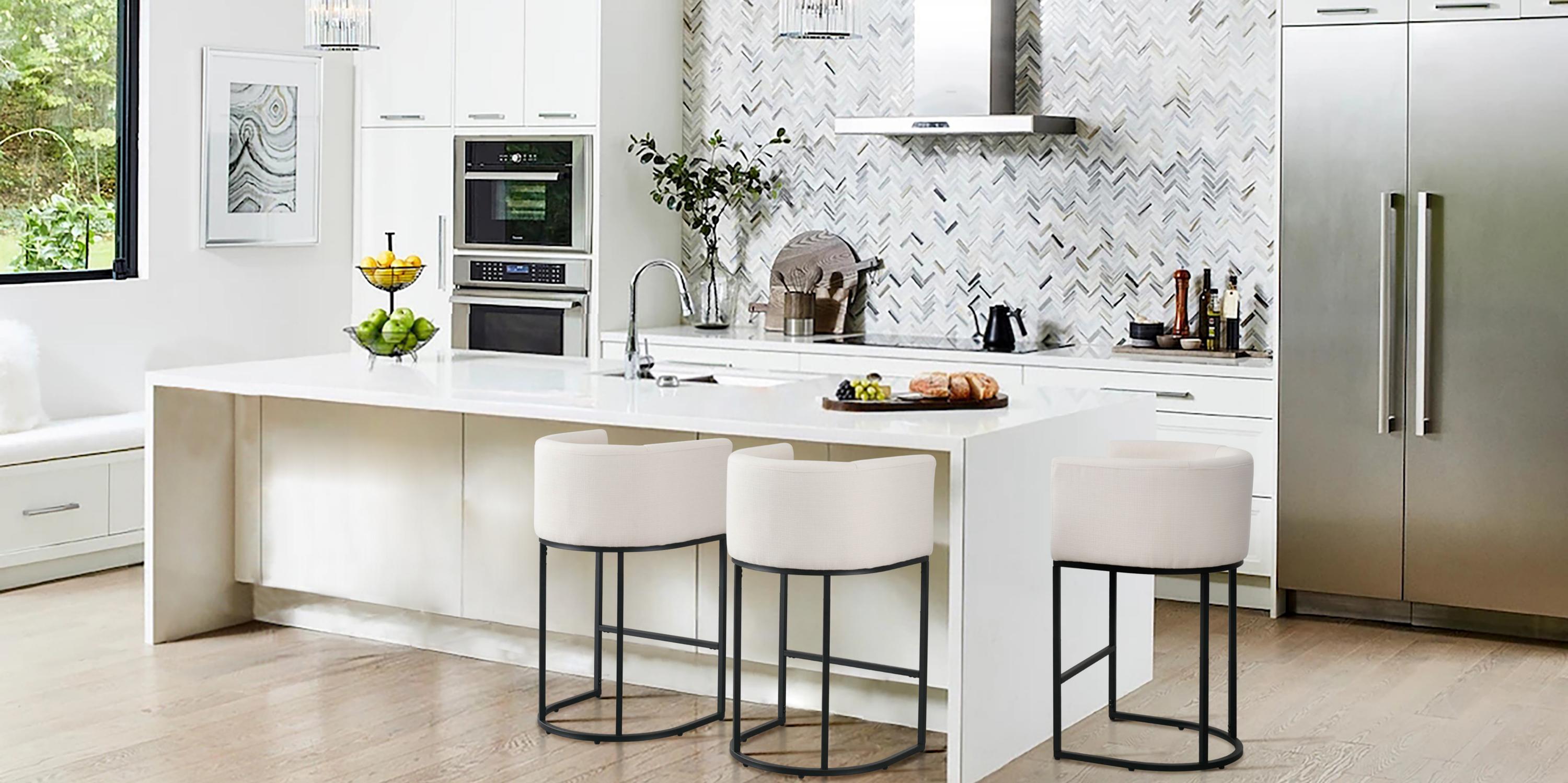
Why Choose Metal Bar Stools?
Metal tends to make visual sense when the kitchen has a more modern, contemporary, or industrial direction.
Slim metal legs take up relatively little visual space, making metal stools particularly useful around a narrow kitchen island. Black, silver, brass-toned, and other finishes can also complement stone, glass, and modern cabinetry without adding too much visual weight.
Metal is also straightforward to maintain. A powder-coated steel or iron surface can usually handle normal household spills with simple cleaning, and unlike wood, metal won't crack or warp because of changes in humidity.
Dayalane's Cameo 25.5" Counter Stools use a clean metal frame with an integrated footrest and a curved upholstered shell. The stool combines a 2.5-inch foam cushion, faux leather surface, and padded 19-inch backrest with a 300-pound weight capacity. It's a good example of how a metal structure can still feel soft and comfortable rather than purely industrial.
The Vintle Bar & Counter Stool offers another interpretation, pairing a tubular metal frame with a padded seat, curved back, integrated arms, and upholstery choices including linen, velvet, and leather-look options. Different frame finishes make it easier to coordinate the stool with the rest of the kitchen.
Is Metal More Durable Than Wood?
Both materials can offer excellent longevity when properly constructed and cared for. A well-made wood or steel stool can remain useful far beyond ten years, while a poorly made version of either material can develop problems much sooner.
Metal is highly resistant to cracking and warping and often works well in high-traffic kitchens. Powder-coated finishes also make everyday cleaning a breeze. However, lower-quality or damaged metal finishes can become vulnerable to rust when exposed repeatedly to moisture.
Wood can scratch or dent, but it has one important advantage: many finishes can be repaired or refinished. Solid oak, for example, is naturally tough and can be refreshed instead of discarded when the surface begins to show its age.
In practice, don't choose by frame material alone. Look at joint quality, frame stability, floor glides, the footrest, and how well the stool is assembled.
Which Material Is More Comfortable?
The answer is usually neither.
Comfort depends more on the seat shape, depth, padding, backrest, and footrest than on whether the legs are made from wood or steel.
A hard metal seat may feel cool in winter, while wood tends to adapt more naturally to room temperature. But a shaped wooden seat can be surprisingly comfortable, and a metal-frame stool with a thick upholstered cushion may be better for long periods of sitting than either.
A typical stool seat depth often falls around 15–17 inches, although exact dimensions vary by design. If you use the island for complete meals or working from home, pay particular attention to seat depth, padded seats, back support, and where your feet naturally rest.
Dayalane's Hugo 27.5" Counter Stool, for example, pairs an FSC-certified wood frame with a substantial 5.5-inch upholstered cushion, supportive arms, and an integrated footrest. It's a useful reminder that frame material and sitting comfort are separate decisions.
What About Hybrid Bar Stools?
For many homes, the best answer to wood vs metal bar stools is actually both.
A hybrid stool can use a metal under-frame for strength while adding wood accents or an upholstered seat for warmth and comfort. These designs are particularly useful when your kitchen mixes materials already—perhaps wood cabinetry with stone counters and black hardware.
Dayalane's current bar and counter height stools include solid wood, cane, rattan, upholstered, and metal-frame designs, along with models combining several of those materials.
That gives you more freedom to bridge different finishes instead of trying to make every piece in the room match perfectly.
Which Bar Stool Should You Choose?
Start with the room rather than the stool.
If your kitchen needs more warmth, or you already have natural wood, oak, or walnut finishes, a wood frame can create an inviting and cohesive look. If the room is narrow, minimal, or contemporary, a slim metal frame may help the seating feel less heavy.
Then consider real life. Do kids use the island every day? Do you deal with frequent spills? Will people sit there for five minutes or an hour? Do you want a backless seat that can tuck away, or a stool with a supportive back and arms?
Finally, check the height. A beautiful stool still won't be the perfect choice if it doesn't fit your counter.
Both wood and metal can make excellent bar stools. The better material is simply the one that fits your space, complements your style, and handles the way you live every day.