


Picture this: dinner is over, but everyone is still around the table, talking and enjoying another glass of wine. Some guests are perfectly comfortable, while others are already shifting in their seats.
That's when the choice between upholstered and wooden dining chairs really matters.
When comparing upholstered vs wood dining chairs, there's no single winner. Upholstered dining chairs offer soft cushioning and a welcoming feel, while wooden chairs are generally easier to clean and bring timeless warmth to a dining room.
The better choice depends on your household, dining habits, and personal style.
Upholstered vs Wooden Dining Chairs: A Quick Comparison
|
Feature |
Upholstered Dining Chairs |
Wooden Dining Chairs |
|---|---|---|
|
Comfort |
Soft, cushioned seating |
Firmer seating surface |
|
Cleaning |
Depends on upholstery material |
Usually easier to wipe clean |
|
Durability |
Fabric and padding may wear |
Quality wood can last decades |
|
Style |
Soft textures and rich colors |
Natural, timeless appearance |
|
Best For |
Long dinners and cozy dining spaces |
Busy households and everyday meals |
Both styles can work beautifully. The key is understanding what each chair offers.
1. Comfort: Which Feels Better During Long Meals?
Let's start with the comfort question.
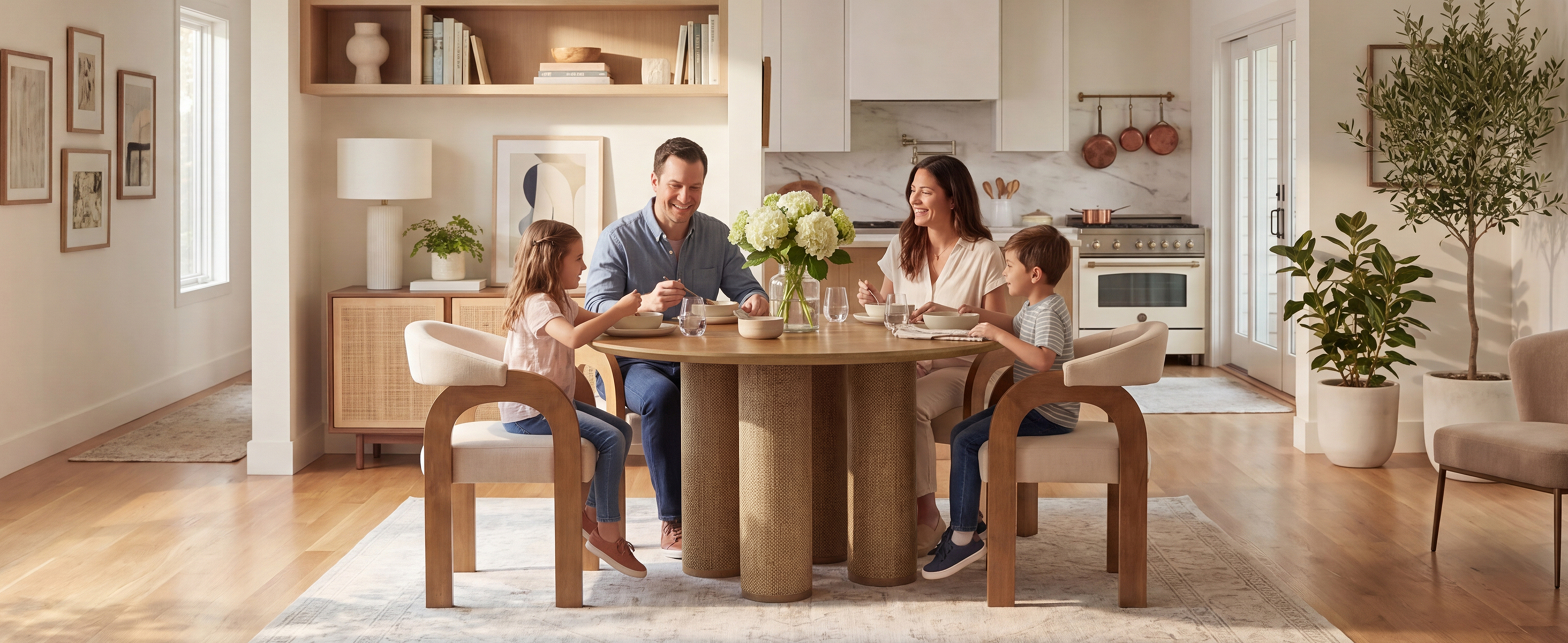
Upholstered dining chairs feature padding materials that cushion the body, making them appealing for long meals and relaxed gatherings.
A padded seat helps reduce direct pressure against a hard surface, while an upholstered backrest can provide a softer place to rest.
The Dayalane Codie Upholstered Dining Chairs, for example, feature a 4.25-inch seat cushion, linen upholstery, and a gently curved backrest.
For people who enjoy long dinners with family and guests, that combination is worth considering.
Wooden dining chairs offer a firmer experience. Some people prefer that feeling, especially when the seat and back are properly shaped.
However, during a two- or three-hour dinner, a hard wooden seat may feel less forgiving than quality cushioning.
The important thing is fit. Even a deeply padded chair can become uncomfortable if its seat height, width, or backrest doesn't suit your body.
2. Cleaning and Maintenance: Which Is More Practical?
For busy households with children or pets, cleaning is often the deciding factor.
Wooden chairs usually have an advantage here. On a properly finished wood surface, everyday crumbs and minor spills can often be removed with a soft, slightly damp cloth.
Upholstered chairs require more attention.
Imagine someone accidentally spills red wine during dinner. Fabric chairs may absorb stains or odors, particularly when the material isn't treated for moisture resistance.
Performance fabric can make maintenance easier, especially when it has verified stain-resistant or water-repellent properties.
Leather upholstery and faux leather are other practical options, although care instructions differ by material.
Regularly vacuum fabric upholstery to remove crumbs and dust. Always check the manufacturer's cleaning code before treating stains.
If your dining table sees daily use by kids, pets, and guests, choose upholstery that matches your cleaning routine rather than relying on appearance alone.
3. Durability: Which Dining Chairs Last Longer?
Well-made solid wood dining chairs can remain useful for decades with proper care.
Their durability depends on the wood species, frame construction, joinery, finish, and how the chairs are used.
Scratches on suitable solid wood finishes can sometimes be repaired through sanding, refinishing, or oiling.
Upholstered chairs have additional components to consider, including fabric, cushioning, seams, and padding.
Over time, fabric wears, cushions can lose their shape, and upholstery may need replacing.
You'll sometimes see estimates suggesting wooden chairs last 20 years or more, while upholstered chairs need recovering after five to ten years. Actual lifespans vary considerably with material quality, construction, and daily use.
A durable wood frame with replaceable upholstery may offer excellent long-term value.
Before making a purchase, look closely at the chair's construction rather than assuming either material is automatically more durable.
4. Style: How Do They Change Your Dining Room?
Beyond comfort and durability, dining chairs influence the entire room.
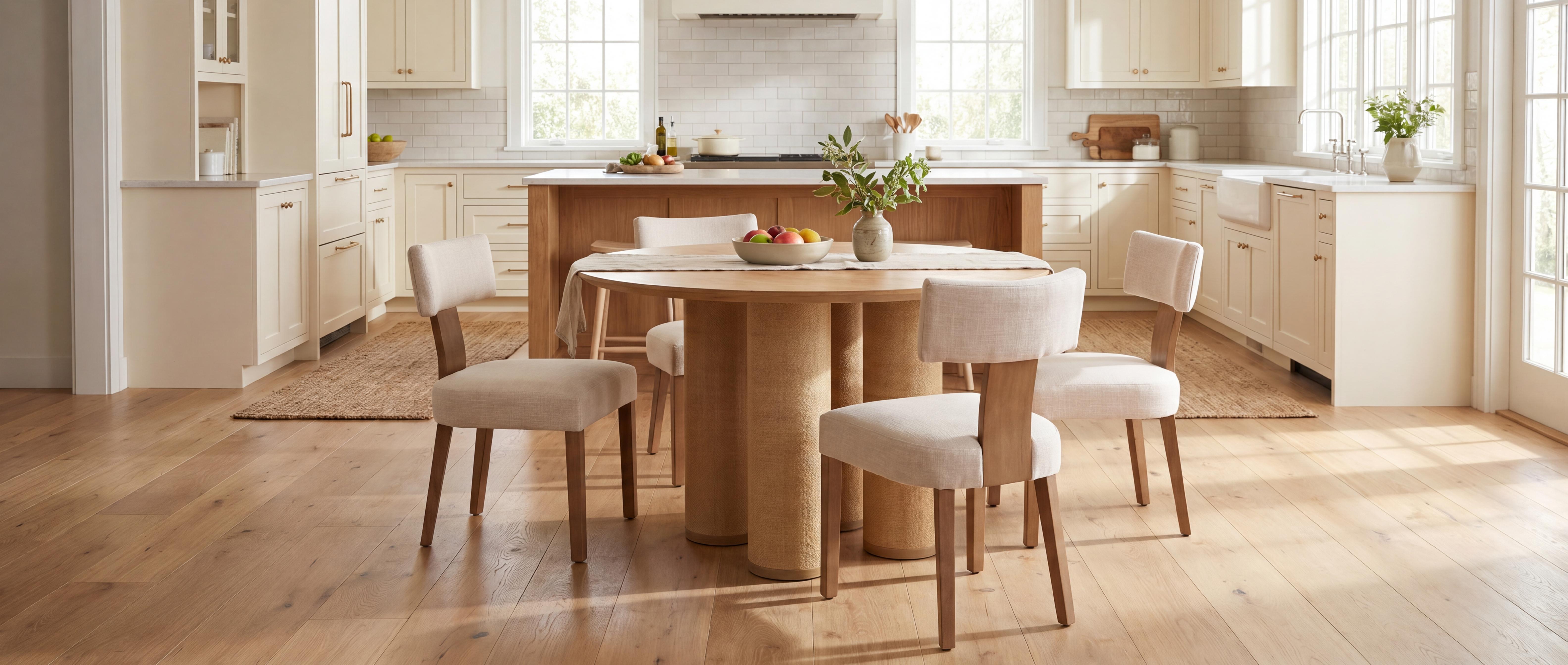
Wooden dining chairs bring natural warmth, visible grain, and a classic character that works with modern, traditional, and casual interiors.
Oak and walnut finishes pair beautifully with stone, glass, and wooden dining tables.
Upholstered chairs introduce softness, color, and texture. Linen creates a relaxed aesthetic, while velvet and leather can give a dining space a more formal appearance.
There's also the question of visual weight.
Fully upholstered chairs can feel substantial, particularly in a small room. Open wooden frames often create a lighter, less crowded impression.
If you prefer contemporary furniture with natural details, combining wood and fabric can deliver the best of both styles.
5. Price: Which Offers Better Value?
Upholstered dining chairs can cost more than simple wooden chairs because of their cushioning, fabric, and additional construction work.
However, there isn't a reliable rule that upholstered chairs always cost 30–50% more. Price varies with materials, brand, design, and manufacturing quality.
Think about cost over time, too.
A solid wood chair may be easier to refinish, while an upholstered chair might eventually need new fabric or padding.
When comparing prices, check whether the product is sold individually or as a set of two.
For most people, the best value comes from choosing durable seating that suits how often they use their dining room.
6. Can You Combine Wood and Upholstered Dining Chairs?
Absolutely. In fact, mixed-material seating is one of the most versatile options for a modern dining space.
The Dayalane Griid Upholstered Dining Chairs combine a solid wood frame, sculpted wooden backrest, and padded fabric seat.
They offer a practical middle ground between traditional wooden chairs and fully upholstered designs.
For a softer, contemporary look, the Dayalane Dove Upholstered Dining Chair features a cushioned seat, wraparound backrest, and integrated arms.
Prefer something with a more natural, open texture? The Dayalane Barnett Wood Dining Chairs feature woven cord seating and wooden design details rather than conventional fabric upholstery.
You can also mix upholstered chairs at the ends of a dining table with simpler wooden chairs along the sides.
This creates a deliberate design statement without making every seat match.
Which Dining Chairs Should You Choose?
If you regularly host long dinners, prefer softer seating, or want to add texture to your room, upholstered dining chairs may be the better option.
If easy cleaning, minimal maintenance, and a classic wood aesthetic matter more, wooden dining chairs deserve a closer look.
For households that want both comfort and practicality, a wooden frame paired with an upholstered seat can be an excellent compromise.
Before you decide, measure your space, compare construction details, and imagine how the chairs will work during daily use.
Ready to refresh your dining room? Explore Dayalane's Dining Chairs Collection to shop upholstered, wood-frame, and woven designs that bring comfort and style to everyday dining.