


Finding the right round dining table for small space living can make a surprisingly big difference. In an apartment, breakfast nook, or compact dining room, the wrong table can make the entire area feel crowded. The right one, however, can create more breathing space, improve movement, and still give you a comfortable place for everyday meals.
So, are round dining tables better for small spaces?
In many cases, yes. A round dining table has no sharp corners, can improve traffic flow, and often feels less visually heavy than a rectangular dining table. A round dining setup also naturally encourages conversation, making it especially appealing for couples, small families, and people who enjoy having a few friends over.
The key is choosing the right size, base, and chair style for your room.
-0.png?w=2528&h=1264)
Why Does a Round Dining Table Work So Well in Small Spaces?
One of the biggest advantages of a round dining table for small space layouts is the lack of corners.
In small spaces, every corner affects how easily you can move around the table. A rectangular dining table may fit on paper but still leave awkward points sticking into a walkway. With a round dining table, the curved edge creates a softer path around the furniture.
That makes a round dining arrangement particularly useful in apartments, open kitchens, breakfast areas, and square dining rooms.
A curved table can also make a compact room feel more relaxed. Instead of filling the area with straight lines and hard edges, a round shape introduces a soft visual element. It is a simple change, but it can make the overall space feel less crowded.
And because everyone sits around the same center point, round dining naturally supports easier conversation. There is no “head of the table,” which can create a more casual and cozy atmosphere for everyday meals.
What Size Round Dining Table Is Ideal for a Small Space?
Size matters just as much as shape.
For particularly small spaces, a 31.5-inch round dining table can be an ideal starting point. It provides a useful dining surface without taking over the entire room.
As a general guide:
-
A 31.5-inch round dining table works well in very compact dining areas.
-
A 36- to 42-inch round dining table can usually seat around 2 to 4 people comfortably.
-
Larger round dining tables can often accommodate 4 to 6 people, depending on chair width and overall table diameter.
When choosing a round dining table for small space use, think about your normal routine rather than your largest possible dinner party.
If two people use the table every day, buying a large six-person dining table may unnecessarily reduce your available space.
Dayalane, for example, carries compact round dining options such as the Clark 39" Round Dining Table as well as larger designs for homes that need more seating. This variety makes it easier to choose a piece based on your actual dining area rather than simply buying the largest table that will technically fit.
A Pedestal Base Can Give You More Usable Space
The base of the table is easy to overlook, but it matters a lot in small spaces.
A traditional four-leg dining table places a leg near each corner or seating position. That can limit where chairs fit and sometimes gets in the way of your legs.
A pedestal base moves much of that structure toward the center of the table.
For a compact round dining table, a pedestal base can provide additional leg room and more flexible chair placement. It also makes it easier to shift chairs slightly when another guest joins the conversation.
This is one reason a round dining table with a pedestal base can be such a practical option for apartments and breakfast nooks.
For an even cleaner layout, pair the table with armless or slim-profile chairs. Chairs that slide fully underneath the table help preserve walking space when nobody is seated.
How Much Space Should You Leave Around a Round Dining Table?
Even the perfect round dining table for small space living needs enough clearance around it.
Try to leave about 30 to 36 inches between the edge of the dining table and a wall, cabinet, sofa, or other furniture whenever possible. This gives people enough space to pull out a chair and move around the room.
Before buying, try this quick measuring trick: mark the diameter of the table on the floor with painter's tape.
Then place your current dining chairs around the outline.
Walk around it. Pull a chair back. Imagine carrying plates through the space.
This quick test can tell you far more about whether a table works than looking at dimensions alone.
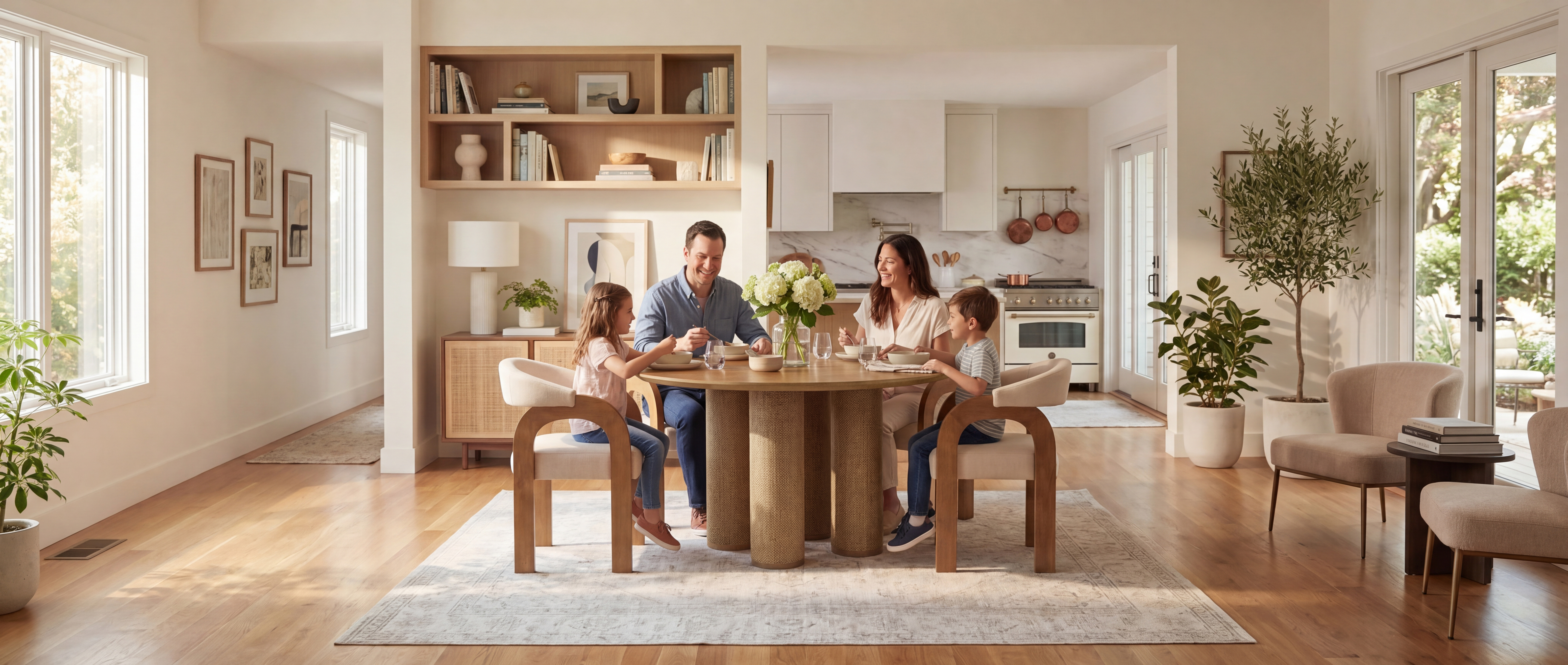
Small Dining Room Ideas That Make a Round Table Feel Even Better
The style of your furniture can also influence how open the room feels.
For small spaces, consider a round dining table with a relatively slim profile. A table with a lighter visual weight can make the dining area feel more open than a very thick or bulky design.
Light-colored wood, cream finishes, and glass surfaces can also help reflect light or maintain longer sight lines throughout the space.
That does not mean a small dining room has to be boring.
A sculptural round dining table can become a bold statement without taking up as much visual space as an oversized rectangular table. A distinctive pedestal or natural wood finish can add personality and elegance while keeping the rest of the furniture simple.
If you prefer a stronger style, a dark round dining table can make a bold statement too. Pair it with lighter chairs, a soft rug, or neutral walls to maintain visual balance.
These ideas work especially well when you want the dining area to feel intentional rather than simply small.
Are Extendable Round Dining Tables Good for Small Spaces?
They can be.
An extendable round dining table gives you a compact everyday setup with the option to create additional space for guests. Some extendable designs can grow from around 43.3 inches to 59 inches.
That flexibility is useful if you normally seat two to four people but occasionally host a larger group.
Just remember to measure the fully extended table, not only its everyday size.
An extendable round dining design may look perfect while closed but become difficult to walk around when extended. Make sure your room has enough clearance in both configurations.
Round Dining Table vs. Rectangular Table for Small Spaces
A rectangular dining table can still work well in a long, narrow room. But in square rooms and awkward layouts, a round dining table is often easier to position.
A round dining layout generally offers smoother circulation because there are no corners projecting into the walking area.
It can also feel more social. Everyone faces inward, which makes meals and casual gatherings feel connected.
For many apartments and smaller homes, that combination of usable space, visual softness, and easy conversation makes a round dining table for small space living a strong choice.
Final Thoughts: Is a Round Dining Table Right for Your Small Space?
For many small spaces, a round dining table is one of the most practical choices you can make.
It can improve traffic flow, create a cozy round dining atmosphere, make chair placement more flexible, and bring style and elegance to a compact dining room.
Look for a size that suits the number of people you actually seat, consider a pedestal base for additional leg room, and leave enough space around the table for comfortable movement.
The goal is not simply to find the smallest dining table in stock. It is to choose a piece that feels natural in your home.
A thoughtfully chosen round dining table for small space living should make the area feel easier to use, not tighter. When the proportions are right, even a modest dining corner can become the perfect place for breakfast, dinner, and long conversation.
For more round dining and small-space decorating ideas, you can also subscribe to Dayalane for inspiration on creating a comfortable, stylish home.