


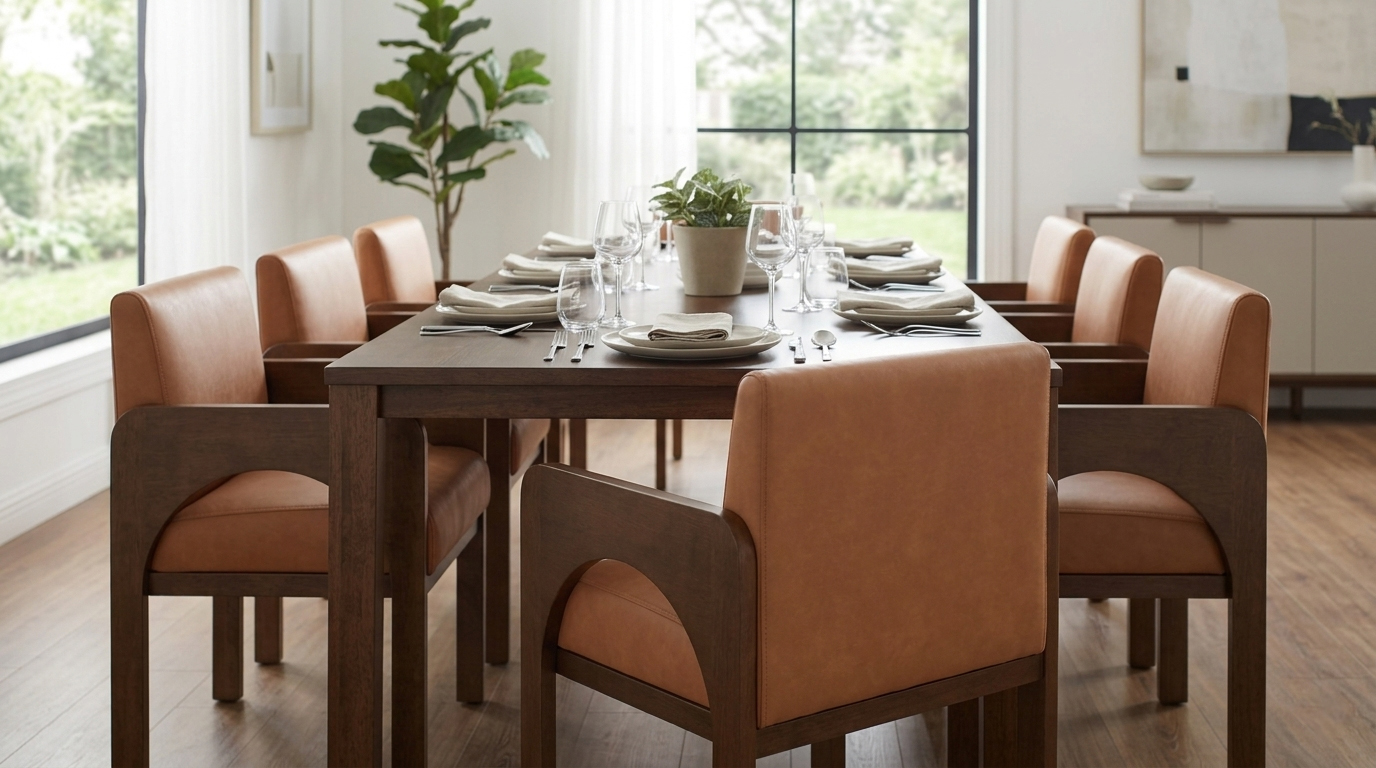
 Getting the leather dining chairs dining table match right can completely change how your home feels. The best pairings do more than look good in a photo. They make the dining room feel balanced, comfortable, and easy to live in. They help the dining space feel intentional without becoming too matchy matchy, and they make everyday meals feel just a little more elevated.
A lot of people assume matching is simple: pick a dining table, add dining chairs, and the room is done. In reality, there is more to it. The shape of the table, the finish, the chair height, the chair width, the frame, the upholstery, and even the surrounding furniture all play a part. The goal is not to make everything identical. The goal is to create a room where both the table and chairs feel like they belong together.
If you are choosing leather dining room chairs and want them to work beautifully with your table, here is what actually matters.
Start with the overall style of the room
Before looking at materials or measurements, step back and look at the whole room. Is your dining area more modern, rustic, classic, or relaxed? Does your kitchen and dining room flow together in one open plan, or does the dining room feel like a separate zone? The best dining table chairs usually feel connected to the overall theme of the home, not just the table alone.
In a modern home, clean-lined leather chairs with slim frames or metal legs often work well. In a warmer, more traditional interior, leather chairs with softer upholstery, wood details, or a more classic feel may make more sense. If your home has a lot of mixed finishes already, it can be a nice way to let the chairs bring in a new tone or texture without making the room feel random.
This is where good matching begins. It is not only about choosing chairs that physically fit. It is about choosing something that reflects the mood you want the room to have.
Do not aim for a perfect set
One of the biggest mistakes people make is assuming that good design means everything should be the same material, the same color, and the same shape. In most homes, that can feel flat. It can also make the room look too staged.
A better approach is to let the chairs complement the table rather than copy it exactly. If both the table and chairs are oak, for example, the room may start to feel too uniform. But if you mix a warm wood table with leather chairs that have black or bronze frames, you add contrast and visual interest. That little bit of difference helps the room stand out in a more natural way.
The goal is balance. You want enough connection that the chairs and table feel related, but enough variation that the space feels layered and alive.
Match the table shape first
The shape of your dining table is one of the first things that should guide your choice of chairs.
Round tables
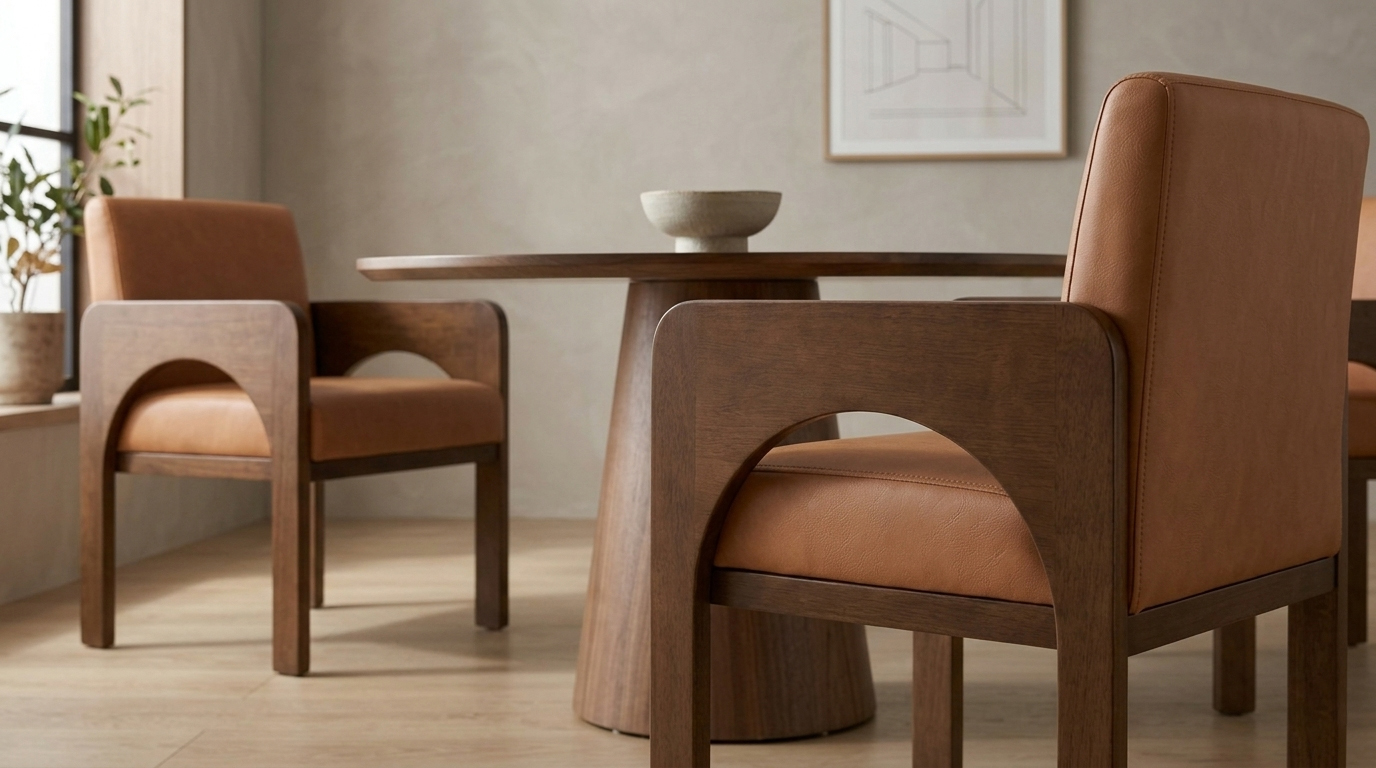
Round tables often work best with chairs that have a softer profile. Curved backs, rounded seats, or slimmer silhouettes can make a round table feel more harmonious. Because a round table already softens the room, leather chairs with gentle lines can help keep that easy, social feeling.
This is also a good setup for smaller spaces. A round table paired with slimmer leather chairs can make a compact dining space feel less crowded. If the room is tight, look for chairs that can slide easily under the table and do not take up too much visual space.
Rectangular tables
Rectangular tables can handle more structure. They pair well with both classic and modern leather chairs, depending on the finish and surrounding decor. A long table often looks great with a slightly more architectural chair shape because the straight lines echo the table shape.
If your rectangular table is large, you can even mix in chairs with arms at the ends. That is a smart way to add a little variation without changing the whole setup.
Pay attention to table size, chair height, and chair width
A beautiful pairing can still fail if the proportions are off. This is where table size, chair height, and chair width matter.
If the chairs are too wide, the room feels cramped and people have trouble moving around. If the seats are too high, the chairs will not fit comfortably under the table. If they are too low, the whole setup feels awkward. These details matter just as much as style.
As a rule, chairs should tuck neatly under the table and leave enough room for comfortable seating. In smaller spaces, this becomes even more important. Slender profiles and slender chairs often work better because they leave more visible floor and make the room feel more open.
A good dining room should feel easy to use, not like a puzzle every time someone pulls out a chair.
Use materials to create harmony
One of the easiest ways to match leather chairs with a table is to think in terms of materials. This does not mean every material has to repeat exactly. It means the materials should make sense together.
Wood tables
A wood table is usually the easiest option because leather and wood naturally work well together. The warmth of leather adds depth, while wood keeps the room grounded. If your table has a darker finish, lighter leather can break up the heaviness. If your table has a pale or natural finish, darker leather can add richness.
The key is to look at the table finishes and decide whether you want the chairs to blend in or provide a little contrast.
Glass dining table
A glass dining table often benefits from leather chairs because leather adds warmth and substance. Glass can feel visually light, even a little cold, so leather helps make the room feel more inviting. In this setup, chairs with clean chair designs and subtle frames often work best, because they keep the look airy.
Metal table
A metal table or table with metal details usually pairs well with leather chairs that include some metal in the base or frame. This helps the materials speak to each other. The result often feels modern, sharp, and a little more urban. It is a good option if you want a cleaner, more industrial edge.
Mix materials, but with purpose
Using different materials is often what makes a room feel interesting. Leather does not have to match the table exactly to work. In fact, some of the best dining rooms mix leather, wood, glass, metal, and soft textiles in a way that feels thoughtful rather than forced.
For example, a walnut table with black leather chairs and a woven rug underneath can feel more complete than a fully matched wood set. A glass table with tan leather chairs and brushed metal lighting can feel both light and warm. A dark wood table with cream leather chairs can elevate the whole room while still feeling relaxed.
This is where design elements come in. The best rooms balance hard and soft, light and dark, smooth and textured. Leather helps bridge those contrasts beautifully.
Think about the chair frame and legs
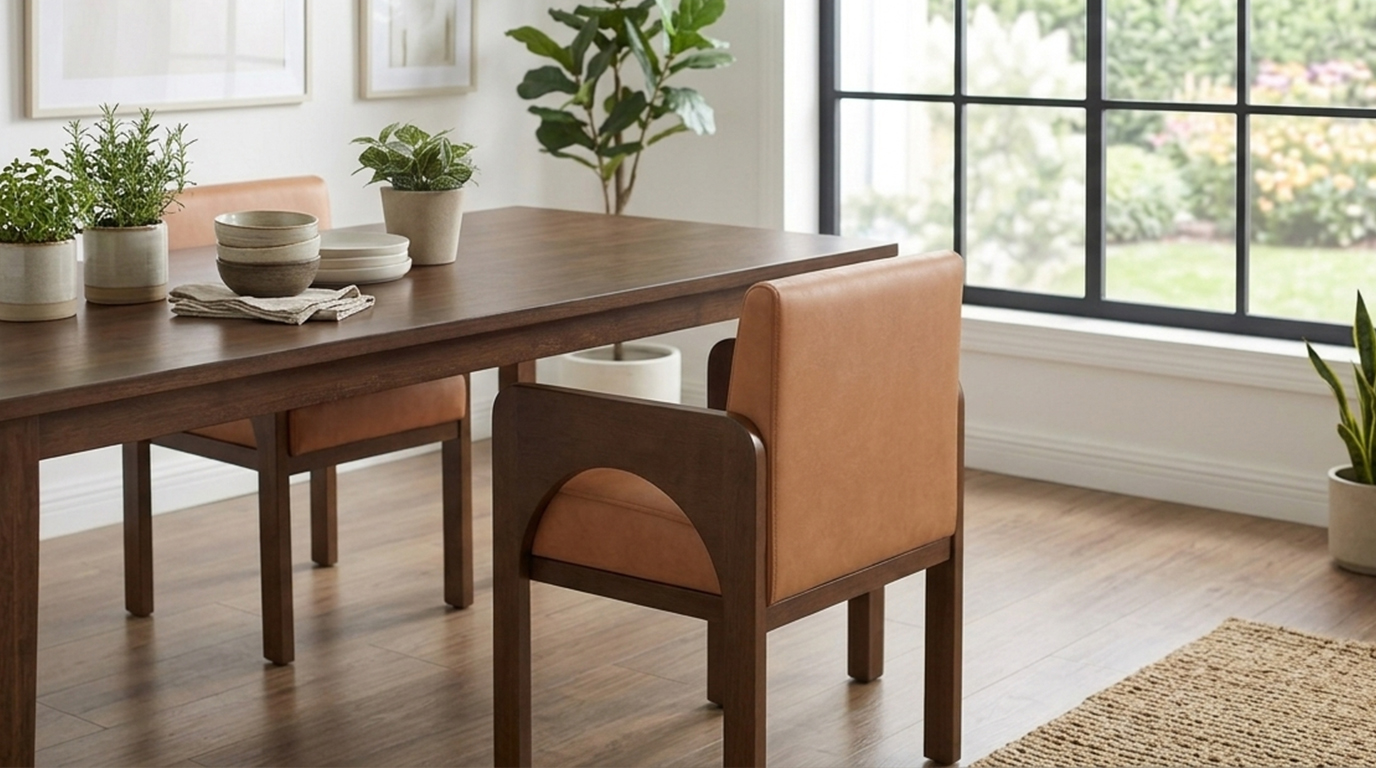
When people focus only on the seat color, they often miss one of the most important details: the chair base. The legs and frames of leather chairs influence how well they pair with the table.
If your table has a heavy wood base, chairs with lighter metal legs can help add visual contrast. If your table has a more delicate silhouette, bulky chairs may overpower it. A clean table often looks better with slimmer chair frames, while a rustic table can handle something more substantial.
This is especially useful if you have already decided on a table and are trying to find the right chair later. Look at the base, not just the top. Good matching happens from the floor up, not only from the tabletop down.
Use upholstery to soften the room
Leather upholstery changes the feel of a dining room in a way that plain hard seating cannot. It brings warmth, texture, and a sense of comfort. That is why leather dining room chairs often work so well in family homes. They can look refined, but they still feel approachable enough for everyday family life, meals with friends, or long conversations after dinner.
If your table is very structured or your room already has strong lines, leather can soften the look. If the room feels too plain, leather can add richness. If the room already has a lot of visual activity, simpler leather chairs can calm it down.
This is also where small details make a difference. Stitching, seat shape, back shape, and subtle cushions can shift the look from formal to relaxed without changing the overall material.
Match the chairs to how you actually live
A dining room should not only look good when decorated. It should also work for real life. Think about how your home functions day to day.
Do you host a lot of family meals? Do friends gather around the table often? Is the dining room next to the kitchen and dining room in an open space where everything is visible at once? Do you need chairs that can slide easily out of the way? Are you decorating for daily use, or are you trying to create a more dressed-up room?
The answers shape the best match. A home with children may need smoother leather and simple frames. A formal dining room might handle more sculptural chair designs. A smaller apartment may need narrower silhouettes. A large open-plan home may benefit from chairs that visually tie the dining zone to the rest of the space.
The right match is not only aesthetic. It is practical too.
A few easy pairing ideas
If you want quick ideas, these pairings usually work well:
A medium-tone wood table with black leather chairs feels timeless and grounded.
A glass dining table with camel leather chairs feels lighter and more modern.
A dark metal table with warm brown leather chairs adds contrast and sophistication.
A rustic wood table with slim black leather chairs is a good way to mix modern and classic.
A pale oak table with leather chairs in earthy tones can make the dining area feel softer and more organic.
These are not rules, but they are a helpful place to start when you shop.
Final thoughts
Matching leather chairs to your dining table is less about making everything identical and more about making everything work together. The best leather dining chairs dining table match comes from looking at shape, scale, material, and the feeling you want in the room. Think about table size, chair height, chair width, table finishes, and how the whole dining room connects to the rest of your home.
Good matching should feel natural. It should make the room feel warm, balanced, and easy to use. Whether you are pairing leather chairs with wood, a glass dining table, or a metal table, the best result is usually the one that feels thoughtful rather than overly perfect.
When both the table and chairs support each other, the whole room looks better. And more importantly, it feels better too.