


Shopping for a dining table sounds simple until you start comparing materials. One table is labeled solid wood, another uses engineered wood, and both look beautiful in the photos. So, does the material really make that much difference?
When comparing an engineered wood vs solid wood dining table, there's no single winner. Solid wood offers natural beauty and long-term repairability, while engineered wood provides a more budget friendly option with plenty of modern design possibilities.
The right choice depends on your budget, lifestyle, and how you plan to use your dining room.
What's the Difference Between Solid Wood and Engineered Wood?
Solid wood comes directly from natural timber, rather than being manufactured from bonded wood fibers or particles. Popular choices include oak, walnut, and teak, each with unique grain patterns and natural color variations.
Every piece of solid wood furniture has its own character. Knots, subtle color differences, and changing grain patterns give it a warmth that's difficult to replicate.
Engineered wood, on the other hand, is made by combining wood fibers, particles, or thin wood layers with adhesives.
Common engineered wood products include:
-
MDF (medium density fibreboard): Made from compressed wood fibers, creating smooth, uniform flat surfaces.
-
Particle board: Manufactured from wood chips and particles bonded together, often used for affordable furniture.
-
Plywood: Built from thin wood layers arranged in alternating grain directions for strength and stability.
Some engineered wood dining tables also feature a real wood veneer, giving the tabletop an authentic wood grain appearance without using solid timber throughout.
Which Material Offers Better Durability?
If you want a dining table that could stay in your home for decades, solid wood often has the upper hand.
Well-constructed solid wood pieces can handle years of daily life, and properly maintained hardwood furniture may eventually become treasured heirloom pieces.
One major advantage is repairability. Solid wood surfaces can often be sanded and refinished multiple times, helping restore their appearance after scratches and everyday wear.
However, solid wood isn't completely carefree.
Natural timber expands and contracts as humidity levels change. Without proper kiln drying, construction, and care, it may develop cracks or warping.
Engineered wood behaves differently.
Its layered construction or bonded fibers can provide greater dimensional stability, especially across large flat panels. This makes certain engineered materials less likely to expand or contract noticeably with humidity changes.
But that doesn't mean they're indestructible. Lower-quality particle board may struggle with heavy loads or repeated stress, while damaged veneer is generally harder to repair than solid wood.
Ultimately, construction quality matters just as much as the material itself.
Is Engineered Wood More Moisture Resistant?
This is where things get interesting.
Many people assume solid wood is naturally water resistant. In reality, both materials need protection from prolonged moisture exposure.
While engineered wood can offer better dimensional stability in changing conditions, unsealed MDF or particle board edges may swell when exposed to water.
Once significant swelling occurs, the damage is often difficult to reverse.
Solid wood can also warp in high humidity environments, but minor surface damage may be easier to repair.
If you live in a humid climate, look for well-sealed surfaces, protected edges, and clear care instructions.
Neither material should be treated as waterproof unless the manufacturer specifically confirms it.
Which One Is Better for Your Budget?
Engineered wood furniture is generally less expensive to manufacture, making it an attractive choice for first apartments, starter homes, and budget-conscious families.
It also gives furniture designers more flexibility to create modern shapes, smooth surfaces, and a uniform finish.
Solid wood furniture typically comes with a higher price because of timber costs, material selection, and manufacturing requirements.
But consider long term value.
A well-maintained solid wood table might last for decades, while an engineered wood table's lifespan depends heavily on its core, finish, construction, and daily use.
There's no reliable universal rule that engineered wood lasts only 5–15 years or always reaches 20–30 years.
If you expect to keep your dining table for a long time, paying more for repairability may make sense.
What About Environmental Impact and Indoor Air Quality?
Both materials have environmental considerations.
Solid wood is a renewable resource when sourced responsibly. Engineered wood products may use recovered wood scraps and fibers, helping reduce waste and improve material efficiency.
Some engineered materials use adhesives that can release volatile organic compounds, including formaldehyde.
In the United States, certain composite wood products must meet EPA TSCA Title VI formaldehyde emission standards.
Solid wood isn't automatically VOC-free either, since stains, lacquers, and other finishes can affect emissions.
If indoor air quality matters to you, look for documented emissions compliance and information about the finishes used.
Explore Solid Wood and Engineered Wood Dining Tables at Dayalane
Not every dining table falls neatly into one category. Some combine solid wood structural parts with engineered panels, creating a balance of durability, appearance, and cost control.
Here are three Dayalane options worth considering.
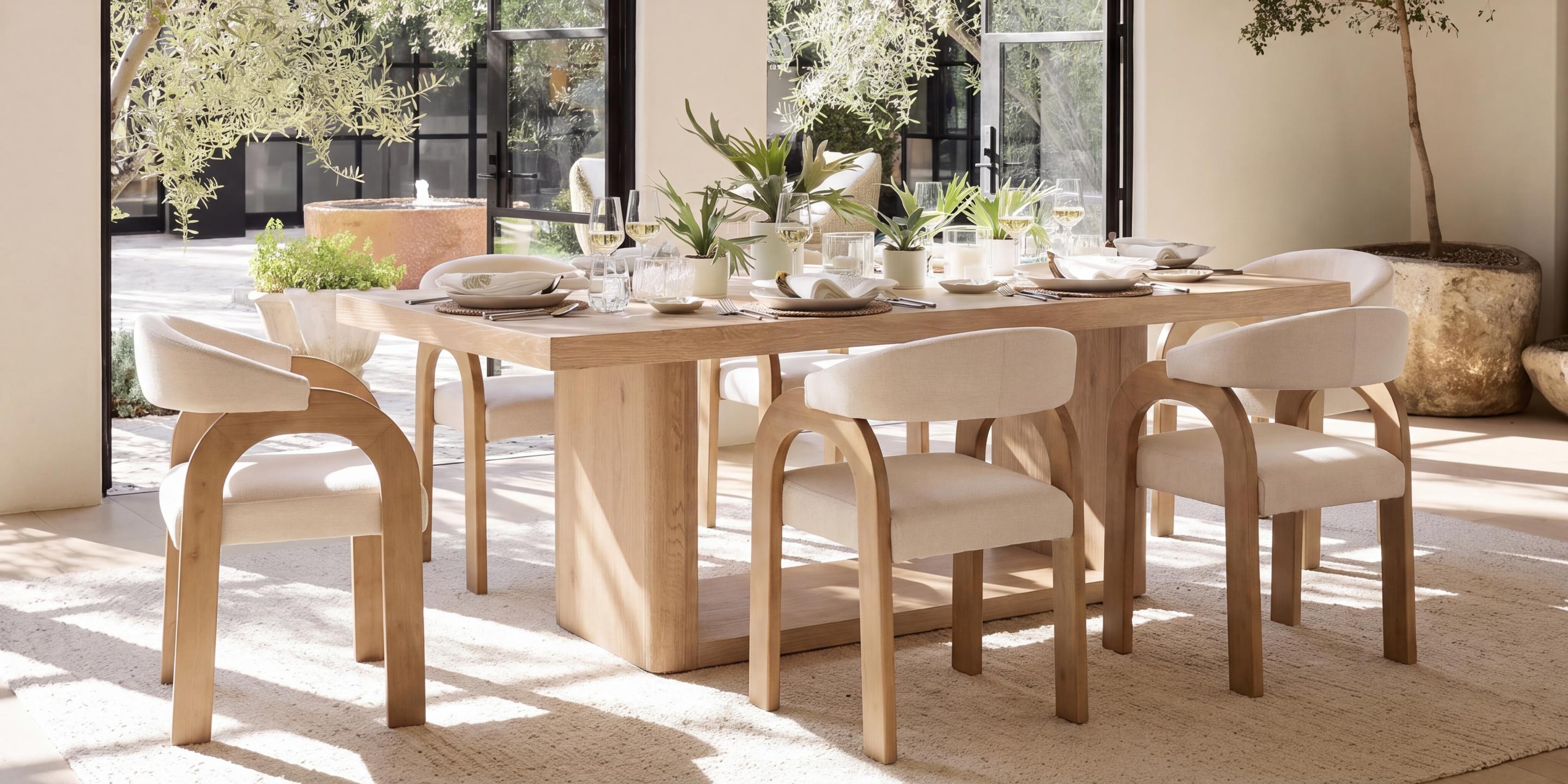
Lane 59" Minimalist Dining Table: Natural Solid Wood
The Lane 59" Minimalist Dining Table is crafted from solid fir wood with an antique-brushed finish.
Its natural grain, simple rectangular shape, and clean lines create a relaxed look that works beautifully in modern and farmhouse-inspired dining rooms.
With seating for up to six people, it's a practical choice for family meals and weekend gatherings.
Drift 47.5" Round Dining Table: Engineered Wood
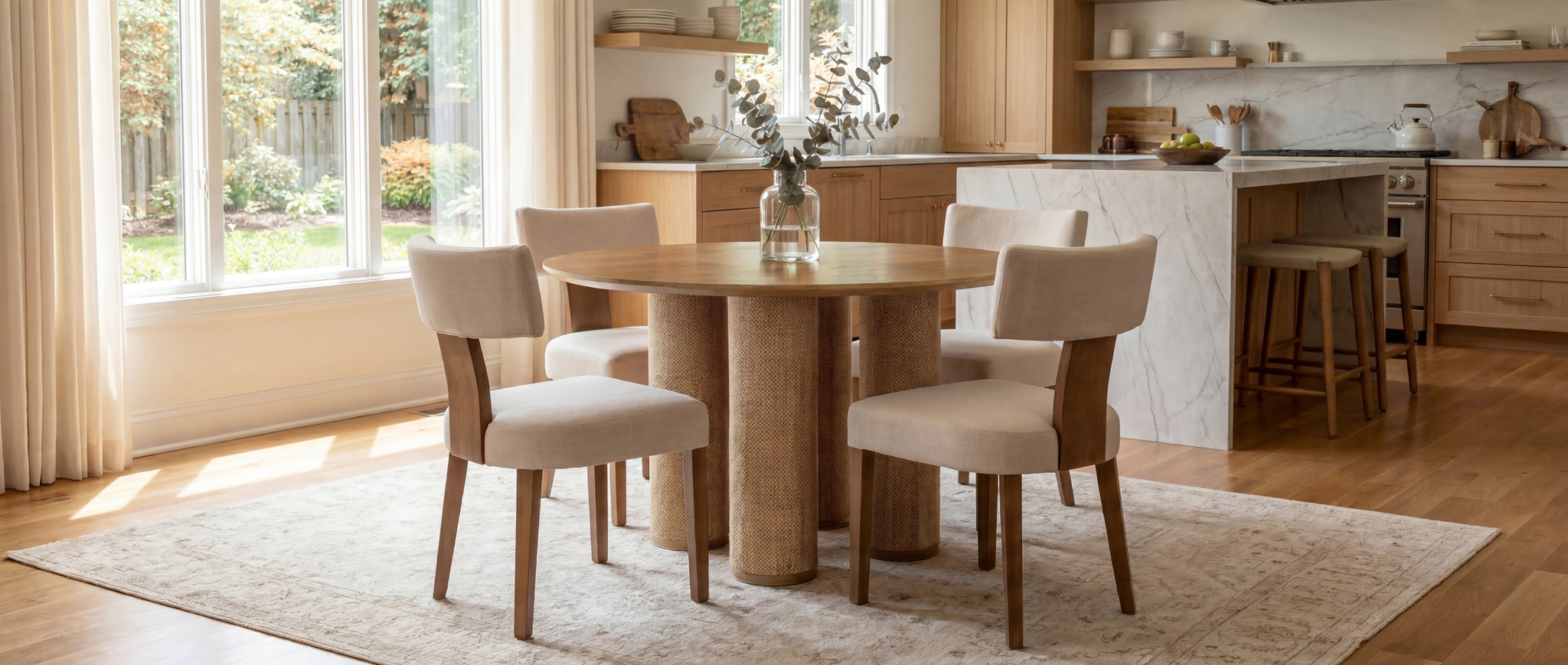
The Drift 47.5" Round Dining Table features an MDF core with a wood veneer finish.
Its round shape comfortably accommodates two to four people, making it especially appealing for apartments and smaller dining areas.
The smooth tabletop and modern silhouette show how engineered materials can create stylish, functional furniture without requiring solid hardwood construction.
Bailey 59" Round Dining Table: A Mix of Materials
The Bailey 59" Round Dining Table combines a white oak veneer over an MDF tabletop with solid rubberwood legs.
This combination brings the natural beauty of real wood grain together with the structural support of solid wood.
Its sculptural base adds character to a dining room, while the spacious round tabletop makes it an inviting choice for shared meals.
Final Verdict: Solid Wood or Engineered Wood?
So, is engineered wood better than solid wood?
Choose solid wood if you appreciate natural variations, want a surface that can often be refinished, and plan to keep your dining table for many years.
Choose engineered wood if affordability, a consistent appearance, and contemporary styling are your priorities.
And don't overlook tables that combine solid wood and engineered materials. A thoughtfully constructed mixed-material design can offer a practical middle ground.
Whatever you choose, pay attention to the finish, joinery, dimensions, and care requirements—not just the material name.
Explore Dayalane's modern dining tables to find a style that fits your home and everyday life.