


Choosing a dining table is partly about style, but the single most important decision is size. A beautiful table can still make a dining room uncomfortable if there is not enough space to pull chairs out, walk behind seated diners, or move naturally between the dining area and the rest of the home.
This dining table size guide breaks down the key measurements—from dining table dimensions and seating capacity to clearance and dining table shape—so you can find a table that feels right in real life, not just on a furniture store floor.
Start With Your Room Dimensions, Not the Table
Before comparing standard dining table sizes, measure the usable room dimensions. Include walls, door swings, cabinets, walkways, and other furniture that will remain in the space.
A useful starting rule is to subtract 6 feet from both the length and width of the room. This gives you roughly 36 inches of clearance on each side and helps establish the maximum table footprint.
For example, a 72-inch table generally needs a room around 12 by 10 feet to leave comfortable space around it.
Aim for at least 36 inches between the table edge and the wall so people can move their chairs. In busy traffic paths, 42 to 48 inches is more comfortable. In a very tight layout, about 24 inches may work on a non-traffic side, but it won't leave much chair clearance once someone is seated.
A simple trick: outline the proposed table dimensions on your floor with painter's tape. Then place your existing chairs around the outline and see how the space actually feels.
Standard Dining Table Dimensions Explained
Most dining tables have a standard height of about 28 to 30 inches, which pairs naturally with standard dining chairs.
You may also see counter height tables and bar height tables, but these need matching seating. Don't assume a regular chair will work simply because the tabletop fits your room.
Table width commonly falls between 30 and 48 inches. A narrower table saves floor space, while a wider one provides more room for serving dishes, centerpieces, and place settings.
For seating, allow roughly 24 inches of linear table space per person. Each diner needs enough elbow room, and chair width also matters—especially if you plan to use wide upholstered chairs or six chairs around a relatively compact table.
-0.jpg?w=2400&h=1200)
Rectangular, Round, Square or Oval?
The right table shape often follows the shape of the room.
Rectangular Dining Tables
A rectangular table is one of the most practical basic shapes and works particularly well in long or narrow rooms. A 72-inch rectangular dining table is a comfortable target for six people, while a 60-inch table can sometimes serve six in a tighter layout when the chairs are relatively narrow.
For a real-world example, Dayalane's James 63" Rectangular Dining Table offers a mid-sized rectangular format, while the Hawk 69" Mid-Century Modern Dining Table is designed to seat 4–6 people.
Round Tables
A round table works especially well in a square room, small dining room, or breakfast nook. Without corners, people can circulate more easily, and the shape naturally encourages conversation.
For six diners, look at a round dining table around 54 to 60 inches in diameter. A 54-inch round table can work well for six, while a 60-inch round table provides more surface area but may still feel snug depending on the chair backs and chair width.
For smaller spaces, Dayalane's Clark 39" Round Dining Table uses a compact round top and a wide pedestal base, helping keep the area around the table visually open while allowing more flexible chair placement.
Square Tables
Square tables feel balanced in a square room and create an intimate dining setup. They are often a good match for four people, although larger square tables can become awkward because diners have farther to reach across the center.
Oval Tables
An oval table combines some of the best features of round and rectangular dining designs. You get useful length and width for larger gatherings, but the curved ends soften the room and make traffic flow easier.
Dayalane's Mateo 79" Oval Dining Table, for example, uses an elongated oval profile with a wide pedestal-style base, making it a useful reference point for shoppers who want generous surface space without sharp corners.
Dayalane's current dining-table assortment includes round, rectangular, and oval options across different footprints, which makes it easier to compare a table's shape against your actual dining space rather than choosing by style alone.
Think About the Base, Too
The tabletop isn't the only key measurement.
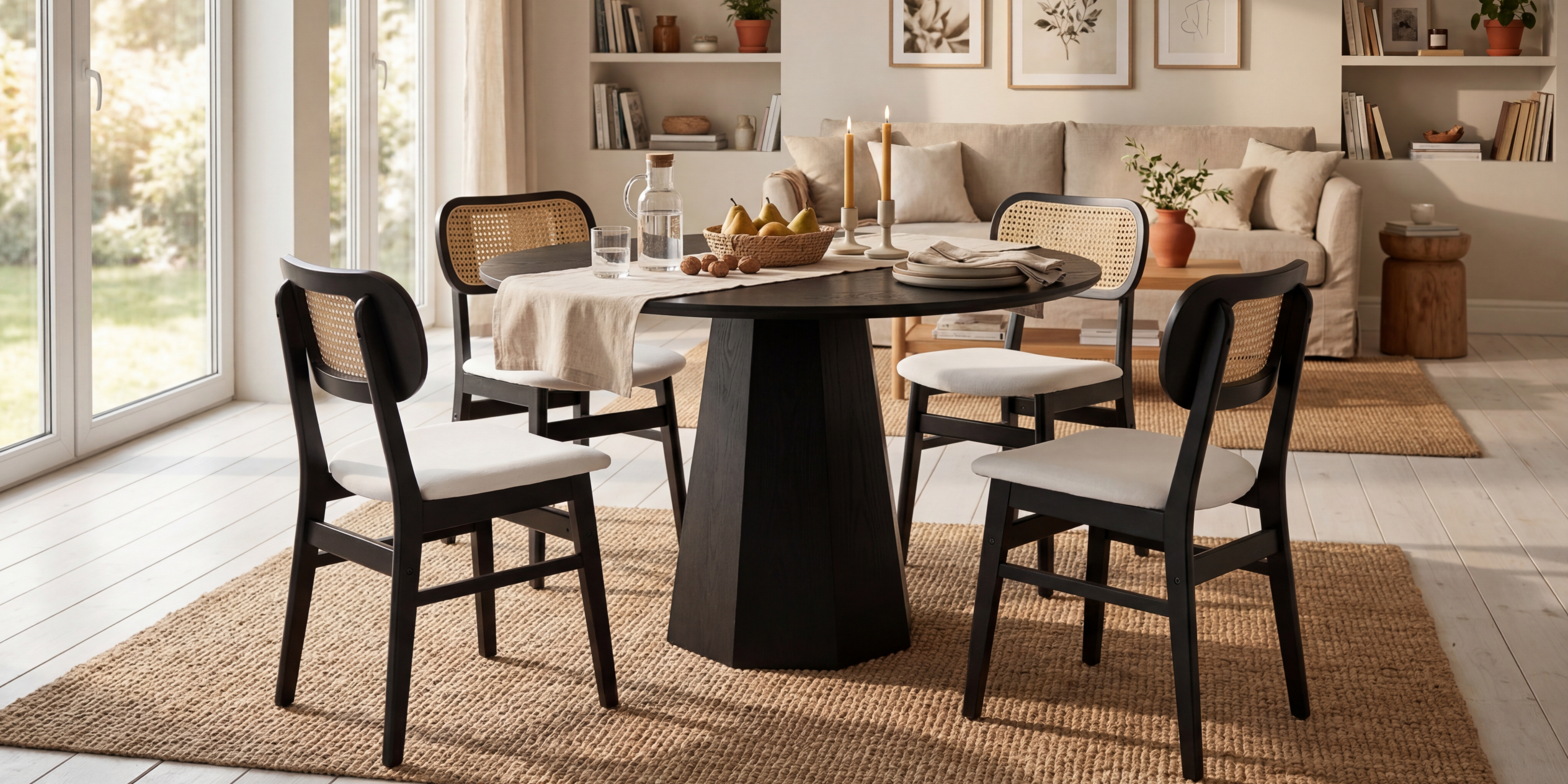
Traditional corner legs can limit where people sit, especially when you add extra chairs for guests. A pedestal base or trestle-style base usually provides more flexible legroom and may make it easier to increase seating capacity without chair legs constantly meeting table legs.
This becomes especially helpful in smaller spaces, where every inch matters.
Consider Extension Tables for Everyday Needs
Your ideal dining table size may change from Tuesday dinner to Thanksgiving.
Extension tables solve that problem by staying compact for daily meals and expanding when guests arrive. Designs with self-storing leaves make setup even easier, giving you flexibility without permanently taking up a large amount of floor space.
If your household usually seats four but regularly hosts six or eight, an extension table can make more sense than buying the maximum table size you might need only a few times a year.
The Right Table Size Should Work in Real Life
When deciding how much space you need, don't focus only on how many people can technically fit around the table. Think about how people sit, how far the chairs pulled away from the table will extend, and whether guests can walk behind them without squeezing through.
Measure the table, the chairs, and the circulation space together. Then choose the right table size for your everyday needs.
A well-sized dining table shouldn't simply fit the floor plan. It should leave enough room for comfortable meals, easy movement, and the people who gather around it—whether that's two people having breakfast or a full room of family and friends.