


In a small kitchen, every inch matters. A kitchen island or breakfast counter can give you extra prep space and casual seating, but the wrong stools can quickly make the room feel crowded.
That is why choosing counter stools for small kitchens is less about finding the smallest possible seat and more about finding a design that uses space efficiently. The right bar stool should tuck neatly beneath the counter, leave enough room to walk around the island, and still feel comfortable enough for breakfast, coffee, or everyday conversation.
From seat height and width to backrest style and materials, here is what to look for before bringing new stools into a compact kitchen.
Start by Measuring Your Kitchen Counter
Before you compare colors or styles, measure from the floor to the underside of your counter or island.
Most standard kitchen counters are around 36 inches high, which means a counter height bar stool with a seat approximately 24–26 inches from the floor will usually be a good fit. Dayalane's current counter-stool collection, for example, includes many options around 25.5–27.5 inches high.
Ideally, leave around 9–12 inches between the stool seat and the underside of the countertop. This gives your legs enough clearance without positioning you too low for comfortable dining.
Measuring is especially important in a small space, because an oversized stool cannot simply be pushed farther away from the counter without taking up valuable walkway room.
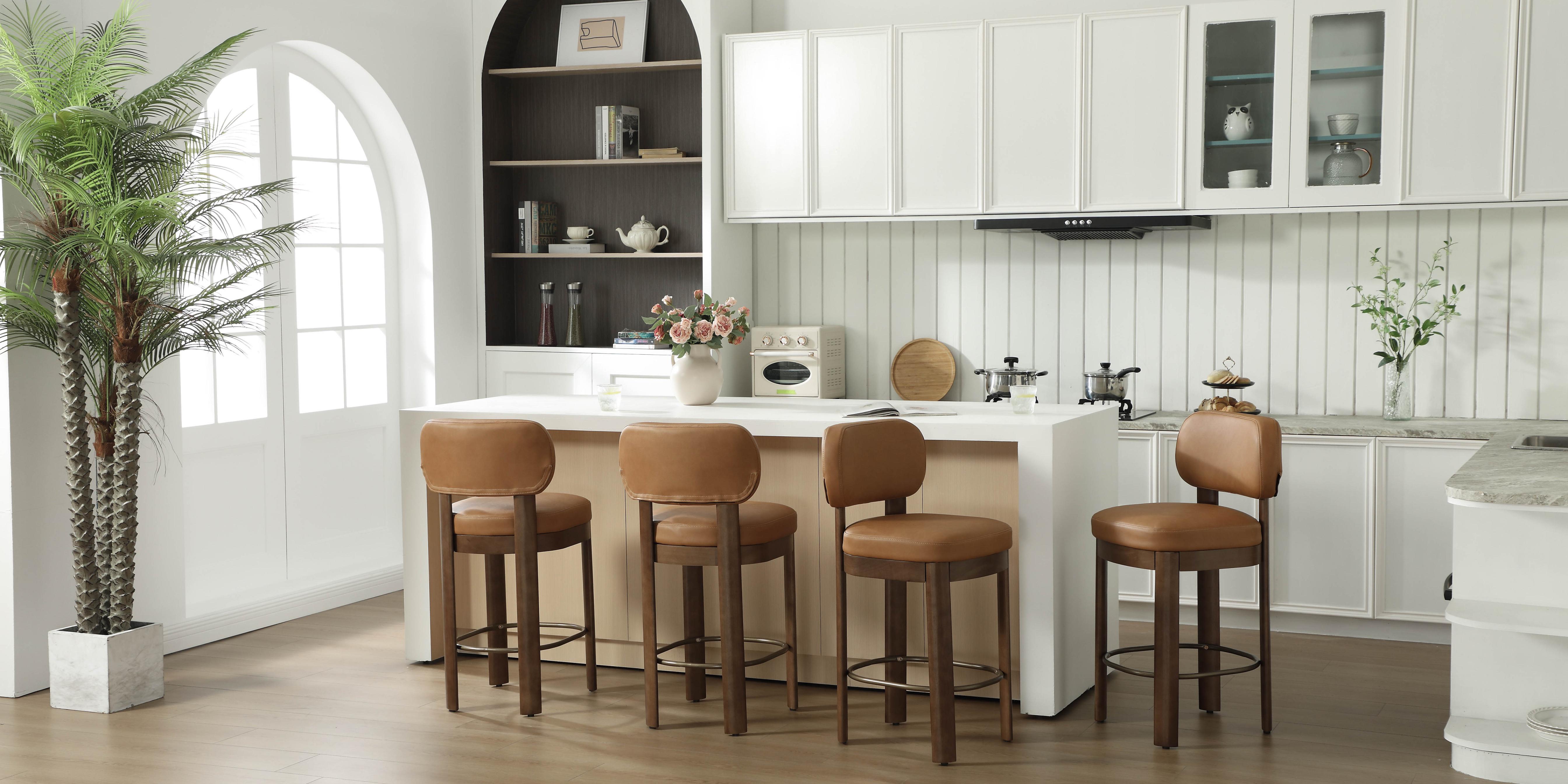
Look for Narrow Bar Stools
Width can make a surprisingly big difference.
Many narrow bar stools use seats around 15–18 inches wide. Compared with a wider chair-style stool, that can save several inches per seat—important when you are trying to fit two or three stools along a short kitchen counter.
As a general guideline, allow around 24–26 inches from the center of one stool to the next. That gives people enough room to sit without constantly bumping elbows.
If the island is narrow, avoid designs with oversized arms, broad flared legs, or a base that extends far beyond the seat. Slim legs and a streamlined profile create a more functional seating arrangement without overwhelming the room.
Backless and Low-Profile Stools Save the Most Space
One of the easiest ways to make a small kitchen feel larger is to keep the area above the counter line visually open.
A backless stool can slide almost completely under many counters when it is not being used. That clears the walkway and keeps the seating from becoming a permanent visual barrier.
A low profile backrest can provide a little extra support while still maintaining that open feeling.
This is particularly useful in apartments and kitchens where the island sits between the cooking area and the dining room. Instead of creating a wall of tall chair backs, lower stools allow light and sightlines to move through the room.
If maximum floor space is the goal, folding, stackable, or nesting stools can also be worth considering for occasional seating.
Choose Visually Lightweight Designs
Physical dimensions are only part of the equation. A stool can technically fit and still make the room feel cramped.
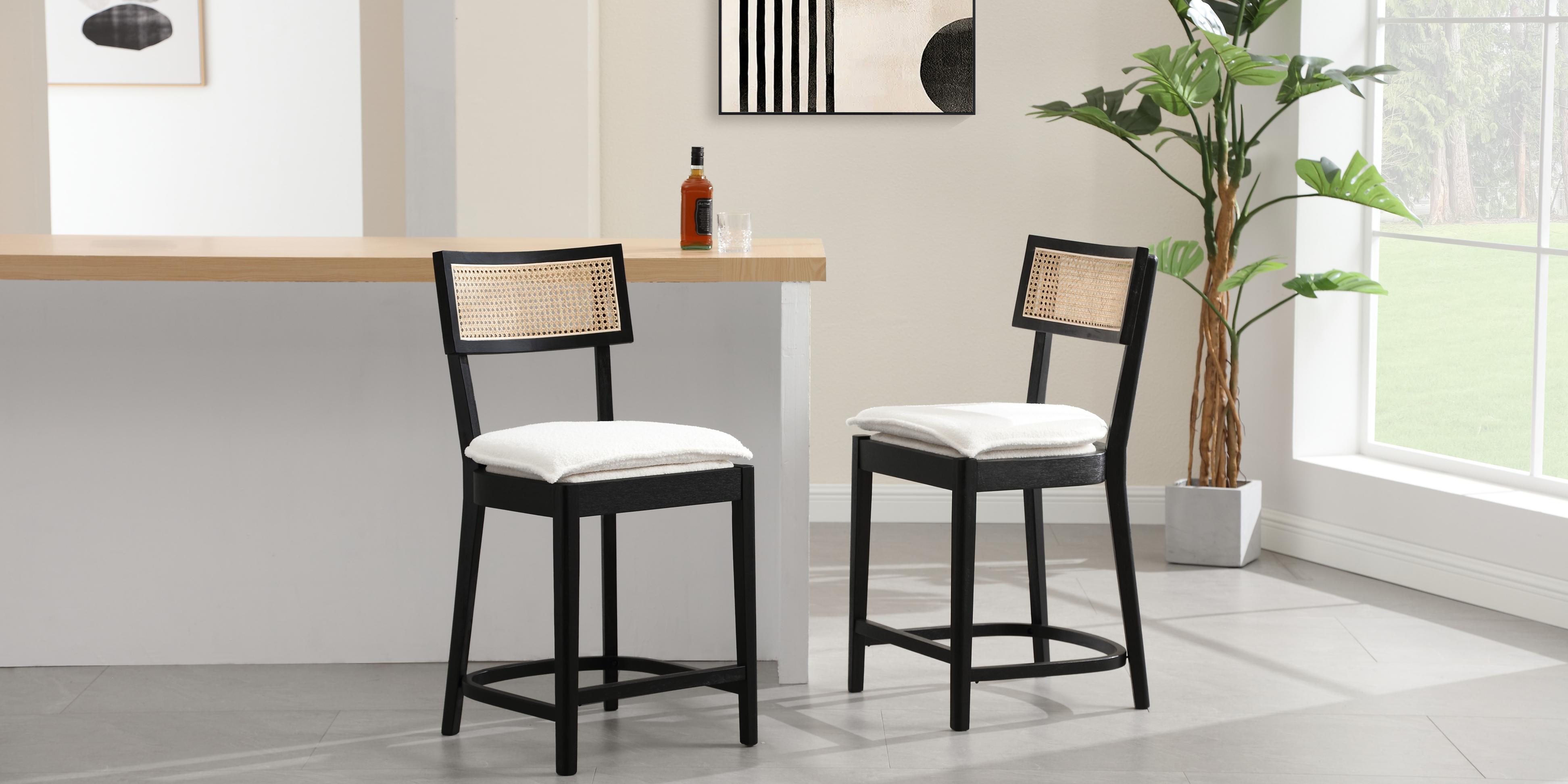
Designs with slim metal legs, open backs, woven details, or narrow wood frames tend to look lighter than heavily upholstered chairs.
Dayalane's Walter 26.5" Cane Counter Stool, for example, combines a solid wood frame with an open woven rattan back. The cane creates visual openness, while the upholstered removable seat adds comfort without turning the stool into a bulky dining chair. The stool also includes a curved footrest and supports up to 300 pounds.
That combination of open texture and practical function is useful when you want seating that feels substantial but not visually heavy.
Don't Give Up Comfort Just to Save Space
Compact seating does not have to mean uncomfortable seating.
Even in a small kitchen, look for a bar stool with enough seat depth, a supportive footrest, and enough width to sit naturally. An upholstered seat can add comfort without taking up much more room than a hard round seat or saddle seat.
A narrow stool with a gently curved backrest may also feel more supportive than a completely flat design.
Dayalane's Perch 26.5" Counter Stools are a useful example. They combine a relatively streamlined solid rubberwood frame with a curved backrest and metal footrest. The stools are available with linen or faux-leather upholstery, and the 26.5-inch seat height is designed for most kitchen islands and breakfast bars.
The design illustrates a useful small-space principle: you do not necessarily need to choose between comfort and a clean footprint.
Should You Choose Swivel Counter Stools?
A swivel feature can work surprisingly well in a tight kitchen.
Instead of dragging the entire stool backward every time you want to turn, a swivel seat lets you rotate toward the room. Some stools offer a full 360-degree motion, making it easier to move between the counter, conversation, and surrounding kitchen.
That can be especially practical when there is not much room between the island and another wall or piece of furniture.
Just remember that swivel stools need a little more clearance around the seat so the backrest does not hit neighboring stools or cabinets.
For a compact layout, choose a swivel stool with a controlled footprint rather than a wide barrel-style chair.
Armless Designs Usually Work Better
For most small kitchens, an armless stool is the safest option.
Arms add width and can prevent the stool from sliding beneath the countertop. Without arms, stools can usually be placed closer together and are easier to enter from the side.
However, if you have only one or two seats and prioritize added comfort, an armrest design may still work.
Dayalane's Vintle Bar & Counter Stool is available in 24-, 29-, and 32-inch seat heights and combines an upholstered seat, curved wraparound back, integrated arms, and tubular metal base. Because it comes in multiple heights, it can work for different counter and home bar setups, though the arms mean it needs slightly more width than a very narrow armless stool.
Pick Materials That Are Easy to Live With
Small kitchens often put seating close to food preparation, so spills and crumbs are inevitable.
Choose fabric, faux leather, wood, or metal finishes that suit the way you actually use the room. Smooth upholstery can be easier to wipe down, while removable cushions can simplify routine cleaning.
Walter's removable linen cushion, for example, is designed to make everyday care easier.
For a modern style, slim black metal legs can create a clean, contemporary look. Natural wood or cane works well for a warmer mid century modern or transitional kitchen. The important thing is to keep the profile simple enough that the materials complement the room rather than dominate it.
How Many Counter Stools Should You Fit?
It is tempting to squeeze in as manybarstools as the counter will physically hold, but a smaller number often works better.
Leave roughly 24–26 inches from the center of one stool to the next so each person has usable space. Wide designs or stools with arms may need even more.
Two properly spaced stools will usually look more intentional—and be much more comfortable—than three stools packed tightly together.
The Best Counter Stool Makes the Kitchen Feel Bigger
When choosing counter stools for small kitchens, look beyond price or appearance.
Start with the right counter height, then consider stool width, leg shape, backrest height, and how completely the stool can tuck beneath the island. Backless and low-back designs preserve sightlines, while slim wood or metal frames help reduce visual bulk.
The goal is not simply to find the smallest stool in stock. It is to create useful seating without sacrificing the openness of your kitchen.
A well-chosen counter stool adds another place to eat, work, or talk while leaving enough breathing room around the island—and in a compact home, that balance between style and functionality is what makes a stool a genuinely great purchase.