


For many homes, the kitchen island is no longer just a prep surface. It is where breakfast happens, where someone opens a laptop in the afternoon, where kids finish homework, and where guests settle in with a glass of wine while dinner is being made.
That raises an important question: are bar stools actually comfortable enough for daily use?
They can be. The difference between an inviting everyday seat and an uncomfortable stool usually comes down to seat height, seat width, cushioning, back support, footrests, and overall construction. If you're looking for comfortable bar stools for everyday use, these details matter much more than appearance alone.
Start With the Correct Seat Height
Even the most padded comfortable stool will feel wrong if the height doesn't match your countertop.
For a standard kitchen counter around 34–36 inches high, a counter stool with a seat height of roughly 24–26 inches generally works well. For a bar height surface, stools are usually around 28–30 inches high.
Whatever the number, aim to maintain approximately 9–12 inches between the seat and countertop. This gives your knees enough space and allows you to sit comfortably without feeling squeezed beneath the counter.
Before buying, measure from the floor to the underside of your counter. Don't assume all kitchen islands are built to the same height.
Dayalane's current stool collection, for example, includes counter-height designs between roughly 25.5 and 27.5 inches as well as adjustable or multi-height options for different surfaces.
A Supportive Backrest Makes a Big Difference
If you're only sitting for five minutes, a simple backless stool may be fine. For full meals or several hours of occasional sitting, a supportive backrest becomes much more important.
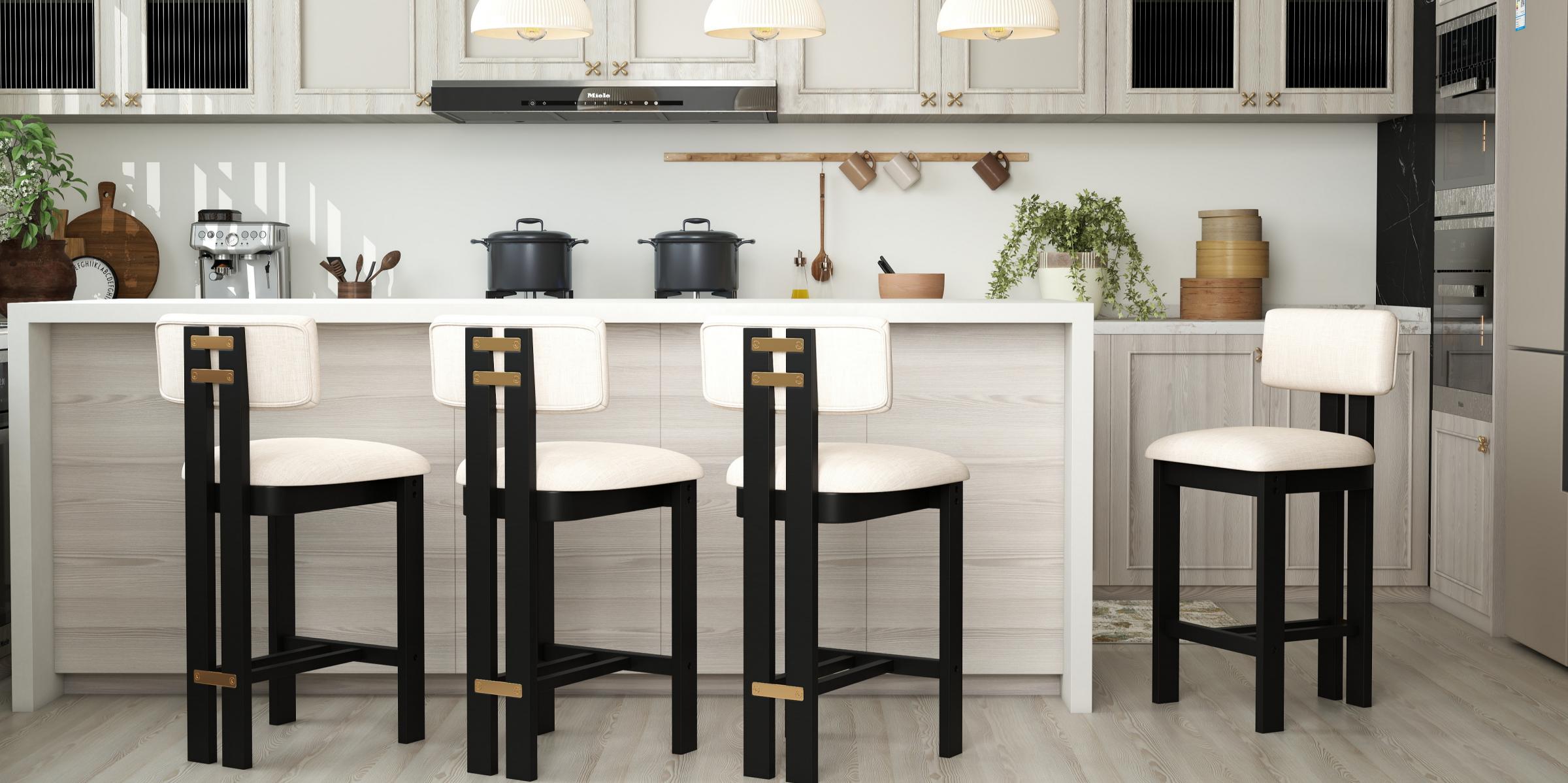
Mid-back and full-back designs give your body somewhere to rest, while an ergonomic shape can better support the natural curve of your spine. A full-back stool can feel much closer to a traditional dining chair, especially when combined with a padded seat.
The Dayalane Perch 26.5" Counter Stool, for example, uses a gently curved back designed to follow the body's shape. It also combines a solid rubberwood frame with a metal footrest, making it more appropriate for regular kitchen-island seating than a minimal decorative stool.
If your style leans toward something softer and more enveloping, armrests may also help. Supporting the arms can reduce shoulder and upper-back tension during longer meals.
Pay Attention to Seat Width and Depth
One feature that's easy to overlook is seat width.
A narrow stool may save space, but it can feel restrictive when you want to shift your weight during dinner or stay seated for a long conversation. Seats around 16–18 inches wide can provide comfortable everyday seating, while wide seat bar stools of 19 inches or more give you extra room to move.
Depth matters too. The seat should support your thighs without pressing into the backs of your knees. If the seat is too shallow, you may feel as though you're constantly sliding forward. If it's too deep, shorter users may struggle to use the backrest properly.
The goal isn't simply a bigger seat. It's a shape that lets a real person settle naturally into the stool.
Cushioning Matters More Than You Think
Hard wood or metal stools can look clean and modern, but they may become less inviting over a long meal. For everyday dining, some cushioning usually improves the comfort level.
High-density foam is especially useful because it is designed to retain its shape while reducing concentrated pressure. For extended sitting, cushioning around 3–4 inches thick can provide a good balance between softness and support, depending on the design.
Dayalane's Casey Swivel Counter Stool combines linen upholstery with a high-density foam cushion. Its contoured barrel-style back and solid wood frame are paired with a circular metal footrest, while the seat can swivel through 360 degrees.
For another approach, the Dove 26" Upholstered Counter Stool pairs high-resiliency foam with performance velvet, a curved backrest, integrated armrests, and a metal footrest. Dayalane positions it specifically for everyday dining at counter-height spaces.
Don't Underestimate the Footrest
A footrest might look like a small design feature, but it is essential for comfortable bar seating.
On a regular dining chair, your feet naturally reach the floor. On a tall stool, they often don't. Without support, the weight of your lower legs can create pressure underneath your thighs and make the seat feel uncomfortable much sooner.
A properly positioned footrest gives your feet somewhere stable to land, reduces leg strain, and helps maintain better alignment.
This is particularly important at bar height, where the distance between the seat and floor is greater.
.jpg?w=2880&h=1440)
Are Swivel Stools More Comfortable?
Swivel stools don't automatically have better cushioning, but they can improve everyday usability.
A 360-degree swivel lets you turn toward the island, another person, or the surrounding room without dragging the entire stool across the floor. That easy movement can make conversation feel more natural, particularly in an open-plan kitchen.
The Casey stool is one Dayalane example that combines a 360-degree swivel with a contoured backrest and padded seat.
Just remember that swivel designs need enough surrounding space to rotate comfortably.
Choose Materials for Real Life
When you're furnishing a kitchen used every day, comfort is only one part of the decision. Durability and cleaning matter too.
A beautiful cream fabric stool may look perfect on day one, but kitchens see crumbs, spills, sticky hands, and stains. Durable upholstery and performance fabric can make maintenance easier. Faux leather seats offer a smoother surface that's often simple to wipe down, while linen and velvet options create a softer, more upholstered look.
Dayalane's Perch stool, for instance, is offered in linen and faux leather versions, giving shoppers a choice between a textured fabric feel and a smoother, easier-to-clean surface.
So, Can Bar Stools Replace Dining Chairs?
For many households, yes—but choose them as actual furniture, not just as decorative accessories.
For optimal comfort, look for the correct counter height, enough seat width and depth, supportive cushioning, a well-shaped backrest, a stable frame, and a useful footrest. Armrests and swivel movement can add even more comfort depending on how long you usually sit.
A well-designed stool can become the perfect match for breakfast, casual dinners, working at the island, or lingering over drinks with guests. You don't have to settle for something uncomfortable just because the seat sits higher than a traditional dining chair.
The best everyday bar stools are the ones you stop thinking about once you sit down—they simply feel supportive, stable, and inviting enough to stay awhile.