


Velvet dining chairs have a signature softness and light-catching surface that can make a dining room feel warmer and more sophisticated. However, the word velvet does not describe one specific fiber.
So, what is velvet fabric? Velvet is traditionally a woven fabric with a dense pile raised above a base fabric. The velvet pile reflects light in different directions, creating its smooth surface, deep color, unique texture, and luxurious feel.
Velvet can be made from pure silk, cotton, viscose, polyester, natural fibers, synthetic fibers, or synthetic blends. This means two chairs labeled “velvet” may perform very differently. One may use delicate silk velvet, while another uses durable polyester velvet designed as an upholstery fabric for everyday dining.
For U.S. shoppers, the best velvet dining chair is not necessarily the softest or shiniest. It should suit the way the household eats, entertains, cleans, and uses the room.
How Is Velvet Fabric Produced?
Traditional velvet fabric is produced on a double cloth loom. Two layers of woven fabric are connected by additional yarns. These connecting yarns are cut apart, creating a raised pile on the surface of both layers.
The fiber, pile height, density, base fabric, and construction quality affect how the finished velvet cloth looks and feels. A shorter pile often looks tailored and may show fewer pressure marks. A dense pile creates greater signature softness and a richer appearance, although it may change color more noticeably when brushed in different directions.
Traditional velvet was often made from pure silk. Modern velvet can be made from cotton, viscose, polyester, or different synthetic materials. Some stretch velvet includes elastic fibers, although this knitted fabric is more common in evening wear and casual clothing than in dining chair upholstery.
Velvet is also different from velour. True velvet is traditionally woven, while velour is commonly knitted and more flexible. Shoppers should therefore check the material specification instead of judging a fabric only by its soft appearance.
.png?w=2528&h=1264)
Common Types of Velvet for Dining Chairs
|
Type of velvet |
Appearance and feel |
Best for |
Main concern |
|
Silk velvet |
Highly reflective, fluid, and exceptionally soft |
Formal, low-use dining rooms |
Expensive and delicate |
|
Cotton velvet |
Substantial, soft, and often has a matte finish |
Tailored interiors and moderate use |
Can absorb spills |
|
Viscose velvet |
Smooth, glossy, and drapey |
Decorative seating |
Requires careful cleaning |
|
Polyester velvet |
Consistent, accessible, and widely available |
Families and everyday dining |
Quality varies |
|
Synthetic velvet |
Made with synthetic materials or blends |
Busy homes and value-focused buyers |
Check fabric specifications |
|
Performance velvet |
Designed or treated for easier care |
Children, pets, and frequent entertaining |
Performance standards vary |
|
Plain velvet |
Even color and a uniform pile |
Modern and minimalist rooms |
Pressure marks may be visible |
|
Crushed velvet |
Pile pressed in different directions |
Glamorous statement interiors |
Strong sheen can dominate small rooms |
|
Embossed velvet |
Pattern formed with pressure or a heat stamp |
Decorative dining chairs |
Less flexible when décor changes |
For most U.S. households, polyester velvet or clearly documented performance velvet is the most practical go-to fabric. It delivers much of the luxurious feel of traditional velvet while being more realistic for family meals, homework, parties, and everyday use.
Cotton velvet is a good natural fiber option for shoppers who prefer a softer, less reflective surface. Pure silk velvet offers exceptional richness but is usually better suited to a formal dining room where spills and heavy wear are less likely.
Decorative Types of Velvet
Some types of velvet describe the finish or pattern rather than the fiber.
Crushed velvet is pressed or twisted so that the pile lies in different directions. This creates changing highlights and a unique texture that adds visual interest.
Hammered velvet and crimped velvet have irregular, dappled surfaces. These fabrics can make a chair feel more decorative, but their dramatic appearance may be harder to coordinate with an existing dining table.
Which Velvet Dining Chair Fits Your Home?
Small apartments usually benefit from armless velvet chairs with slender legs and a compact footprint. Velvet already adds texture and visual weight, so the chair does not need an oversized shape to become a focal point.
Before buying, measure the chair width, overall depth, seat height, and space between the table legs. Make sure the chairs can slide under the table without blocking walkways.
Dayalane’s guide to styling velvet dining chairs in a small dining room offers additional advice on scale, spacing, and color.
Families and pet owners should prioritize polyester velvet, synthetic velvet, or verified performance upholstery fabric. Dark green, brown, taupe, navy, and charcoal may conceal minor marks and pet hair better than very pale plain velvet.
People who host long dinners or work from the dining table should look beyond the fabric. Cushion density, seat depth, back support, frame material, and base stability affect comfort more than the velvet’s softness alone.
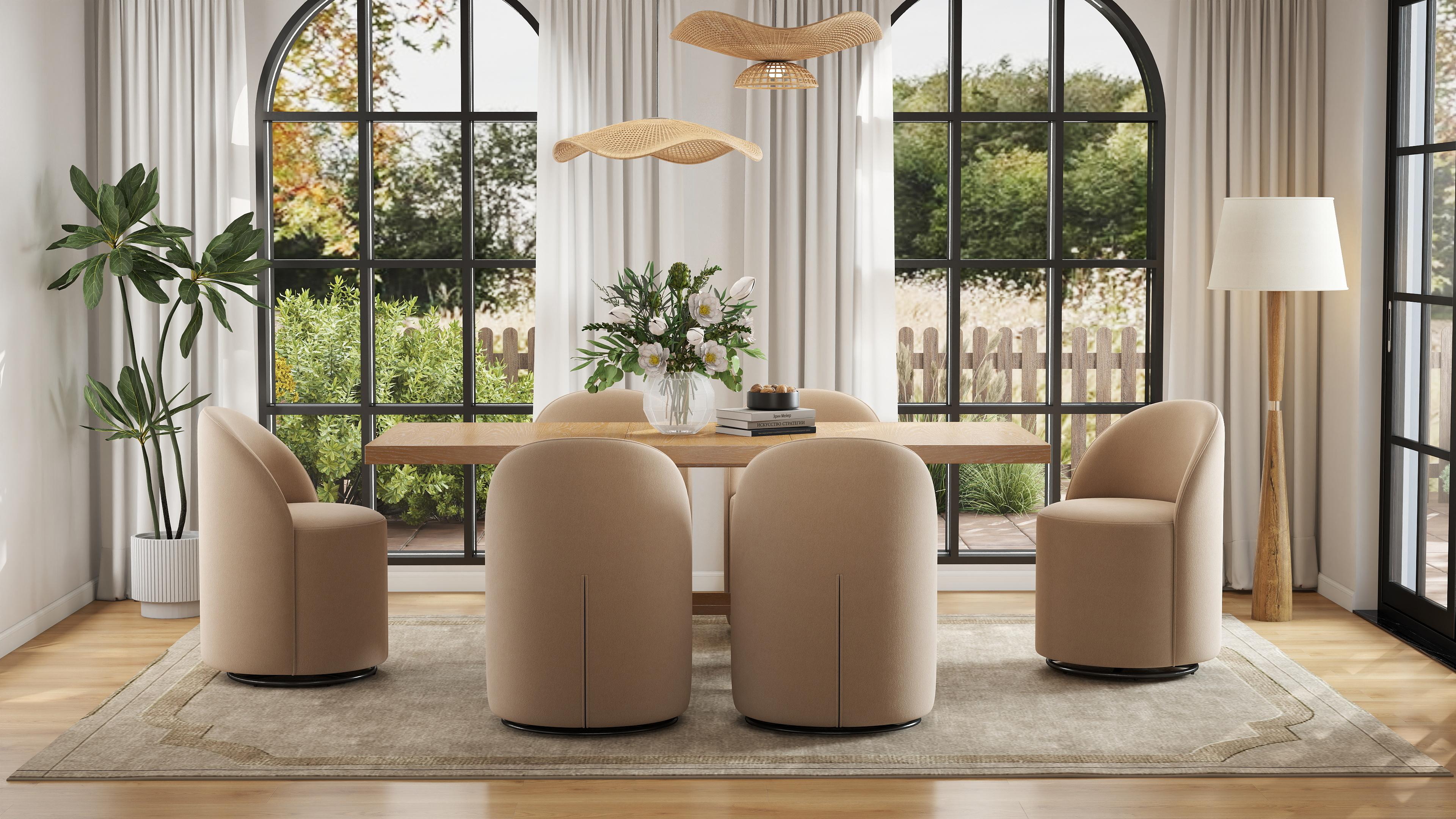
Dayalane’s velvet dining chair collection includes armless, high-back, barrel-back, swivel, and rolling designs for different dining spaces.
How to Evaluate Velvet Quality Online
Product photography cannot prove whether a chair will remain comfortable or easy to maintain. Before ordering, check:
-
Fiber content and synthetic blends
-
Upholstery cleaning code
-
Pile height and surface finish
-
Chair width, depth, and seat height
-
Frame and leg materials
-
Weight capacity
-
Assembly requirements
-
Warranty and return conditions
When a fabric swatch is available, brush it in one direction and then the opposite direction. This shows how strongly the velvet pile changes color. Press it gently to see whether temporary marks lift after brushing.
Be cautious when a listing uses phrases such as “luxury velvet” or “premium velvet” without explaining how the velvet fabric was produced, what fibers it contains, or how it should be cleaned. Marketing language alone does not confirm durability.
How to Care for Velvet Dining Chairs
Use a soft upholstery attachment to remove dust, crumbs, and pet hair. Brush gently in the same direction instead of scrubbing the pile.
When a spill occurs, blot it immediately with a clean, absorbent cloth. Do not rub, because rubbing can spread the liquid and disturb the smooth surface.
Test any cleaning product on a hidden area and follow the manufacturer’s care label. Avoid soaking fixed upholstery. Removable covers should only be washed on a gentle cycle when the instructions specifically allow machine washing.
Protect velvet chairs from strong, continuous direct sunlight, which may cause fading. After spot cleaning, allow the material to air-dry before using a soft upholstery brush to restore the pile.
Dayalane’s velvet dining chair cleaning guide provides additional maintenance advice.
Velvet is not automatically too delicate for a dining room. The right modern velvet can provide softness, color, and an elevated appearance without making every meal stressful. Compare velvet styles with Dayalane’s broader modern dining chair collection, then choose according to how your household actually eats, works, entertains, and cleans.