
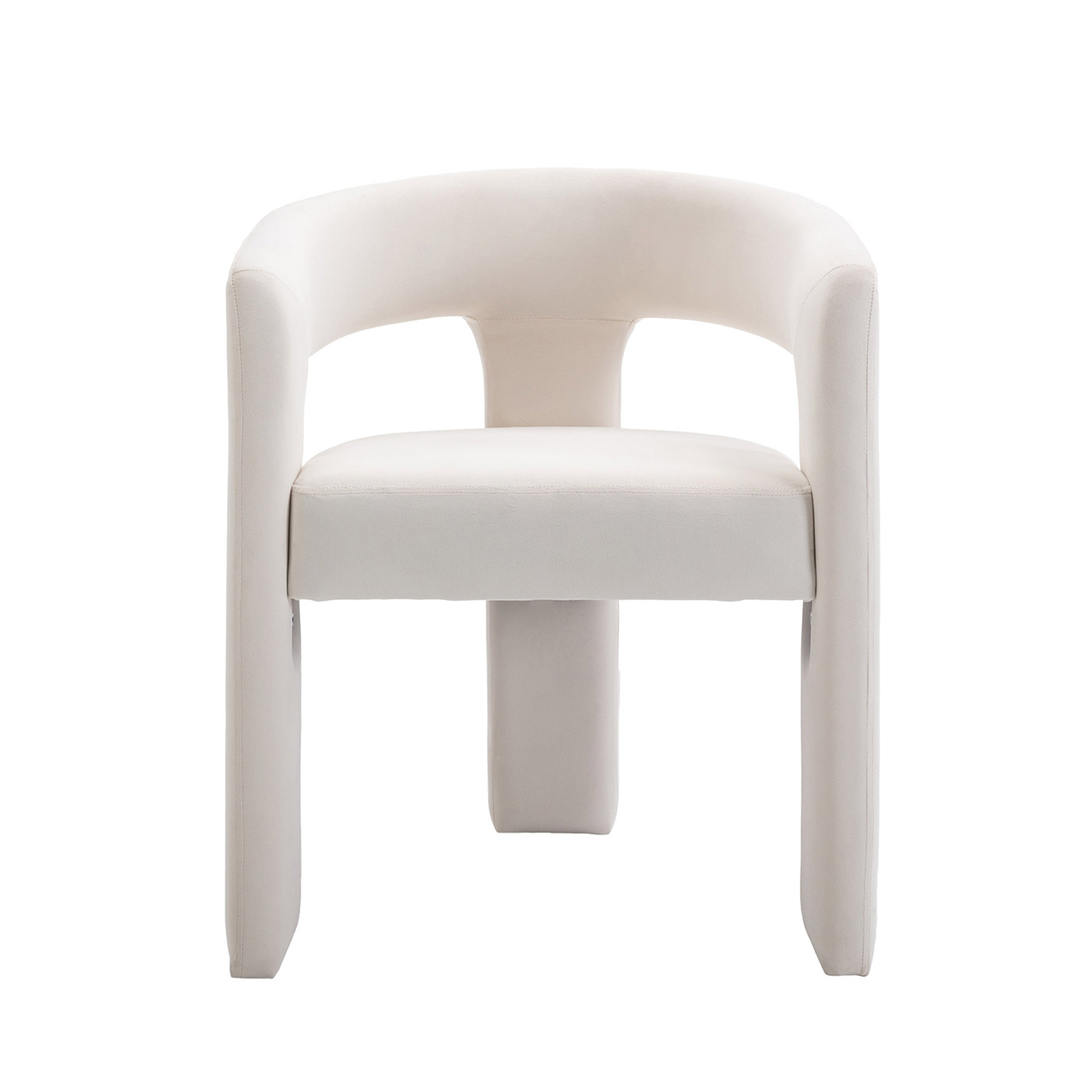
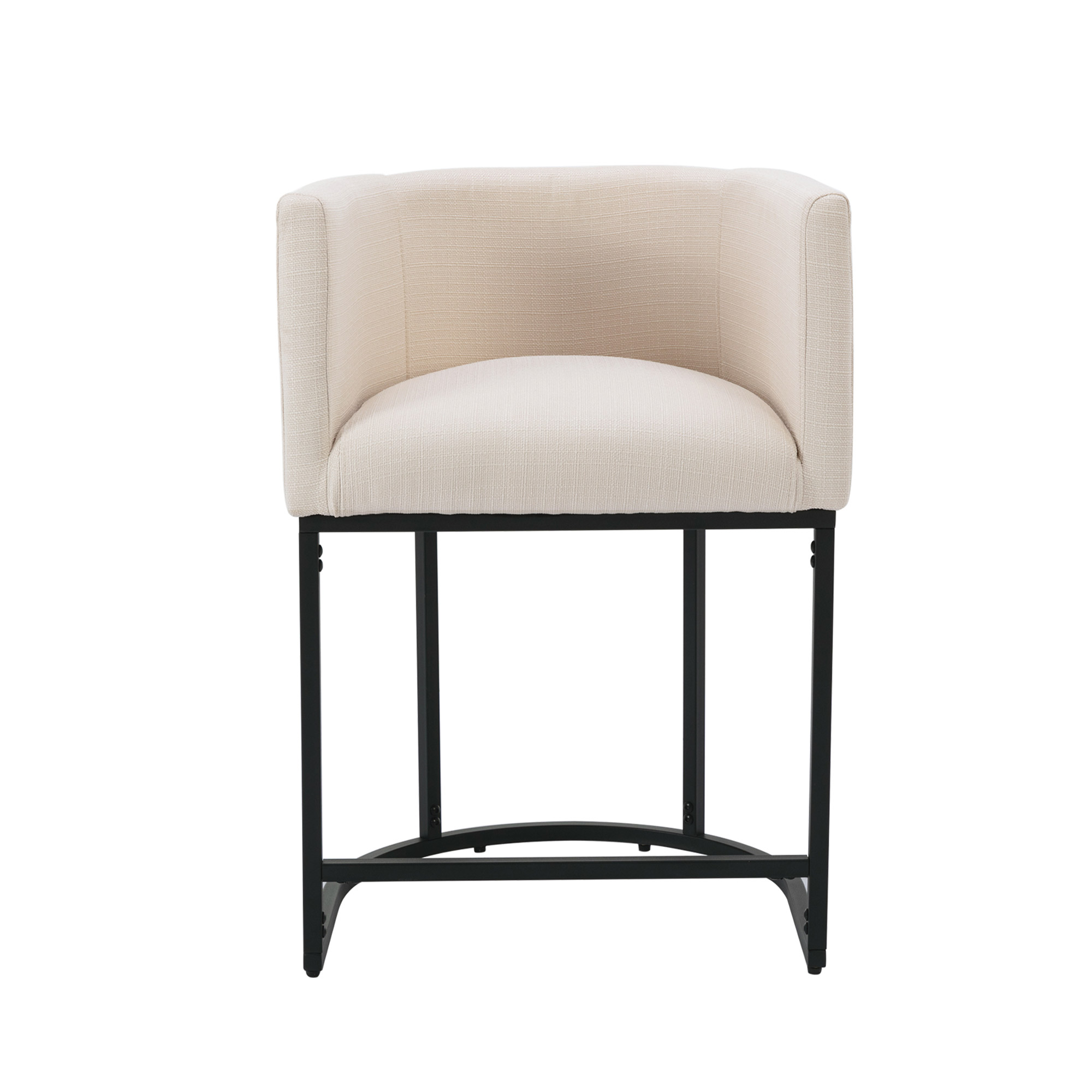
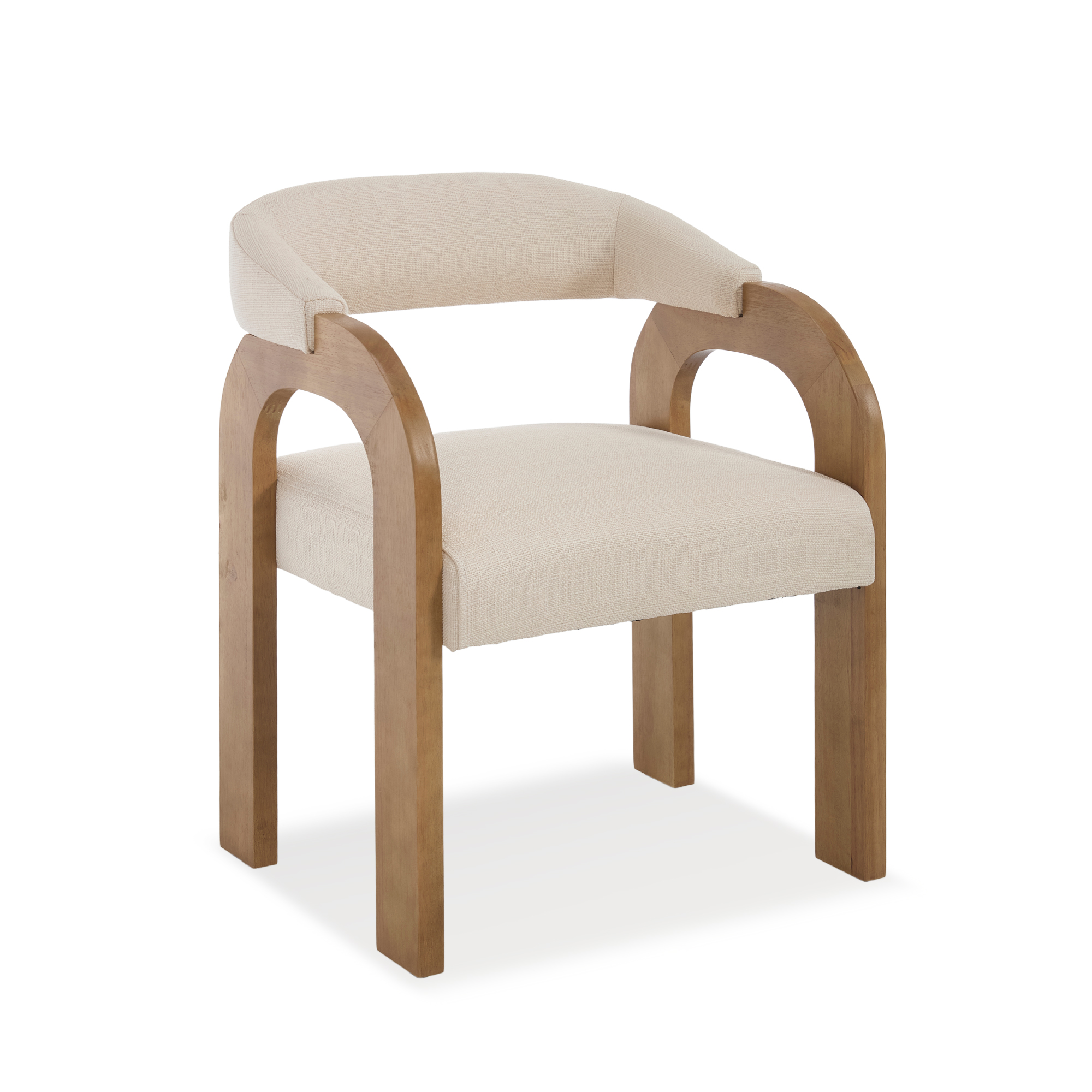
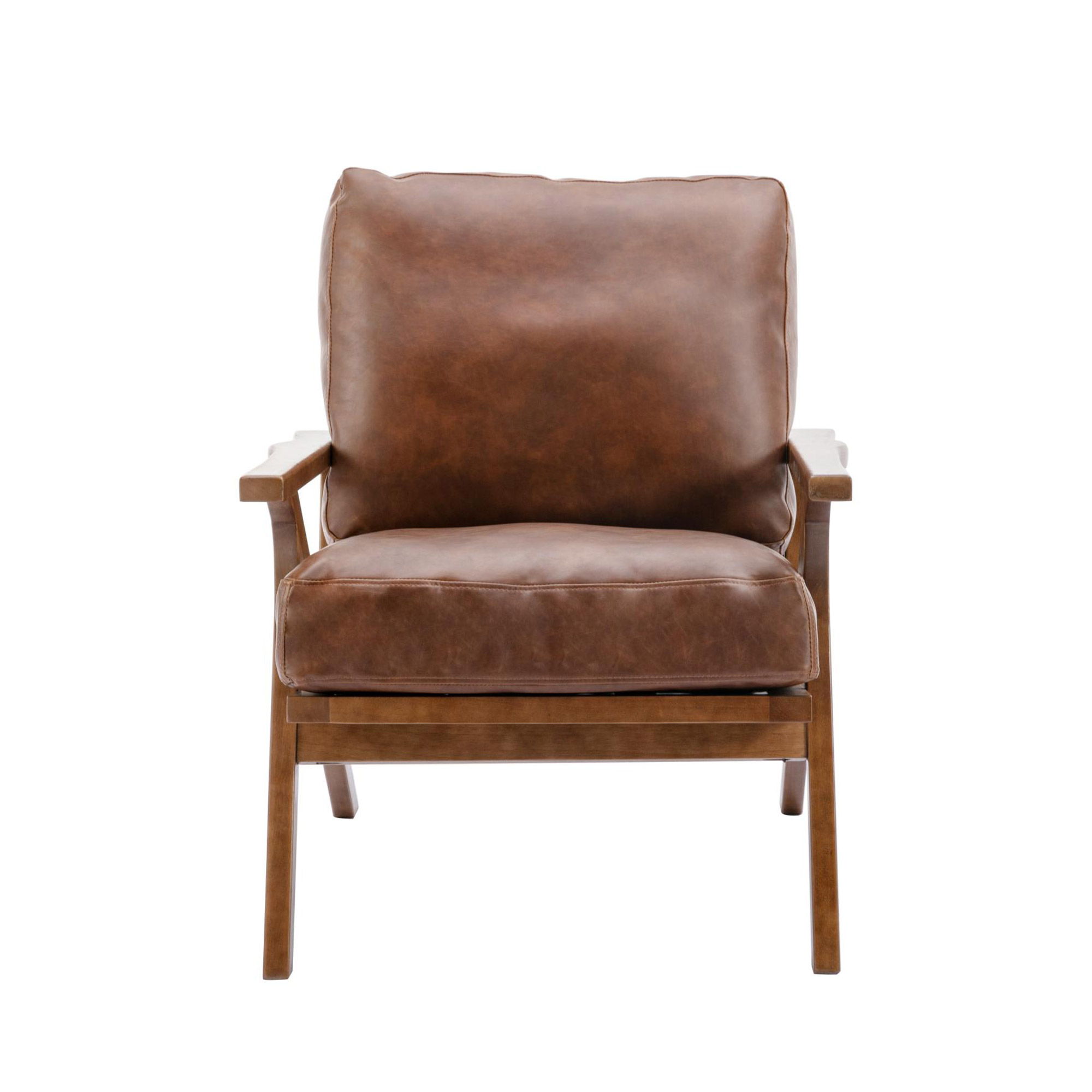
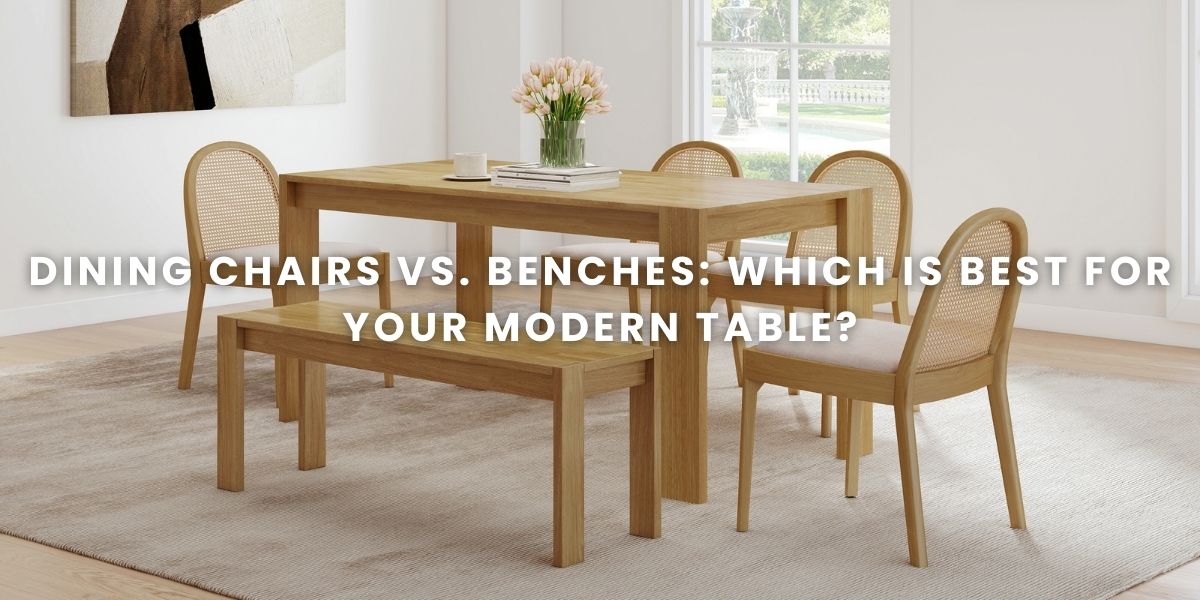
Choosing the right seating for your dining table can shape how a home feels every single day. Meals aren’t just about food—they’re about conversation, comfort, and how people gather. When planning a modern dining setup, one question comes up again and again: dining bench vs chairs.
Both dining chairs and dining benches have clear advantages, but the best choice depends on how you use your dining room, how much space you have, and what kind of dining experience you want to create. From formal dining rooms to casual kitchen nooks, seating plays a larger role than most people expect.
This guide breaks down the differences between dining chairs and dining benches, helping you decide which option—or combination—works best for your home, lifestyle, and table.
Understanding the Role of Seating in a Modern Dining Space
In modern homes, the dining area often serves multiple purposes. It may be a place for everyday meals, dinner parties, homework, or long conversations that stretch late into the evening. Because of this, dining furniture needs to balance comfort, flexibility, and design.
Seating affects:
- How many people you can accommodate
- How comfortable guests feel during long meals
- How much floor space your dining setup occupies
- The overall visual balance of the room
Before choosing a bench or chairs, it’s important to look at the bigger picture: room size, table shape, and how people actually move through the space.
Dining Chairs: A Classic Choice That Prioritizes Comfort
Dining chairs have long been the standard in dining rooms, and for good reason. Individual chairs offer personal comfort, structure, and flexibility that many households rely on.
Why Dining Chairs Still Work So Well
One of the main reasons people prefer chairs is back support. Chairs offer a defined seat and backrest, which makes them ideal for long meals, formal dinners, or work-from-home moments at the table.
Dining chairs also:
- Give each person their own spot
- Are easy to move, pull out, or reposition
- Work well for guests of different ages
- Fit naturally into both formal dining rooms and casual spaces
For many households, chairs simply feel familiar. They’re a classic choice that suits a wide range of styles, from clean lines and minimal forms to plush upholstery and traditional silhouettes.
When Dining Chairs Are the Better Option
Dining chairs tend to work best when:
- Comfort during long meals matters most
- You host formal dinners or structured dinner parties
- The dining room is large enough to allow chairs to pull out comfortably
- Individual comfort is a priority for guests
- You prefer chairs with arms or armchairs at the head of the table
In homes with older family members or guests who value support, chairs offer a sense of ease and stability that bench seating can’t always match.
Dining Benches: A Modern, Space-Saving Alternative
Dining benches have become increasingly popular in modern interiors. They bring a relaxed, casual feel while offering more flexibility in how people sit and move around the table.
Why Dining Benches Appeal to Modern Homes
One of the biggest advantages of dining benches is seating capacity. A single bench can often seat more people than individual chairs, especially during holidays or when guests drop by unexpectedly.
Dining benches also:
- Slide easily under the table, creating more space
- Take up less visual and physical floor space
- Work well in narrow rooms or smaller dining areas
- Create a more relaxed, communal atmosphere
A simple wooden bench can soften a dining space and make it feel more approachable. In homes with children, bench seating often feels less restrictive and easier to manage.
When Dining Benches Make Sense
Dining benches are especially practical when:
- You need more space around the table
- The dining area is tight or shared with other rooms
- You want flexible seating for large families
- The table sits against a wall
- You prefer a casual, relaxed dining experience
In kitchen nooks or informal dining spaces, benches help create a cozy, lived-in feel without overwhelming the room.
Dining Bench vs Chairs: Key Differences That Matter
Choosing between a bench or chairs isn’t about trends—it’s about how your dining setup works day to day.
1. Comfort and Support
Chairs offer back support and defined seating, making them better for long meals and formal dining. Benches, while flexible, may need cushions for extra comfort, especially during extended sitting.
If comfort is your top priority, chairs offer more support. If flexibility matters more, benches can still work with the right cushions.
2. Space and Layout
Benches are excellent for tight spaces and narrow rooms. Because they slide under the table, they free up floor space and improve traffic flow. Chairs need clearance behind each seat, which can make smaller dining areas feel crowded.
For smaller dining areas or homes where space is limited, benches often create more room without sacrificing function.
3. Seating Capacity
When it comes to fitting more people at the table, benches clearly win. Bench seating allows people to sit closer together, making it easier to accommodate extra guests.
Chairs define individual seating positions, which limits how many people can sit comfortably.
4. Flexibility for Different Occasions
Chairs are easier to rearrange and move to other rooms. Benches are better suited to staying in one place but excel during casual gatherings.
Homes that host dinner parties often benefit from chairs, while families with kids may enjoy the adaptability of benches.
Mixing Benches and Chairs: The Best of Both Worlds
Many modern dining rooms don’t choose just one option. Mix chairs with a bench to create a balanced, functional dining space.
Why Mixing Works
Using both benches and chairs allows you to:
- Add visual interest to the dining setup
- Keep comfort where it matters most
- Increase seating capacity without clutter
- Adapt seating for different guests
A common approach is placing a bench on one side of the dining table and individual chairs on the other. This setup works especially well in rooms where one side of the table sits against a wall.
Where Mixed Seating Shines
Mixed seating works well for:
- Families who want flexibility
- Homes that host both casual meals and formal dinners
- Dining rooms with limited floor space
- Tables used daily for multiple purposes
By combining both benches and chairs, you don’t have to compromise between comfort and practicality.
Table Shape and Seating: What Works Best?
The shape of your dining table plays a major role in deciding seating options.
- Rectangular tables pair well with both benches and chairs
- Round tables usually work better with chairs for equal spacing
- Long tables benefit from benches to seat more people
- Smaller tables often feel more balanced with individual chairs
Benches are best suited for straight edges, while chairs adapt more easily to different sizes and layouts.
Formal Dining Rooms vs Casual Dining Areas
Not all dining rooms serve the same purpose.
Formal Dining Spaces
In formal dining rooms, chairs are often the better fit. They support long meals, create structure, and align with traditional dining expectations. Upholstered chairs or armchairs enhance the sense of occasion.
Casual Dining Areas
Casual dining spaces benefit from benches. They encourage relaxed seating, allow kids to move easily, and make the room feel welcoming. Benches suit everyday dining without feeling stiff or overly designed.
Families, Kids, and Everyday Use
Households with children often lean toward benches. Bench seating allows kids to slide in and out easily, sit closer together, and adapt as they grow. Cushions can be added or removed as needed, making benches a practical long-term solution.
Chairs still play an important role, especially for adults who value support during long meals or work sessions at the table.
Making the Best Choice for Your Home
There’s no single answer to the dining bench vs chairs debate. The best choice depends on:
- Room size and layout
- How often you entertain guests
- Whether meals are casual or formal
- Who uses the table most often
- Your design preference and lifestyle
Some homes need individual chairs for comfort. Others benefit from benches that create more space and flexibility. Many find that combining both options creates the most practical and inviting dining experience.
Final Thoughts: Comfort, Space, and Personal Preference
Dining furniture should support the way you live, not force you into a rigid setup. Whether you choose dining chairs, dining benches, or a thoughtful mix of both, the goal is the same: a dining space that feels comfortable, functional, and welcoming.
By considering seating capacity, comfort, room size, and daily habits, you can create a dining setup that works for everything from quiet family meals to lively dinner parties—without sacrificing style or practicality.
In the end, the best choice is the one that makes your dining room feel like home.