


Choosing the right mid-century dining chairs involves more than finding a beautiful wood finish or a classic design. The dimensions determine whether the chair fits your dining table, supports your body comfortably, and leaves enough room for people to move around the dining area.
A chair that is too tall can create cramped legroom. A model that is too wide may cause guests to bump elbows, while an overly deep seat can make it difficult for shorter users to rest against the back. Understanding Mid-Century Dining Chair Dimensions: Seat Height, Width, and Depth will help you choose furniture that looks balanced and feels comfortable.
Whether you love the warm appearance of walnut, the lighter look of oak, or the rich tone of cherry, accurate measurements are essential.
Why Mid-Century Dining Chair Dimensions Matter
Mid-century modern furniture is known for tapered legs, curved backs, organic shapes, and a clean, timeless appearance. Although many designs look visually lightweight, their actual dimensions can vary considerably.
Important measurements include:
-
Seat height
-
Seat width
-
Seat depth
-
Overall width
-
Arm height
-
Overall chair length
These dimensions affect comfort, spacing, and how many chairs can fit around the table. Checking them also helps ensure that the chairs tuck underneath the table and leave enough room for nearby walkways.
Many online sellers provide only overall height and width, so always look for a complete dimensions diagram rather than relying on product photos alone.
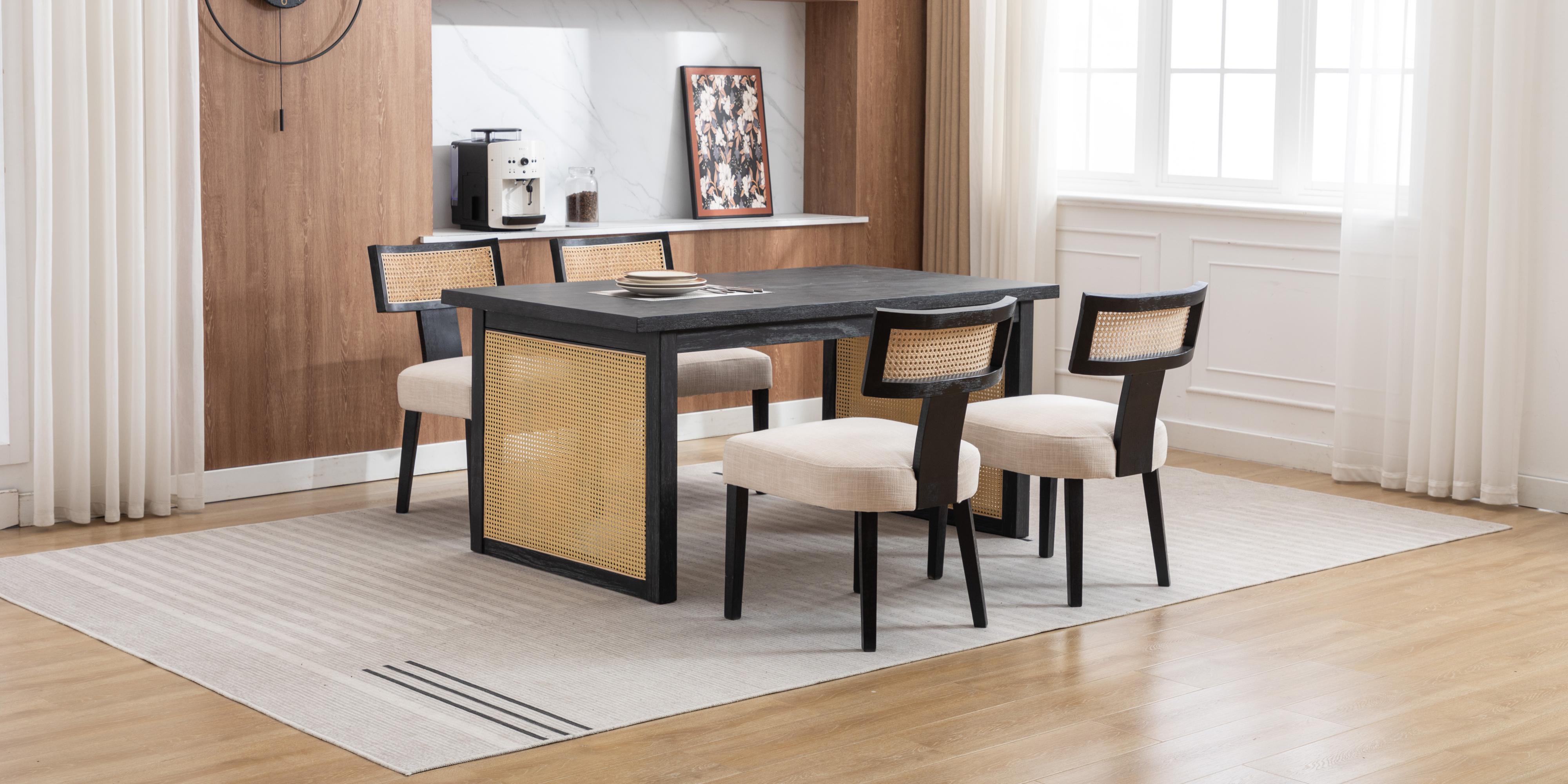
Standard Mid-Century Dining Chair Dimensions
Most mid-century dining chairs fall within these approximate ranges:
|
Measurement |
Typical Range |
|
Seat height |
17–19 inches |
|
Seat width |
17–21 inches |
|
Overall width |
18–24 inches |
|
Seat depth |
16–18 inches |
|
Overall depth or length |
20–24 inches |
|
Overall height |
30–36 inches |
These figures are useful starting points, but the perfect dimensions depend on your table height, room size, and the people using the chairs.
Seat Height vs. Table Height
Seat height is measured from the floor to the top of the sitting surface. For chairs with thick upholstery, use the height to the top of the cushion.
Most mid-century dining chairs have a seat height of 17 to 19 inches, which generally works with standard dining tables measuring 28 to 30 inches high.
Follow the 10-to-12-Inch Clearance Rule
There should be around 10 to 12 inches of clearance between the top of the seat and the lowest point beneath the table.
Do not measure only to the tabletop. A thick table apron or support frame can reduce the usable legroom.
For example:
-
A table with 29 inches of underside clearance usually works with an 18-inch seat.
-
A table with 28 inches of clearance may suit a 17- to 18-inch seat.
-
A table with only 27 inches of clearance may feel cramped with a 19-inch upholstered chair.
Too little clearance restricts movement, while too much can leave guests sitting too low.
Chair Width and Seating Capacity
Most armless mid-century chairs are between 18 and 22 inches wide, while chairs with arms often measure between 22 and 24 inches.
Allow at least 6 inches between chairs so guests can move comfortably without bumping elbows. When space permits, 8 to 12 inches creates a more relaxed layout.
Overall chair width + 6 inches = minimum table-edge space per person
A 20-inch-wide chair therefore needs around 26 inches of usable table edge. Remember that table legs and pedestal supports can reduce the actual seating space.
Armless Chairs
Armless chairs are ideal for apartments, breakfast nooks, and small dining rooms. Their slim profiles allow them to sit closer together and tuck more easily under the table.
Chairs With Arms
Armchairs can elevate a dining room and create a more formal look. However, always measure the arm height. If the arms are higher than the underside of the table, the chair will not tuck in properly.
Seat Depth and Comfort
Seat depth is measured from the front edge of the seat to the backrest. Most mid-century dining chairs have a seat depth of 16 to 18 inches.
The correct depth supports the thighs while leaving a small gap between the seat edge and the backs of the knees.
A shallow seat may provide limited support, while an overly deep seat can force shorter users to sit forward. Dining chairs should also remain more upright than lounge chairs, which are usually deeper and more reclined, or office chairs, which often include adjustable support.
For long dinners or game nights, a slightly deeper seat with supportive fabric upholstery may be more comfortable. A compact wooden chair may work better in a small breakfast area.
-.jpg?w=4000&h=2000)
Overall Depth and Room Clearance
Overall depth includes the seat, backrest angle, and rear-leg projection. Most mid-century dining chairs measure approximately 20 to 24 inches deep.
You also need enough space behind the chair:
-
30 inches for basic seating
-
36 inches for comfortable movement
-
42 to 48 inches for a main walkway
Curved backs and angled rear legs can occupy more floor space than expected, so check the full product length before buying.
How Materials Affect Chair Size and Comfort
Material choice influences visual weight, frame thickness, comfort, and durability.
Mid-century wooden chairs are commonly associated with oak, walnut, cherry, teak, and rosewood. Walnut provides a warm brown tone, while oak often feels lighter and more casual. Vintage teak and rosewood are closely connected with iconic mid-century furniture.
Check whether the frame is made from solid wood, engineered wood, veneer, or a combination. Chairs built from quality materials and reinforced joinery are generally more stable.
Upholstered chairs may have greater seat height and width because of the foam and fabric layers. Common materials include woven fabric, velvet, faux leather, and genuine leather. Leather creates a refined look, while textured fabric adds softness.
Choosing the Right Chair for Your Interior
A wide selection of mid-century dining chairs is available, from slim wooden frames to padded upholstered models.
Popular combinations include:
-
Walnut chairs with a walnut or black table
-
Oak chairs with neutral fabric
-
Leather chairs with wood or metal tables
-
Cane-back chairs with natural materials
-
Upholstered chairs with a simple solid-wood table
Before ordering, check whether the finish is in stock and whether the full quantity is ready to ship. Chairs from different batches may show slight variations in wood or fabric color.
How to Measure Before Buying
Follow these steps:
-
Measure the tabletop height.
-
Measure from the floor to the lowest point beneath the table.
-
Measure the usable space between the table legs.
-
Check the distance between the table, walls, and walkways.
-
Review seat height, width, depth, length, and arm height.
-
Use painter’s tape to mark the chair footprint on the floor.
These measurements help ensure the dining area is ready for both daily meals and special gatherings.
Common Sizing Mistakes
Avoid these common errors:
-
Ignoring the table apron
-
Comparing seat width instead of overall width
-
Forgetting to measure arm height
-
Failing to account for table legs
-
Choosing chairs that are too deep for the room
-
Placing chairs too close together
-
Assuming all mid-century chairs share the same dimensions
Final Thoughts
The best mid-century dining chair combines style, comfort, quality materials, and practical dimensions. Seat height affects posture and legroom, width determines how many chairs can fit, and depth influences comfort and floor space.
Measure your table and dining room carefully, compare the full product specifications, and choose chairs built for the way you use your home. The right proportions can elevate the room, improve comfort, and create a timeless look you will continue to love.
FAQs
What is the standard seat height for a mid-century dining chair?
Most have a seat height between 17 and 19 inches, which suits tables measuring around 28 to 30 inches high.
How much clearance should there be under the table?
Aim for approximately 10 to 12 inches between the top of the seat and the lowest point beneath the table.
How wide should dining chairs be?
Armless chairs are usually 18 to 22 inches wide. Chairs with arms are often 22 to 24 inches wide. Leave at least 6 inches between chairs.
What is the best seat depth?
A seat depth of 16 to 18 inches is comfortable for many adults and provides adequate thigh support.
Are upholstered chairs more comfortable?
Comfort depends on seat depth, cushion firmness, backrest angle, and body shape. Upholstery adds softness, but a well-built wooden chair can also be comfortable.
What questions should I ask before buying?
Ask about dimensions, frame materials, upholstery, weight capacity, assembly, warranty, available stock, and replacement parts.